

NEET 2026: Complete Guide for Aspirants
Introduction
For millions of students across India, becoming a doctor is more than just a career goal—it is a dream built on years of dedication and hard work. The National Eligibility cum Entrance Test (NEET) is the gateway to pursuing medical education in India. As competition continues to rise each year, students preparing for NEET 2026 need a clear understanding of the exam structure, eligibility requirements, syllabus, and preparation strategies.
Whether you are starting your preparation journey or refining your study plan, this comprehensive guide will help you understand everything about NEET 2026. From registration and exam pattern to preparation tips and career opportunities, this article covers all the essential information aspiring medical students need.
What is NEET 2026?
NEET (National Eligibility cum Entrance Test) is the national-level medical entrance examination conducted for admission to undergraduate medical courses across India.
The examination serves as the primary entrance test for:
- MBBS programs
- BDS programs
- BAMS programs
- BHMS programs
- BUMS programs
- Veterinary courses in many institutions
- Nursing and allied health science programs in selected colleges
NEET 2026 is expected to attract more than 25 lakh candidates, making it one of the most competitive entrance examinations in the country.
Why is NEET 2026 Important?
NEET is the single entrance examination accepted by most medical institutions in India. A good NEET score can open doors to prestigious government and private medical colleges.

Key Benefits of NEET
- Admission to top medical colleges
- Uniform selection process nationwide
- Opportunity to pursue MBBS and BDS programs
- Access to government medical colleges with affordable fees
- Eligibility for scholarships and merit-based admissions
As medical education becomes increasingly competitive, performing well in NEET 2026 can significantly impact a student’s future career.
NEET 2026 Eligibility Criteria
Before applying, candidates must ensure they meet the required eligibility standards.
Educational Qualification
Candidates should have completed or be appearing in Class 12 with:
- Physics
- Chemistry
- Biology/Biotechnology
- English
Minimum Marks Requirement
General category candidates typically require:
- 50% aggregate in PCB subjects
Reserved category candidates receive relaxation according to applicable regulations.
Age Criteria
Candidates are generally required to meet the minimum age criteria prescribed by the authorities at the time of admission.
Students should always verify the latest eligibility guidelines from official notifications before submitting their applications.
NEET 2026 Exam Pattern
Understanding the exam pattern is essential for effective preparation.
Subjects Covered
The examination includes questions from:
- Physics
- Chemistry
- Biology
Biology is divided into:
- Botany
- Zoology
Question Format
Questions are generally objective-type multiple-choice questions (MCQs).
Examination Mode
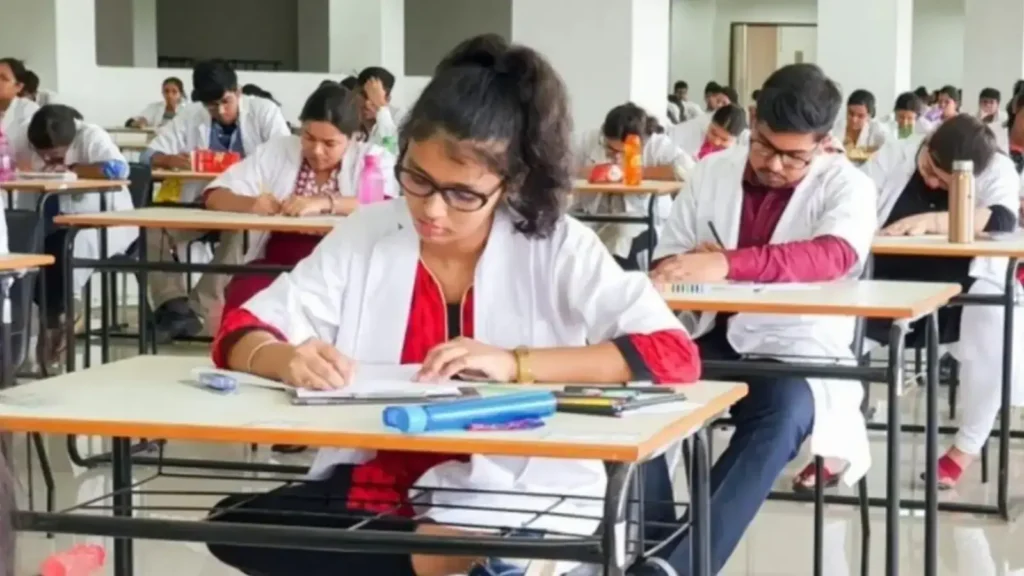
The exam is conducted in pen-and-paper mode at designated examination centers.
Duration
Candidates are provided a fixed duration to complete the examination.
Marking Scheme
Typically:
- Correct Answer: Positive marks awarded
- Incorrect Answer: Negative marking applicable
- Unattempted Question: No marks deducted
Candidates should verify the latest marking scheme once the official notification for NEET 2026 is released.
NEET 2026 Syllabus
The NEET syllabus is primarily based on Classes 11 and 12.

Physics Syllabus
Class 11 Topics
- Physical World
- Units and Measurements
- Motion in a Straight Line
- Laws of Motion
- Work, Energy and Power
- Gravitation
- Thermodynamics
Class 12 Topics
- Electrostatics
- Current Electricity
- Magnetism
- Electromagnetic Waves
- Optics
- Modern Physics
Chemistry Syllabus
Physical Chemistry
- Mole Concept
- Chemical Equilibrium
- Thermodynamics
- Electrochemistry
Organic Chemistry
- Hydrocarbons
- Alcohols
- Aldehydes
- Ketones
- Amines
Inorganic Chemistry
- Periodic Table
- Chemical Bonding
- Coordination Compounds
- p-Block Elements
Biology Syllabus
Class 11 Biology
- Cell Structure
- Plant Physiology
- Human Physiology
- Biological Classification
Class 12 Biology
- Genetics
- Evolution
- Biotechnology
- Ecology
- Reproduction
- Human Health and Disease
Biology usually contributes the highest number of questions, making it the most important subject for scoring well.
NEET 2026 Registration Process
The application process is expected to be conducted online.

Step 1: Online Registration
Candidates need to create an account using:
- Email ID
- Mobile Number
- Basic personal details
Step 2: Fill Application Form
Enter:
- Academic information
- Personal details
- Communication address
Step 3: Upload Documents
Documents generally include:
- Passport-size photograph
- Signature
- Identity proof
- Category certificate (if applicable)
Step 4: Pay Application Fee
Payment can usually be completed through:
- Debit card
- Credit card
- UPI
- Net banking
Step 5: Submit Form
Review all information carefully before final submission.
NEET 2026 Preparation Strategy
Success in NEET depends on consistency, discipline, and smart preparation.
Create a Realistic Study Plan
Develop a timetable that balances all three subjects.
A sample daily schedule may include:
- Biology: 3–4 hours
- Physics: 2–3 hours
- Chemistry: 2–3 hours
- Revision: 1–2 hours
Focus on NCERT Books
NCERT textbooks are considered the foundation of NEET preparation.
Why NCERT is Important
- Covers core concepts
- Matches syllabus closely
- Frequently asked questions originate from NCERT content
- Strong foundation for advanced preparation
Students should read Biology NCERT multiple times.
Practice Mock Tests
Mock tests help students:
- Improve speed
- Increase accuracy
- Build confidence
- Reduce exam anxiety
Attempting one or two full-length tests every week can significantly improve performance.
Strengthen Weak Areas
Every student has strengths and weaknesses.
Identify:
- Difficult chapters
- Frequently incorrect concepts
- Time-consuming questions
Allocate additional study time to improve these areas.
Revise Regularly
Revision is one of the most important aspects of NEET preparation.
Effective revision techniques include:
- Flashcards
- Short notes
- Formula sheets
- Mind maps
Weekly revision ensures long-term retention of concepts.
Common Mistakes to Avoid During NEET Preparation
Many students work hard but still fail to achieve their target scores due to avoidable mistakes.
Ignoring NCERT
Skipping NCERT and focusing only on reference books can be counterproductive.
Lack of Revision
Studying new topics without revising old ones leads to poor retention.
Excessive Study Material
Using too many books creates confusion.
Choose limited, high-quality resources and master them thoroughly.
Poor Time Management
Without a structured timetable, preparation often becomes ineffective.
Neglecting Health
A healthy body supports a healthy mind.
Students should:
- Sleep 7–8 hours
- Exercise regularly
- Stay hydrated
- Maintain a balanced diet
Best Books for NEET 2026 Preparation
Physics
- NCERT Physics
- Concepts of Physics
- Objective Physics
Chemistry
- NCERT Chemistry
- Physical Chemistry by O.P. Tandon
- Organic Chemistry reference books
Biology
- NCERT Biology
- Objective Biology practice books
The combination of NCERT and quality practice material can provide excellent preparation.
Time Management Tips for NEET 2026
Effective time management can improve scores significantly.
During Preparation
- Set daily goals
- Track progress
- Prioritize difficult chapters
- Take regular breaks
During Examination
- Start with easier questions
- Avoid spending too much time on one question
- Review marked questions later
- Keep track of remaining time
These techniques help maximize performance under exam conditions.
Career Opportunities After NEET 2026
Qualifying NEET opens numerous career pathways.

Medical Courses
- MBBS
- BDS
- BAMS
- BHMS
- BUMS
Allied Health Sciences
- Nursing
- Physiotherapy
- Occupational Therapy
- Medical Laboratory Technology
Future Career Options
After graduation, students can become:
- Doctors
- Surgeons
- Researchers
- Public Health Specialists
- Medical Educators
- Healthcare Administrators
The healthcare industry continues to expand, creating strong demand for qualified professionals.
How to Stay Motivated During NEET Preparation
Preparing for a competitive examination can be mentally challenging.
Stay Positive
Focus on daily improvement rather than comparing yourself with others.
Set Small Goals
Achieving small milestones builds confidence.
Track Progress
Maintain a study journal to monitor growth.
Take Short Breaks
Continuous studying can cause burnout. Planned breaks improve productivity.
Surround Yourself with Supportive People
Family, teachers, and mentors can provide valuable encouragement throughout the preparation journey.
Conclusion
NEET 2026 represents a major opportunity for students aspiring to enter the medical profession. With proper planning, consistent effort, regular revision, and smart time management, achieving a high score is absolutely possible.
Start your preparation early, focus strongly on NCERT concepts, practice mock tests regularly, and maintain a disciplined study routine. Remember that success in NEET is not about studying endlessly—it is about studying effectively and consistently.
If you are preparing for NEET 2026, begin today, stay committed to your goals, and take one step closer to your dream medical career.