



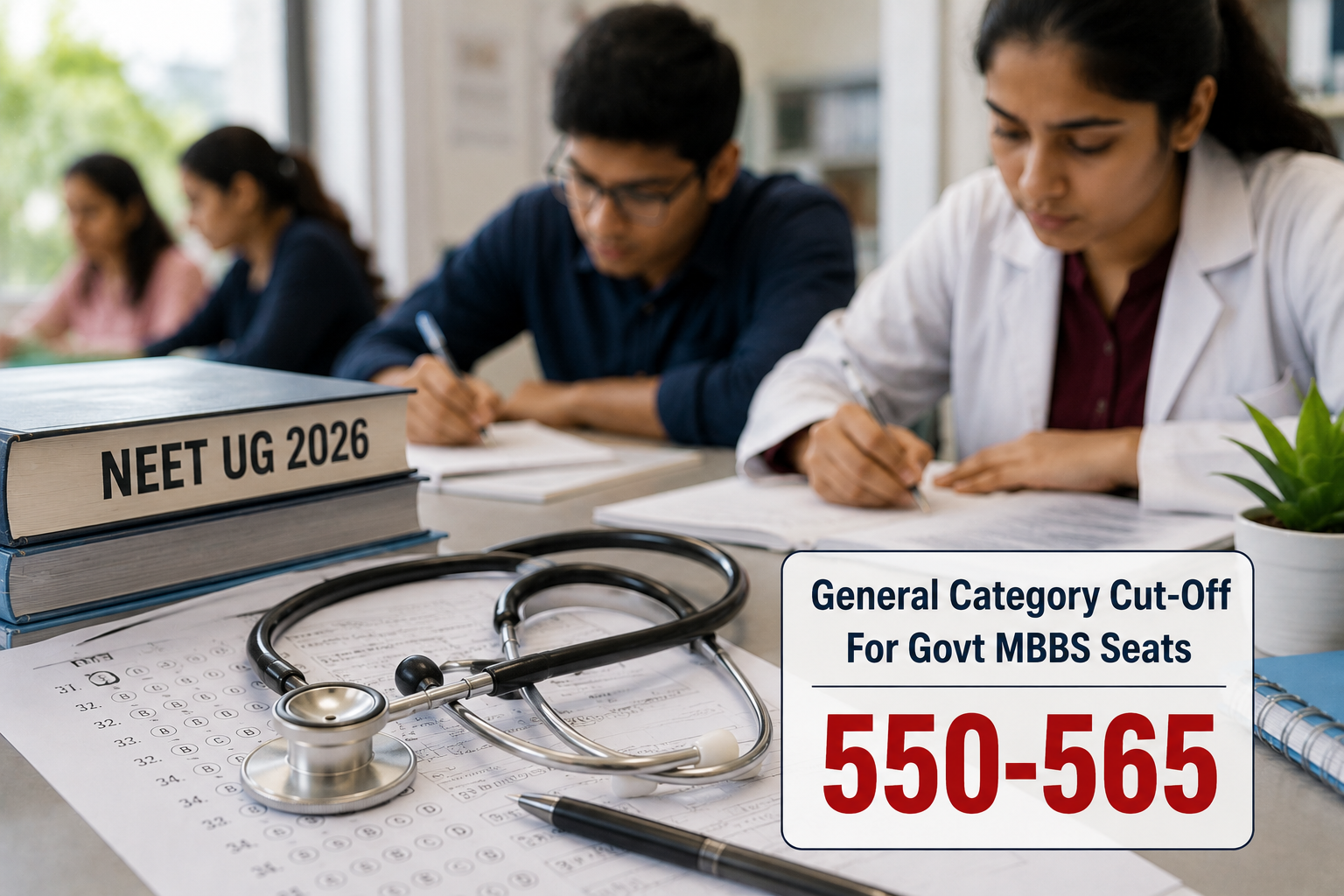

Tamil Nadu has asked a panel led by Nandan Nilekani to examine whether the National Eligibility cum Entrance Test, or NEET, should continue to determine entry to undergraduate medical courses in the state. The request places the current admissions framework under review and asks the panel to consider an alternative: selecting students on the basis of their Class 12 examination marks. It is a proposal for examination and assessment, not an announcement that NEET has been scrapped or that admissions rules have already changed. Until any formal decision is made, the existing process remains the relevant framework for applicants.
NEET is the common entrance examination used for admission to undergraduate medical programmes across India. Applicants take the same national test, and their scores are used in the selection process alongside applicable eligibility requirements and counselling procedures. Tamil Nadu’s request reflects a longstanding concern that a single competitive examination may not fully capture students’ academic performance or circumstances. The state’s argument gives greater weight to Class 12 results, including marks awarded through the state board examination, as a possible basis for comparing candidates. The panel is being asked to assess this approach rather than simply assume it should replace the national test.
The central issue is how to design admissions that are both fair and academically sound. A common entrance exam offers a shared measure, but students can differ in access to coaching, familiarity with the test format, language needs, schooling conditions and personal circumstances. Class 12 marks, meanwhile, are earned through board assessments that may vary in syllabus, standards and marking practices, making comparisons across candidates a key consideration. Any review would therefore need to examine how each method identifies readiness for medical study, supports equal opportunity and can be applied consistently. The question is not only whether NEET should be retained or replaced, but how an admissions system can balance reliable assessment with the varied preparation and experiences of students.
Opposition to the National Eligibility-cum-Entrance Test (NEET) in Tamil Nadu is rooted in concerns about fairness, access and the role of school education in medical admissions. Critics of a single, high-stakes examination argue that performance may reflect not only a student’s ability, but also the opportunity to prepare specifically for the test. They say candidates whose families can afford private coaching, study materials and dedicated preparation time may be better placed to compete than students without those resources. This is presented as a concern by opponents of NEET, rather than as proof that every admission outcome is determined by coaching access.
Cost and geography are also part of the debate. Preparing for the examination can involve fees for coaching and travel, while reaching a test centre may create additional expense or difficulty for candidates in remote areas. State representatives and other critics have argued that these burdens can weigh more heavily on students from lower-income households and rural communities. The scale of those effects may vary, but the concerns inform Tamil Nadu’s broader claim that a common test does not necessarily create equal conditions for all applicants.
Another issue raised is the relationship between NEET preparation and school curricula. Students may study under different state and national boards, whose syllabuses, teaching approaches and assessment patterns are not identical. Critics contend that test-specific preparation can place some candidates at a disadvantage if their schooling has not closely matched the examination’s content or style. They also question whether one examination can adequately represent a student’s learning across several years.
Tamil Nadu’s policy preference is to give greater weight to Class 12 marks, which proponents view as a record of academic achievement built through sustained study and assessment over time. They argue that school results may better recognise learning within the curriculum students have followed, rather than concentrating selection on performance on one test day. This position is part of the state’s proposal for an alternative admissions approach and is the subject of the panel’s examination. It should not be confused with the rules currently governing undergraduate medical admissions: NEET remains the required entrance examination under the applicable framework unless and until the governing rules are changed.
A central question for the panel would be whether Class 12 results from different boards and curricula can provide a fair basis for comparing applicants. Students may study under state, national or other examination systems, which can differ in syllabuses, assessment formats, marking practices and grade distributions. Even when candidates take subjects with similar names, the depth and emphasis of the courses may not be identical. The panel would therefore need to examine whether raw marks measure comparable achievement, and whether differences between boards could systematically advantage or disadvantage particular groups.
If marks are not directly comparable, possible approaches could include statistical normalization, subject-specific adjustments or common eligibility criteria. Each method would require clear rules, reliable data and an explanation that students and families can understand. The panel would also need to ask what an alternative admissions process is intended to measure. Strong school performance may indicate sustained learning, but medical study also demands a sound foundation in relevant sciences and the capacity to manage rigorous professional training. Any proposed system would need to assess readiness without creating unnecessary barriers or relying on measures that are themselves inconsistent.
Transparency and safeguards against manipulation would be equally important. Educators and boards could contribute evidence about curriculum and marking standards; medical institutions could explain the academic preparation needed for their courses; and regulators would have to consider consistent implementation across colleges. Students and families would need timely information about eligibility, calculations, deadlines, appeals and the treatment of exceptional circumstances. Auditable procedures, published methodologies and checks on data could help build confidence in the outcome.
Finally, the panel’s remit would be analytical, not a substitute for legal review. A recommendation to replace or substantially alter the current process would have to be assessed against applicable national laws, court rulings and the respective responsibilities of state and central authorities. The practical merits of an admissions model and its legal permissibility are related questions, but they are not the same; both would need careful consideration before any change could take effect.
If Tamil Nadu were to replace NEET with a process based on Class 12 marks, the change could reshape how students prepare for medical admissions. Applicants might place greater emphasis on school coursework and board examinations, rather than treating a single entrance test as the decisive measure. For some, this could reduce the pressure associated with preparing for a separate, high-stakes exam. However, the effect would depend on the admission formula, eligibility rules and how marks were weighted across subjects.
Demand for coaching could also shift rather than disappear. Students might seek support for board examinations, subject-specific preparation or strategies for improving school performance. Schools, in turn, could face pressure to strengthen teaching and assessment practices, while families may place increased importance on internal tests and board results. These responses are possibilities, not assured outcomes; they would depend on implementation details and the choices made by students, schools and coaching providers.
NEET A marks-based route could reduce reliance on one common entrance test, but it would bring other questions into focus. Board examinations may differ in difficulty, assessment methods and marking patterns across education boards and schools. If small differences in marks determine access to limited medical seats, concerns could arise about comparability and fairness. Students’ access to well-resourced schools, experienced teachers and academic support may also affect results. Any proposed system would therefore need to explain how it would account for variation while allocating seats transparently.
NEET The next developments to watch include the Nilekani panel’s findings, the Tamil Nadu government’s response and the details of any proposed admission framework. Readers should also follow whether implementation would require changes to existing laws, regulations or decisions by relevant authorities. The panel’s examination alone would not establish a new admissions route. Until the competent authorities make and announce official decisions, NEET requirements and the applicable admission rules remain subject to the current official framework. The eventual outcome will depend on those decisions and any legal or regulatory steps that follow.