



NEET 2026 The National Eligibility cum Entrance Test (NEET) 2026 serves as a vital gateway for aspiring medical students in India, determining their eligibility for undergraduate medical programs across various institutions. This exam assesses knowledge and competencies in key subjects such as Biology, Physics, and Chemistry, essential for proficiency in the medical field. The test format consists of multiple-choice questions (MCQs) that encompass a total of 180 questions, allocated evenly among the three primary subjects: 90 questions from Biology, and 45 questions each from Physics and Chemistry.
The marking scheme for the NEET 2026 exam awards four points for each correct answer, while one point is deducted for every incorrect response, thus encouraging students to approach questions judiciously. This penalization model drives a thoughtful consideration of the answers rather than random guessing, enhancing the overall assessment quality.
Additionally, the NEET 2026 exam will be conducted in pen-and-paper mode, making it crucial for candidates to hone their time management skills for optimal performance. Students will be allotted a total of three hours to complete the exam, reflecting the need for sustained focus and efficiency during the assessment period. Notably, NEET 2026 introduces a few enhancements aimed at improving accessibility and fairness, including provisions for differently-abled candidates and additional language options, accommodating diverse educational backgrounds.
In its core essence, the NEET examination aims to streamline the admission process into medical schools while ensuring that only qualified candidates are admitted, thereby maintaining educational standards. As the medical field continues to evolve, NEET 2026 stands as a testament to the rigorous evaluation of aspiring healthcare professionals, ensuring they possess the requisite knowledge and aptitude to meet the challenges ahead.
Student Feedback: Analyzing the Difficulty Level of the Question Paper
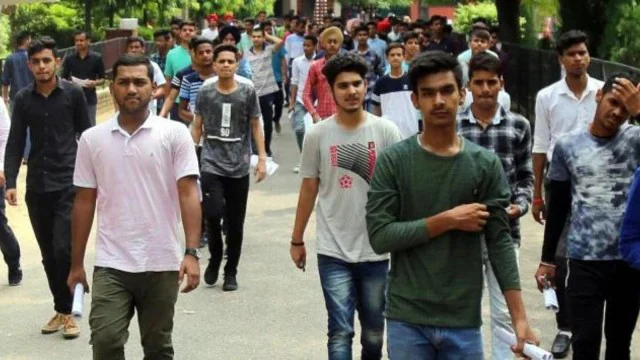
The NEET 2026 examination has generated various responses from the student cohort regarding the perceived difficulty level of the question paper. Many students expressed their perspectives, highlighting specific areas of the test that posed challenges as well as those they found manageable. Overall feedback was mixed, as different students reported diverse experiences based on their preparation styles and subject familiarity.
One student, Priya Sharma, noted, “The biology section was straightforward, mostly covering our syllabus. However, I found the physics questions to be a bit tricky, especially the conceptual ones. I spent too much time on them.” This sentiment was echoed by several others who felt that while biology was consistent with previous years, the physics segment presented unexpected challenges.
Conversely, Ravi Kumar remarked, “I was pleasantly surprised by the chemistry questions; they were almost identical to the practice papers I worked on. I felt confident and was able to secure my marks there.” This highlights that preparation and familiarity with the subject matter significantly influenced individual experiences.
Additionally, students shared their observations regarding the format and structure of the questions. For instance, some found the sequence of questions disorienting, which may have contributed to increased anxiety during the exam. Anisha Mehta mentioned, “The transitions between sections felt abrupt, and it impacted my pace. I think that played a part in how I managed my time overall.” Such feedback indicates the necessity for maintaining a balanced flow within examinations to enhance student performance.
Ultimately, it is clear that while many students had a varied range of perceptions regarding the difficulty level of the NEET 2026 question paper, their individual preparation strategies and knowledge base greatly influenced their performance and overall experience.
Expert Review: Insights from Coaching Institutes and Educators
The NEET 2026 exam has drawn considerable attention from educators and coaching institutes, with a focus on the alignment between the examination and the officially prescribed syllabus. Many experts believe that this year’s exam reflects a coherent arrangement with the National Eligibility cum Entrance Test framework, effectively assessing students’ grasp of the foundational concepts across subjects such as Physics, Chemistry, and Biology. Feedback from educators indicates that the paper maintained a balanced distribution of questions, covering various topics comprehensively.
When juxtaposed with previous years, several trends have emerged in this year’s paper. Notably, there appears to be a shift towards a higher emphasis on analytical thinking and application-based questions rather than rote memorization. This trend is indicative of a broader educational philosophy that encourages critical reasoning and deeper understanding among students. Coaches and tutors have highlighted that this transition is a positive development, as it prepares students effectively for real-world medical challenges.
Moreover, insights from professional coaching institutes have focused on the effectiveness of question structures in relation to educational standards. The diversity in question types—ranging from multiple-choice to assertion-reasoning formats—has been positively received. Such formats not only assess theoretical knowledge but also practical application, thereby testing students’ problem-solving abilities. However, some educators expressed concerns regarding the level of difficulty, suggesting that certain questions could be perceived as overly challenging, which may not accurately reflect the preparedness of all candidates.
In conclusion, the NEET 2026 exam has demonstrated significant alignment with curricular expectations while evolving in its approach to assessing student competency, thereby enhancing the overall educational integrity of the examination process.
Conclusion
As we analyze the outcomes of the NEET 2026 examination, it becomes evident that both student feedback and expert evaluations provide significant insights into the evolving landscape of medical entrance assessments. The experiences shared by students highlight the importance of adaptive learning strategies, emphasizing that a comprehensive understanding of core subjects is paramount for success. Many students reported that a focused approach on conceptual clarity and regular practice through mock tests contributed positively to their performance.
Experts have pointed out several trends that emerged from this year’s exam, one of the notable being the increased complexity and integration of questions that challenge aspirants to apply their knowledge critically. This evolution suggests a shift toward evaluating not just rote memorization but also the ability to link concepts across different subjects. Future candidates should, therefore, emphasize a holistic understanding of the curriculum rather than a segmented approach.
The analysis of NEET 2026 also indicates potential changes in future examinations, with expectations set on further integrating technology and innovative assessment methods. Candidates can anticipate adaptive learning modules and online preparatory platforms becoming more prevalent, which could significantly alter how one approaches preparation. Additionally, emphasis on practical knowledge and real-world applications of scientific concepts may dominate future test formats.
In light of these insights, prospective NEET aspirants should refine their preparation strategies to align with the observed trends. This includes prioritizing in-depth understanding, practicing application-based questions, and utilizing a variety of preparatory resources. By doing so, they can enhance their chances of success and adapt to the potentially changing demands of future NEET examinations.