





IIT Madras Study Warns AI Could Disrupt Entry-Level Career Growth In India
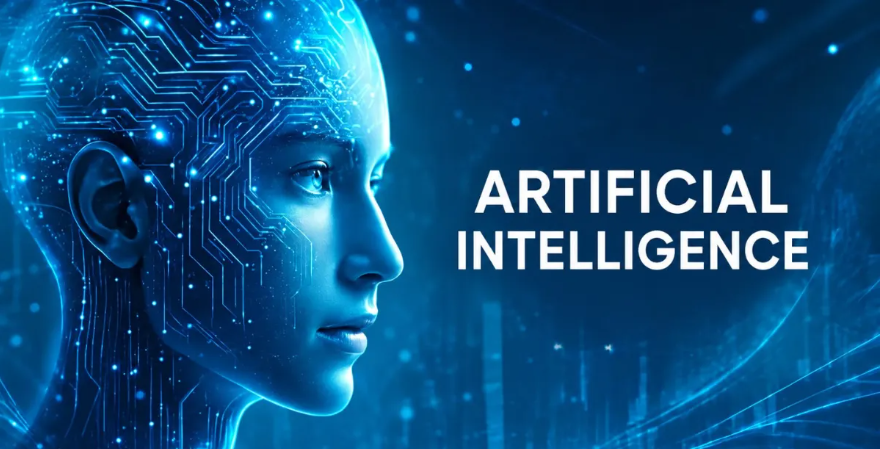
An Indian Institute of Technology (IIT) Madras study warns that AI automation could change how fresh graduates gain workplace experience, develop professional skills and progress towards senior roles, even if entire professions do not disappear.
Artificial intelligence (AI) could change how young professionals begin their careers in India, with routine workplace tasks increasingly being handled by automated systems. While this does not necessarily mean entire jobs will disappear, it could affect how fresh graduates gain practical experience and develop the skills needed for senior positions, according to a new white paper by the Indian Institute of Technology Madras .
The paper, titled How AI Is Reconfiguring Work in India: A Task-Based Framework for Understanding Augmentation, Displacement, New Roles and the Changing Structure of Jobs, was prepared by the institute’s Centre for Responsible AI (CeRAI).
AI Could Change How Freshers Gain Work Experience
Entry-level employees typically begin their careers by performing routine tasks, learning workplace processes and gradually taking on more complex responsibilities. However, AI tools can increasingly perform activities such as entering invoices, answering standard customer queries, resetting passwords and writing basic software code.
The study highlights a potential challenge arising from this shift. When AI takes over routine assignments, young employees could lose some of the opportunities through which they traditionally develop professional judgement and practical skills.
For instance, junior accountants may spend less time processing invoices, while software engineers could rely on AI for coding tasks that previously helped them understand programming fundamentals.
These changes could require employers to rethink how they train freshers and prepare them for more advanced responsibilities.
The white paper states, “Junior roles have historically functioned as an apprenticeship: repetitive, process-oriented tasks are individually low-value but that collectively teach the judgement a worker later needs in a senior role.”
LATEST
Lula Wins Record Fourth Brazilian Presidential Term in 2026,
Reliance Jio IPO: Where To Check Your IPO Allotment Status?
India Women vs Zimbabwe Women, ODI Series: Schedule, Head to
Unitree Robotics: Which Country Is It From? Key Facts, Robot
26 October 2026 Holiday: What’s Open and What’s Closed? Chec
Bank Holiday Today: Why Are Banks Closed On 26 October? Chec
Gold Price Today: What Additional Charges Do Buyers Pay? Che
Reliance Jio IPO Allotment: What Is Listing Day And How To C
IMD Weather Today: Cyclone Arnab Puts Andhra Pradesh And Odi
Which Is the Longest River in Africa? Check Its Length, Sour
Before Buying a Geyser This Winter: Check the Cost and Benef
National Geographic Reveal the Best Places in the World to V
List of Indian Players With Most Centuries in Women’s ODI ft
Why AI May Not Eliminate Entire Jobs
The researchers caution against assuming that AI’s ability to perform a particular task means an entire profession will disappear.
According to the paper, AI’s impact depends on several factors, including the nature of the work, the cost of adopting the technology, industry regulations, safety requirements and how organisations restructure their operations.
Explaining the findings, Balaraman Ravindran, head of CeRAI and the Wadhwani School of Data Science and Artificial Intelligence at IIT Madras, said, “This paper challenges the idea that AI always takes away jobs. Most jobs have tasks and only some of those can be undertaken by AI. The effect depends on the tasks, the industry, rules for AI and how much it costs to use AI. We also looked at who gains from these changes and who is affected.”
The study examines different ways AI can be introduced into workplaces. In some situations, AI may perform tasks while employees check the results. In others, workers may use AI to improve productivity while retaining responsibility for decisions and outcomes.
Human judgement, accountability and the ability to handle complicated situations could therefore remain important even as automation expands.
Affordable AI Could Widen Access for Businesses
The study also examines how the cost of AI tools could influence their adoption across India.
Smaller businesses may benefit from affordable, task-specific AI systems that help with bookkeeping, customer support and quality checks. However, applications requiring advanced technology, specialised expertise and better infrastructure could remain concentrated in larger organisations.
This means AI’s impact may differ across industries, businesses and groups of workers.
The researchers recommend encouraging access to affordable AI tools, investing in India-specific research on changing job requirements, and creating training opportunities to help employees adapt to new responsibilities.
What It Means for Young Professionals
The report suggests that preparing for an AI-driven workplace requires more than identifying which tasks machines can perform. Employers must also consider how employees will acquire the knowledge and experience needed to progress in their careers.
For fresh graduates, the challenge could be learning to work alongside AI while developing the ability to evaluate its outputs, solve problems and make informed decisions.
The researchers also call for clearer pathways to new roles and opportunities for workers to learn additional skills as workplace responsibilities change.
Ultimately, the study argues that the future of employment will depend not only on what AI can do but also on how businesses redesign jobs and prepare their workforces for the transition.
ALSO READ| Bihar To Partner with 11 IT Firms To Train Govt School Teachers In IT and AI