


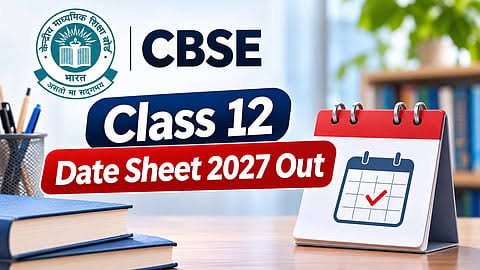
CBSE For students preparing for the CBSE Class 12 examinations in 2027, the date sheet will be an important planning document. However, a timetable described as “tentative” should not be treated as a confirmed schedule. Early reports, circulating tables, or an alleged draft may indicate possible arrangements, but they do not establish that the Board has approved those dates. Until CBSE publishes an official notice, any proposed examination date—including a date associated with a possible rescheduling—should be regarded as unverified.
These labels have different meanings. A tentative timetable is provisional and may be revised before final publication. A reported draft is information attributed to a source or document that may not have been authenticated by CBSE; it can be incomplete, inaccurate, or superseded. An officially confirmed date sheet is issued through the Board’s own announcement channels and is the authoritative version for students, schools, and examination centres. Students should therefore check CBSE’s official website and notices for publication, corrections, or updates, rather than relying solely on social media posts, forwarded messages, or news summaries.
A complete date sheet typically identifies the examination dates alongside subject names and, where applicable, subject codes. It also states the session or shift and the prescribed start time, reporting guidance, and other exam-day instructions. Separate information may cover practical examinations, including their schedule and arrangements, which can differ by school or subject. Students should review the final documents carefully, confirm that each subject and code matches their registration, and note any timetable changes announced after initial release. Until the 2027 schedule is officially published, no specific date should be assumed as final. Keeping a flexible study plan and checking verified updates regularly can help students respond calmly if the Board changes or clarifies any part of the timetable.
Reports that a CBSE Class 12 paper may be scheduled for March 22, 2027, have prompted questions about whether the date could overlap with Holi or related public-holiday observances. The concern is understandable, but the festival’s timing and the way it is observed can vary across calendars, regions and communities. Until the official 2027 holiday calendar and CBSE date sheet are available, it is not possible to confirm that an examination will take place on a Holi holiday.
Festival dates can matter to examination planning for practical reasons. Public observances may affect transport availability, traffic patterns and access to examination centres, particularly where celebrations involve road closures or large gatherings. Students who travel from other towns, as well as parents and guardians arranging transport, may need time to plan around local conditions. Schools also coordinate staffing, centre readiness and other administrative arrangements, so a holiday or significant local observance can raise logistical questions even when it does not apply uniformly across the country.
These uncertainties explain why students and families may seek clarification when a date appears close to Holi. They may want to know whether the reported date is confirmed, which regional calendar is being followed, and whether local holiday notifications could affect attendance or travel. Checking reliable updates can help prevent confusion and reduce the risk of relying on an unverified schedule or informal social-media claims.
However, a possible overlap alone does not establish that CBSE will revise an examination date. The board may consider the full examination timetable, centre arrangements, academic requirements and applicable government notifications before making any decision. It may also determine that the date remains workable despite differing local observances. Students should therefore treat reports about March 22 as provisional unless CBSE publishes an official notice. The confirmed date sheet and relevant state or local holiday announcements will provide the clearest basis for planning; until then, families can monitor official communications without assuming either a definite clash or a rescheduling.
If a scheduled CBSE Class 12 examination appears to coincide with a major holiday or presents a practical administrative difficulty, the Board may first review the published calendar and the circumstances behind the concern. That review could involve checking the date against the academic schedule, examination-centre arrangements, and information from schools or regional offices. Where relevant, CBSE may also consult government departments or other authorities to understand whether the date creates a significant operational problem. A possible clash, by itself, does not establish that an examination will be postponed. The timetable remains in force unless the Board formally announces a change.
If CBSE determines that an adjustment is necessary, it could issue a correction or publish a revised date sheet through its official communication channels. Any such notice should make clear which subject or paper is affected, the original examination date, the replacement date, and the candidates to whom the change applies. It should also explain whether other subjects and dates remain unchanged. Students should read the entire notice rather than relying on a headline or a partial screenshot, since a revision may apply only to a particular paper, examination category, or group of candidates. Schools can help direct students to the relevant official update.
Until an official CBSE notification appears, claims that the March 22 paper has been moved should be treated as unconfirmed. Social-media posts, forwarded messages, and unofficial websites may repeat speculation or misunderstand a timetable detail; they are not evidence of a rescheduling decision. Candidates should check the CBSE website and notices shared through their schools, and confirm that any document is current and published by an authorized source. If no formal revision is announced, students should continue to prepare on the basis of the date sheet already issued. This approach helps distinguish a verified timetable change from discussion about a possible date-sheet clash.
When questions arise about whether a CBSE Class 12 examination date may change, students should verify the information through official channels before changing their plans. Visit the Central Board of Secondary Education’s official website regularly and look for notices or date-sheet updates published by the board. Check that a notice is current and applies to the relevant examination session; older schedules and unrelated circulars may continue to circulate online. School communications can also help clarify what an official update means for students at a particular institution.
Compare any timetable shared through messaging apps, social media, or unofficial education websites with the original document hosted by CBSE. Check the publication date and read the notice in full rather than relying on a screenshot, headline, or forwarded message. If information is unclear or appears inconsistent, ask the school to confirm it through its usual communication channels. Students should pay particular attention to subject names and codes, examination dates, reporting instructions, and start and end times. Even a small difference in a subject code or timing can lead to avoidable confusion.
Save or download the latest confirmed date sheet and keep an accessible copy, while noting when it was issued. Recheck it periodically in case CBSE publishes a formal revision, and make sure any replacement document comes from a reliable source. Until a change is officially announced, organize revision around the most recently confirmed schedule. Continue preparing for each subject in its scheduled order, leaving room for review and practice without assuming that an exam will move. Avoid making travel bookings, cancelling arrangements, or substantially reorganizing study plans based solely on rumors. If an official change is confirmed, review the notice carefully, consult the school if needed, and then adjust transport, revision, and other arrangements using the revised dates and timings. This measured approach helps students stay prepared while responding promptly to reliable updates.