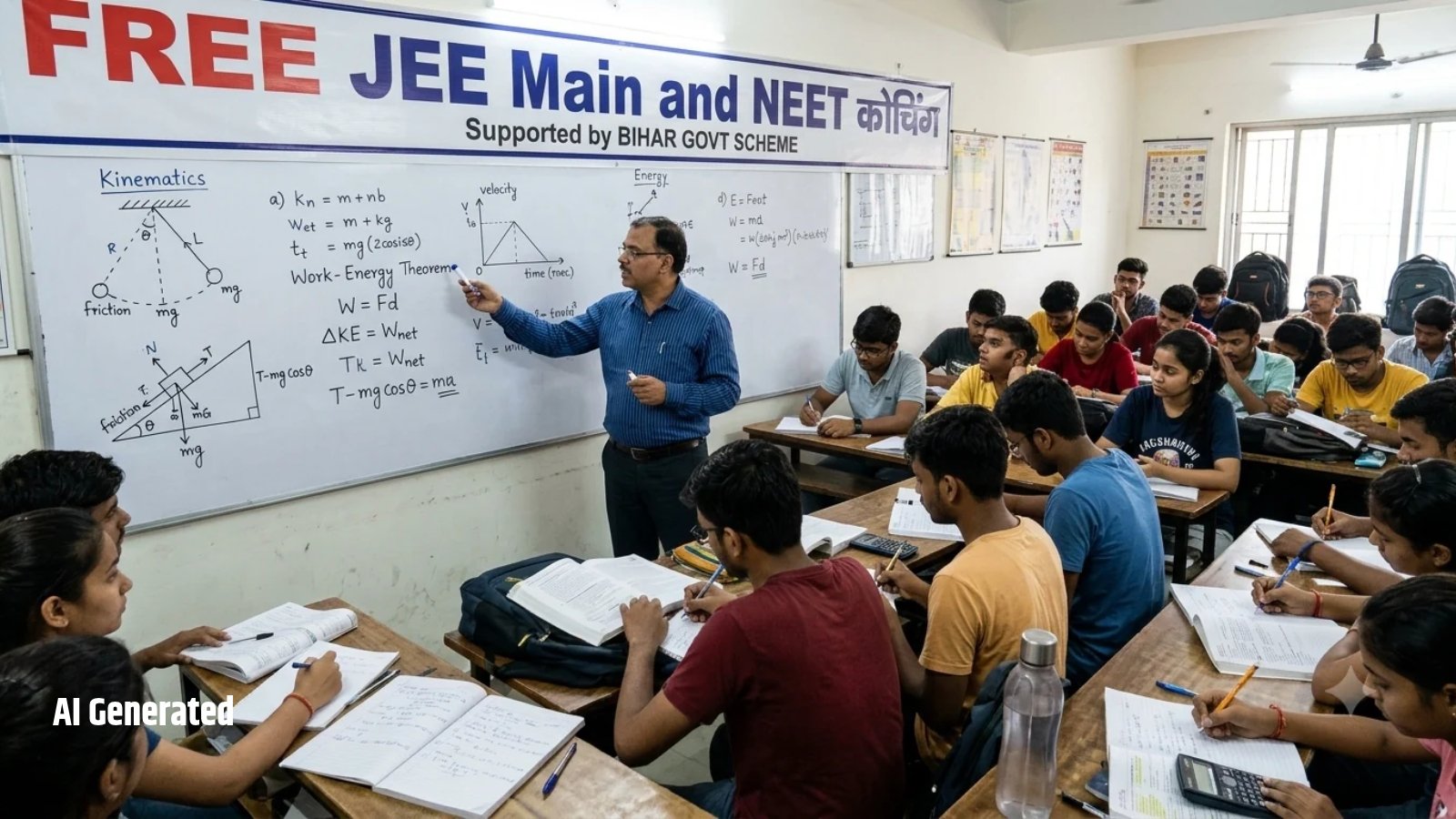
NEET Preparing for the IIT-JEE or NEET can demand sustained study, expert instruction and access to suitable learning materials. For students from lower-income households, the financial challenge may begin well before an examination fee is paid. Families often need to cover coaching tuition, textbooks, practice tests, internet access and other study expenses over many months.(NEET) These costs can put structured preparation beyond reach, even when a student has strong academic potential and the motivation to pursue engineering or medicine.
NEET Geography can add another substantial burden. Competitive coaching has long drawn students to centres in cities such as Kota, but relocating there may require families to pay for travel, rent, food and daily transport, as well as tuition. Students who move away from home may also face the practical and emotional pressures of adapting to a new environment. For households in Bihar’s smaller towns and rural areas, the combined expense of relocation and coaching can be prohibitive. Those who cannot move may have fewer nearby options for organized classes, regular assessments or guidance from experienced instructors.
Bihar’s government-supported free coaching initiatives seek to reduce these barriers by offering eligible students access to structured preparation for engineering and medical entrance exams, including IIT-JEE and NEET. By bringing instruction closer to students or removing some of its direct costs, such programs aim to widen opportunity without requiring every family to finance a move to a major coaching hub. Free coaching does not necessarily remove all expenses or guarantee admission, and the support available can differ across programs. Eligibility criteria, application dates, teaching locations, subjects and included services may change by scheme and year. Students and families should therefore consult current official announcements and notices before applying, and confirm precisely what costs and learning support are covered. Clear information helps applicants make plans, compare available options and understand the requirements before committing time to the selection process.
Bihar’s free IIT–NEET coaching initiative is best understood as an academic support programme, not merely a set of no-cost classes. Depending on the current arrangements at a particular centre, students may receive subject teaching in topics relevant to engineering or medical entrance examinations, along with practice tests that help them assess progress and become familiar with exam formats. Doubt-clearing sessions can provide opportunities to revisit challenging concepts, while study resources and preparation guidance may help students plan revision and use their time effectively. The precise services, teaching format and level of support can differ, so applicants should confirm what is available locally.
NEET Students considering the programme should first check the latest eligibility criteria, including any conditions related to residence, schooling, academic level or other factors. They should then establish whether applications are open, how to apply and whether selection involves screening, an entrance test or document verification. It is also important to identify the centres currently operating, confirm the courses offered at each location and review class schedules before making plans. Applicants may need to provide items such as identity and residence proof, school records, photographs or other specified documents, but requirements should not be assumed. Current government notices and official sources are the most reliable way to verify deadlines, procedures and centre details, since these can change between sessions.
For families, access to coaching closer to home and at reduced cost may ease expenses associated with private tuition, travel or relocation. Local provision can also make structured preparation more reachable for students who otherwise have limited options. However, access alone does not guarantee exam readiness or admission. Students still need to attend consistently, practise independently, review mistakes and make sustained use of dependable learning materials. They also need suitable study time alongside school and other responsibilities. Families can help by checking practical arrangements, including travel and class timing, and by supporting a regular routine. Understanding both the programme’s provisions and its limits allows students to approach the opportunity with realistic expectations and a clear preparation plan.
Reports of students from Bihar reaching IITs, AIIMS, and other respected institutions after attending government-supported coaching offer a concrete way to understand what affordable preparation can make possible. Such outcomes matter not because they represent every participant, but because they show how structured instruction and access to study resources may help students compete in demanding entrance examinations. Admission remains uncertain, and coaching by itself cannot guarantee a place. Results reflect a combination of circumstances, effort, and preparation over time.
A student’s journey can make this impact clearer than a selection figure alone. A useful account might describe the student’s starting point, such as limited access to specialist teachers or the need to balance study with family responsibilities, then explain the obstacles encountered. It can also show the routine that followed: attending classes, revisiting difficult concepts, completing practice papers, and learning to manage time under exam conditions. Persistence is important, but so are prior preparation, timely teacher feedback, and encouragement from family members or peers. Together, these details reveal how support can contribute without suggesting it is the sole cause of success.
When telling these stories, accuracy is essential. Names, institutions, examination years, and selection outcomes should be checked against reliable records or confirmed directly with the student and relevant programme officials. A student who qualified for an advanced stage should not be described as having secured admission, and figures used in publicity should be distinguished from independently verified results. Clear sourcing helps readers understand what was achieved and how it was achieved. Presented with care, individual journeys can show the practical value of accessible coaching while acknowledging that students follow different paths and outcomes vary. They can also help prospective learners form realistic expectations: a supported classroom can provide guidance, practice, and a stronger opportunity to prepare, while the final result depends on many factors beyond any single programme.
Free IIT–NEET coaching can ease the cost of preparation, but availability does not guarantee equal access or consistent results. Seats may be limited, leaving eligible students without a place, while facilities and teaching support can vary between districts. Students in remote areas may face long travel times or unreliable internet, and crowded classrooms can make individual attention difficult. Where books, practice materials, or suitable study spaces are scarce, students may struggle to benefit fully from instruction.
Coaching also adds demands to school life. Students must manage classes, homework, travel, and preparation for competitive examinations, often with limited time for rest. This can be especially challenging for girls and students from disadvantaged communities, who may encounter additional barriers related to mobility, household responsibilities, finances, or access to technology. Programs should therefore assess who enrolls, who attends regularly, and who completes the course—not simply how many students are admitted.
NEET Headline selections are important, but they offer only a partial measure of impact. A fuller evaluation would track attendance, course completion, changes in practice-test scores, examination performance, and students’ experiences. Reporting these outcomes transparently, while protecting personal information, could help identify which approaches work and where support is missing. Data should also be examined by district, gender, and social background to reveal whether opportunities are reaching students equitably.
Practical improvements could include clear admission criteria and waiting lists, consistent faculty support, regular testing with timely feedback, and counselling on study planning, stress, and career choices. Updated learning resources, dependable connectivity, (NEET) and options for supplementary help could support students with different starting points. Expansion should be guided by local needs and capacity, rather than numbers alone. Free coaching can reduce a major financial barrier, but lasting progress depends on reliable instruction, attentive support, and sustained investment in students’ wider education.
About the Author