NEET The National Eligibility cum Entrance Test (NEET) is a pivotal examination in India, essential for aspiring candidates seeking admission to medical and dental colleges. Conducted annually, NEET serves as a single gateway for students to demonstrate their proficiency in the core subjects of Physics, Chemistry, and Biology. The structure of the examination is designed to assess a candidate’s understanding and application of concepts in these critical fields which are foundational for medical studies.
NEET is significant not only for its standardized assessment but also because it facilitates equal access to medical education across the nation. Each year, the exam draws thousands of applicants, all vying for limited seats in prestigious institutions. Successfully clearing the NEET is a prerequisite for enrollment in undergraduate medical programs, including MBBS and BDS courses.
The examination is uniquely structured to encourage a deeper understanding of the subjects. Candidates are tested on their analytical skills and their ability to apply theoretical knowledge to practical scenarios. The importance of NEET extends beyond mere examination; it plays a crucial role in shaping the future of candidates pursuing careers in healthcare and medicine.
Furthermore, the NEET cut-off marks are instrumental in determining the eligibility of candidates across various categories, such as General, OBC (Other Backward Classes), SC (Scheduled Caste), and ST (Scheduled Tribe). These cut-off marks are crucial as they establish the minimum score required to qualify for admission, reflecting the competitive nature of the examination. By setting category-wise cut-offs, NEET ensures representation and access for students from diverse backgrounds, thereby promoting inclusivity within the medical education system.
NEET 2026 Cut-Off Marks: Overview
The National Eligibility cum Entrance Test (NEET) serves as a crucial gateway for aspiring medical students in India. Each year, the NEET cut-off marks play a significant role in determining the candidates who qualify for admission into various medical colleges. The cut-off marks are essentially the minimum scores that candidates must achieve in order to be considered for further admissions processes. Each year, these cut-off marks are determined based on a variety of factors, including the difficulty level of the exam, the number of candidates appearing, and the availability of seats in medical institutions.
Typically, the calculating body for NEET, the National Testing Agency (NTA), takes into account the performance of candidates across different sections of the exam. High scores generally lead to higher cut-off marks, reflecting a competitive exam environment. Influencing factors such as changes in the syllabus, examination patterns, and overall health trends impacting the applicant pool also contribute to fluctuations in the cut-off marks each year.
When exploring trends in past NEET cut-off marks, candidates may note that cut-offs have exhibited a general uptick over the years, aligning with an increase in aspirant numbers and improved educational resources. For instance, from 2020 to 2022, there was a noticeable rise in the minimum qualifying marks across various categories, indicating heightened competition. Based on these observations, it can be anticipated that the NEET 2026 cut-off marks may follow a similar pattern unless impacted by unprecedented changes in exam structure or policies.
Understanding these dynamics is essential for aspirants preparing for the NEET 2026 exam. By comprehending how cut-off marks are established and recognizing trends from previous years, candidates can better strategize their preparation efforts to ensure they meet or exceed the expected thresholds in the upcoming examination cycle.
Category-Wise Cut-Off Marks for NEET 2026
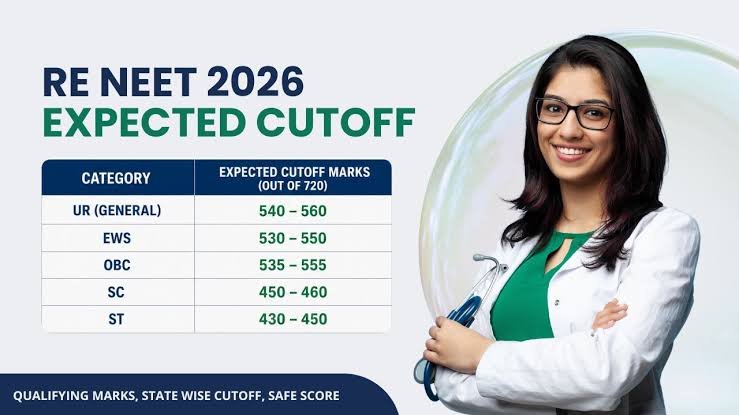
The National Eligibility cum Entrance Test (NEET) serves as a crucial stepping stone for students aspiring to pursue medical and dental courses in India. The cut-off marks are pivotal as they determine the minimum scores required for candidates to be eligible for admission. For NEET 2026, the anticipated category-wise cut-off marks have been structured to reflect the changing dynamics of the examination and the competitive landscape.
Based on historical data and anticipated trends, the expected cut-off marks for NEET 2026 are anticipated to be categorized as follows:
- General Category: 720-147
- OBC Category: 145-116
- SC Category: 145-113
- ST Category: 145-107
These cut-off scores are determined by a variety of factors including the overall performance of candidates, the number of available seats, and reservation policies in place. Each year, a panel evaluates these parameters to ensure that the cut-offs maintain rigor while also providing opportunities for deserving candidates across categories. The cut-off marks are also influenced by the absolute scores attained by candidates and the percentile scores associated with these marks.
Analyzing trends from previous years, it is evident that the cut-offs have fluctuated owing to the varying difficulty levels of the examination and changes in the pool of test-takers. For instance, in 2025, the cut-off for the General category saw a slight increase from the previous year, reflecting a higher overall performance. This data is vital for new applicants as it informs them of the competitiveness of NEET and strategically guides their preparation efforts.
Strategies for Meeting NEET Cut-Off Requirements
To successfully meet the NEET cut-off requirements, candidates must adopt effective study techniques and strategies tailored to their learning styles. Firstly, creating a comprehensive study plan that allocates ample time for each subject is essential. This plan should balance time between Physics, Chemistry, and Biology, prioritizing weaker areas while ensuring that stronger subjects are also consistently reviewed.
Utilizing the right study resources can significantly boost performance. NEET aspirants should consider a mix of NCERT textbooks and reference books known for their aptitude toward NEET topics. Online resources, including video lectures, mock tests, and NEET-specific apps, also provide valuable support. Regularly taking mock tests will help familiarize students with the exam format and timing, promoting effective time management skills during the actual exam.
Understanding the cut-off requirements specific to one’s category is crucial. Different categories have varying cut-off scores, and knowing these can help students tailor their preparations accordingly. For example, candidates belonging to reserved categories may have a slightly relaxed cut-off. This knowledge can instill a sense of confidence and clarity in the preparation process, allowing candidates to set realistic goals.
Furthermore, forming study groups can enhance learning experiences. Engaging with peers allows for discussion of challenging topics, sharing vital resources, and providing mutual motivation. Additionally, maintaining a healthy lifestyle, incorporating regular breaks, and practicing relaxation techniques can alleviate stress levels, enhancing focus and retention during study sessions.
Lastly, motivational insights play a crucial role in the preparation journey. Setting achievable milestones and celebrating small victories can boost morale. Joining NEET aspirant communities, participating in motivational talks, and routinely reminding oneself of the ultimate goal—becoming a healthcare professional—are strategies that can keep candidates focused and driven towards their NEET aspirations. By implementing these strategies, candidates can enhance their chances of achieving the necessary cut-off scores.