
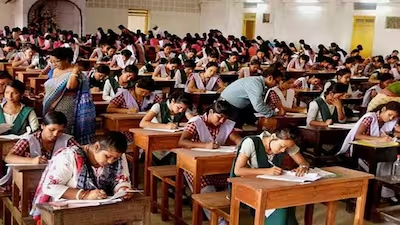
NEET-UG Retest The National Eligibility cum Entrance Test for Undergraduate (NEET-UG) is a pivotal examination for aspiring medical students in India. It serves as a gateway for admission to various undergraduate medical programs across the country, making it a critical milestone in the journey of many students aiming to pursue careers in medicine. NEET-UG not only tests the academic proficiency of candidates but also ensures that only the most qualified individuals gain entry into the medical field. Given the high stakes associated with this examination, the integrity and fairness of the test are of utmost importance.
In recent events, circumstances that necessitated a retest have emerged, prompting educational authorities to take pre-emptive actions to uphold the examination’s credibility. This decision comes in the wake of allegations of malpractice and security breaches that have cast doubts on the authenticity of previous test administrations. As a result, a retest for the NEET-UG is scheduled to take place on June 21, with enhanced security measures being implemented to prevent any potential irregularities.
The implementation of stricter protocols is being viewed as an essential step to ensure that all candidates have an equal opportunity to demonstrate their knowledge and skills in a secure environment. Such measures are crucial not only in restoring public confidence in the examination but also in maintaining the sanctity of the medical admission process. The importance of conducting a fair NEET-UG cannot be overstated, as it directly impacts the quality of medical education and healthcare in India. Thus, the forthcoming examination is being closely monitored to ensure that it is conducted without any hindrances or breaches of ethics.
Reasons for Enhanced Security Measures
In recent years, the integrity of medical entrance examinations, particularly the NEET-UG, has faced significant challenges due to various incidents of malpractice. Such events have raised concerns regarding the transparency and fairness of the examination process, prompting authorities to implement enhanced security measures. One key reason for the lockdown of paper setters is the necessity to mitigate the risks of question leakages and to safeguard the intellectual property associated with the exam preparation.
Past irregularities, including instances of collusion and distribution of unauthorized materials, have fueled the need for robust security protocols. These irregularities not only jeopardize the academic integrity of the exams but also compromise the opportunities for genuine candidates who aspire to pursue a medical career. The NEET-UG serves as a crucial gateway for aspiring medical students, and any breach in trust can have far-reaching implications for the healthcare sector and society at large.
Moreover, the enhanced security measures aim to bolster the confidence of stakeholders, including students, educational institutions, and regulatory bodies. By ensuring that paper setters are kept under strict supervision until the examination date, authorities aim to eliminate any possibilities of tampering or misconduct during the exam preparation phase. This proactive approach is intended to reinforce the sanctity of the examination process, thereby making it fairer and more trustworthy.
In addition, the broader implications of these measures extend to the overall educational framework. By upholding strict security standards, educational authorities can foster an environment of accountability and ethical practices in assessments, which are essential for maintaining the credibility of the medical profession. Ultimately, the lockdown of paper setters and the resultant heightened security serve as essential steps in preserving the integrity of the NEET-UG examination.
Impact on Paper Setters and Examination Process
The recent decision to place paper setters under lockdown until the NEET-UG retest on June 21 has significant implications for both the individuals involved and the broader examination process. This measure aims to enhance security and integrity, thereby ensuring a transparent testing environment that stakeholders can trust. For paper setters, this entails rigorous logistical arrangements, as they must prepare examination materials in a secured location without access to external distractions or potential influences. Such a tight security protocol can lead to increased pressure on the paper setters, requiring them to focus solely on crafting a fair assessment.
Moreover, the process of developing exam questions becomes more complex under lockdown conditions. With reduced opportunities for collaboration and consultation, paper setters may need to rely on their expertise and knowledge in isolation. This might also affect the diversity and innovation of the questions prepared, as external feedback and collaborative brainstorming are restricted. It raises questions about the overall quality of the examination papers and whether they adequately reflect the curriculum standards expected.
From the perspective of stakeholders, including educators, students, and parents, these changes could generate mixed reactions. While the intention is to maintain a high level of examination integrity, concerns may arise regarding the pressures placed on paper setters and the resultant quality of the assessments. Students, in particular, are keen on receiving an assessment that accurately measures their knowledge and skills without being influenced by malpractices. Hence, it is critical that despite these lockdown measures, the evaluation process remains equitable and aligns with the educational standards expected by various educational bodies.
Conclusion and Future Outlook for NEET-UG Exams
The recent implementation of stricter security measures for the NEET-UG exam represents a significant shift in the administration of medical entrance examinations in India. As we have explored, the placement of paper setters under lockdown until the examination date is a strategic response to enhance the integrity and confidentiality of the exam process. This action is anticipated to prevent leaks and ensures that the examination can be conducted with a higher degree of security than in previous years.
Looking ahead, the tightening of security protocols may lead to a more reliable and fair evaluation for candidates, fostering trust among stakeholders including students, educators, and parents. The implications of these intensified security measures are manifold. For one, this could deter potential attempts at malpractice, thereby promoting a culture of honesty in examination settings. Furthermore, a successful implementation of these measures may inspire similar security practices across other competitive exams in India, creating a standard that prioritizes exam integrity.
Additionally, the response to these heightened security protocols will likely shape future policies regarding the administration of the NEET-UG exams and potentially other standardized tests. Authorities may draw lessons from this experience, evaluating the effectiveness of current protocols and exploring the introduction of innovative technologies to further safeguard examination environments. This may include biometric verification, enhanced surveillance methods, and even digital monitoring solutions, which could revolutionize how examinations are conducted.
In conclusion, the current developments regarding NEET-UG exam security not only address immediate concerns but also set a precedent for future examination processes in India. As we move forward, it will be crucial to monitor the outcomes of these changes and their long-term effects on the aspiring medical community and educational integrity in the country.