






Preparing for the National Eligibility cum Entrance Test (NEET) is a challenging yet rewarding journey for aspiring medical students. Every year, millions of candidates compete for a limited number of seats in prestigious medical colleges across India. In such a competitive environment, choosing the right NEET Study Material can significantly impact your preparation and final score.
Many students spend countless hours studying but fail to achieve their desired results because they use outdated resources or follow an ineffective study plan. The good news is that with the right study material, a strategic approach, and consistent effort, you can maximize your chances of success.
This comprehensive guide explores everything you need to know about selecting and utilizing the best NEET study material to strengthen your preparation and achieve your medical career goals.
Why NEET Study Material Matters
The quality of your study material directly influences your understanding of concepts, problem-solving abilities, and exam performance.

Good NEET study material helps students:
- Understand concepts clearly
- Practice a variety of questions
- Improve speed and accuracy
- Strengthen weak areas
- Build confidence before the exam
- Stay aligned with the latest syllabus and exam pattern
Without proper resources, even hardworking students may struggle to cover the syllabus effectively.
Understanding the NEET Exam Structure
Before selecting study material, it is important to understand the exam format.
Subjects Covered
NEET consists of three major subjects:
- Physics
- Chemistry
- Biology
Marks Distribution
| Subject | Questions | Marks |
|---|---|---|
| Physics | 45 | 180 |
| Chemistry | 45 | 180 |
| Biology | 90 | 360 |
| Total | 180 | 720 |
Since Biology carries the highest weightage, students should allocate sufficient time to mastering this subject while maintaining a balanced approach toward Physics and Chemistry.
Essential Components of NEET Study Material
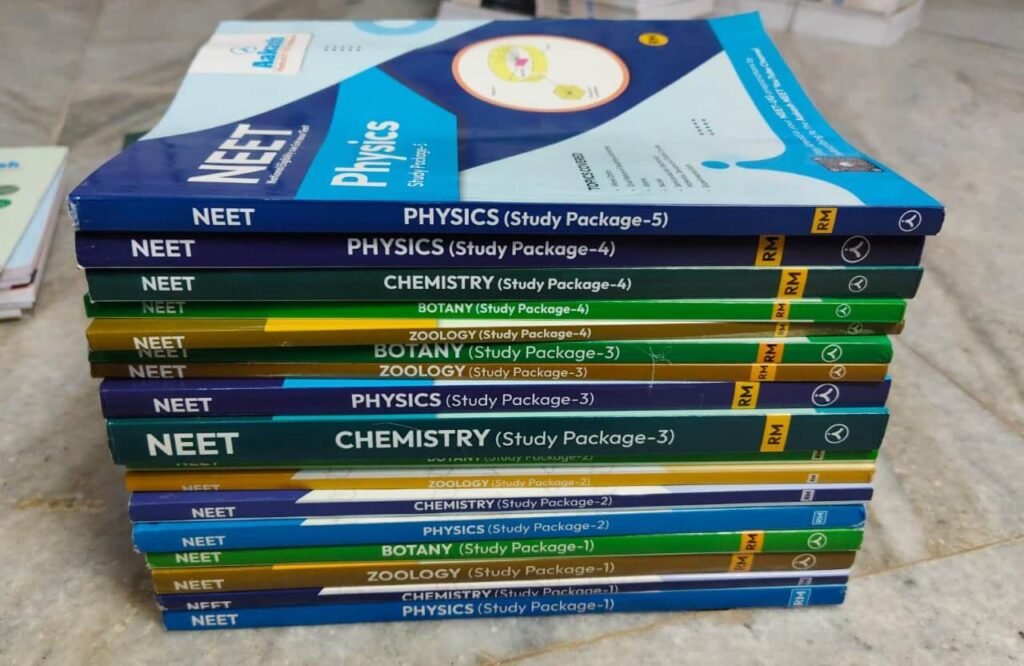
Not all study resources are equally useful. Effective NEET study material should include the following components.
Comprehensive Theory Notes
Theory notes help build conceptual understanding.
They should:
- Cover the complete syllabus
- Explain concepts clearly
- Include diagrams and illustrations
- Highlight important formulas
- Provide chapter summaries
Practice Question Banks
Question banks help students apply theoretical concepts.
Look for materials that include:
- Topic-wise questions
- Previous year questions
- Assertion-reason questions
- MCQs with explanations
- Difficulty-based practice sets
Mock Tests
Mock tests are crucial because they simulate the actual exam environment.
Benefits include:
- Time management improvement
- Accuracy enhancement
- Performance analysis
- Stress reduction
- Confidence building
Revision Notes
Quick revision notes are useful during the final months before NEET.
These notes should contain:
- Important formulas
- Key reactions
- Biological processes
- Frequently asked concepts
- Quick facts and shortcuts
Best Sources of NEET Study Material
NCERT Textbooks
NCERT books are considered the foundation of NEET preparation.
Biology NCERT
Biology NCERT is arguably the most important resource for NEET aspirants.
Why it matters:
- Direct questions often appear from NCERT
- Covers fundamental concepts
- Easy-to-understand language
- Exam-oriented content
Chemistry NCERT
Chemistry NCERT provides:
- Strong theoretical foundations
- Important reactions
- Organic chemistry concepts
- Inorganic chemistry details
Physics NCERT
Although additional references may be needed, Physics NCERT helps establish basic conceptual understanding.
Reference Books
Once NCERT concepts are clear, students can move to advanced books.
Physics Books
Some popular choices include:
- Concepts of Physics
- Objective Physics
- NEET-focused Physics guides
Chemistry Books
Helpful options include:
- Physical Chemistry practice books
- Organic Chemistry concept guides
- Objective Chemistry question banks
Biology Books
Recommended resources often provide:
- Detailed explanations
- Additional MCQs
- Diagram practice
- Chapter-wise tests
Subject-Wise NEET Study Material Strategy
Biology Preparation
Biology accounts for 50% of the total marks.
Focus Areas
Key topics include:
- Human Physiology
- Genetics
- Biotechnology
- Ecology
- Plant Physiology
- Reproduction
Study Approach
- Read NCERT repeatedly
- Highlight important lines
- Create flashcards
- Practice MCQs daily
- Revise diagrams regularly
Chemistry Preparation
Chemistry requires both conceptual understanding and memorization.
Physical Chemistry
Focus on:
- Numerical practice
- Formula application
- Problem-solving techniques
Organic Chemistry
Key strategies:
- Understand reaction mechanisms
- Practice conversions
- Revise named reactions
Inorganic Chemistry
Success depends on:
- Regular revision
- NCERT memorization
- Short notes preparation
Physics Preparation
Physics can be challenging for many students.
Important Areas
Topics frequently tested include:
- Mechanics
- Electricity
- Magnetism
- Modern Physics
- Optics
- Thermodynamics
Effective Strategy
- Learn formulas thoroughly
- Solve numerical problems daily
- Analyze mistakes carefully
- Practice time-bound questions
Digital NEET Study Material
Technology has transformed exam preparation.

Online Learning Platforms
Online resources provide:
- Video lectures
- Doubt-solving sessions
- Chapter-wise tests
- Progress tracking
Mobile Apps
Many NEET preparation apps offer:
- Daily quizzes
- Mock tests
- Flashcards
- Revision tools
PDF Notes
Digital notes provide flexibility and convenience.
Advantages include:
- Easy access
- Quick search functionality
- Portable study options
- Fast revision
How to Create Personalized NEET Notes
Creating your own notes improves retention and understanding.
Benefits of Self-Made Notes
- Better memory recall
- Faster revision
- Personalized learning
- Identification of weak areas
What to Include
Your notes should contain:
- Important concepts
- Formulas
- Reactions
- Diagrams
- Short tricks
- Common mistakes
Importance of Previous Year Question Papers
Previous year papers help students understand exam trends.
Advantages
They help identify:
- Frequently asked topics
- Difficulty level
- Question patterns
- Time management requirements
Recommended Practice Method
- Complete the syllabus first
- Attempt papers under exam conditions
- Evaluate performance honestly
- Revise weak topics
- Reattempt challenging questions
Mock Tests and Their Role in NEET Success
Many toppers credit mock tests for their success.
Why Mock Tests Matter
Mock tests help:
- Increase speed
- Improve accuracy
- Build exam temperament
- Identify knowledge gaps
Ideal Frequency
Students can follow this schedule:
Early Preparation Phase
- One test every two weeks
Mid Preparation Phase
- One test every week
Final Preparation Phase
- Two to three tests per week
Common Mistakes While Choosing NEET Study Material
Students often make avoidable mistakes that hinder preparation.

Using Too Many Resources
Collecting multiple books creates confusion and wastes time.
Ignoring NCERT
Many aspirants underestimate NCERT despite its importance.
Lack of Revision Material
Studying without proper revision resources reduces retention.
Not Practicing Enough Questions
Concepts alone are insufficient without application.
Sample Daily Study Plan Using NEET Study Material
Morning Session
- Biology theory
- NCERT reading
- Diagram practice
Afternoon Session
- Chemistry concepts
- Numerical practice
- Revision
Evening Session
- Physics problem solving
- Formula revision
- Topic tests
Night Session
- Quick revision
- Flashcards
- Error analysis
Following a structured routine ensures consistent progress.
Tips to Maximize the Use of NEET Study Material
Stay Consistent
Consistency beats intensity in long-term preparation.
Follow a Schedule
A study timetable helps maintain discipline.
Revise Frequently
Regular revision prevents forgetting previously learned concepts.
Analyze Mistakes
Every mistake is an opportunity to improve.
Focus on Concept Clarity
Understanding concepts is more effective than rote memorization.
Final Three-Month Strategy
The last three months are crucial.
Month 1
- Complete syllabus revision
- Strengthen weak topics
Month 2
- Intensive mock tests
- Performance analysis
Month 3
- Final revision
- Formula review
- High-yield topics practice
Avoid learning completely new concepts during the final weeks.
Conclusion
Selecting the right NEET Study Material is one of the most important decisions in your preparation journey. High-quality resources, combined with disciplined study habits, regular revision, and consistent practice, can dramatically improve your performance.
Remember that success in NEET does not depend on studying from dozens of books. Instead, it comes from mastering a few reliable resources, understanding concepts thoroughly, and practicing regularly.
Start building your preparation strategy today, choose the best NEET study material, and move one step closer to securing a seat in your dream medical college. Stay focused, stay consistent, and keep working toward your goal. Your future as a medical professional begins with the choices you make now.