





Getting a good score in NEET is a significant achievement, but it is only half the journey toward becoming a doctor. The next and equally important step is NEET Counseling, the process through which qualified candidates secure admission to MBBS, BDS, AYUSH, and other medical courses across India.
Every year, lakhs of students appear for the National Eligibility cum Entrance Test (NEET), but many candidates lose opportunities due to a lack of understanding about the counseling process. Knowing how NEET Counseling works can help students make informed decisions, choose the right colleges, and maximize their chances of admission.
This comprehensive guide covers everything you need to know about NEET Counseling, including eligibility, registration, seat allotment, counseling rounds, required documents, and expert tips for success.
What is NEET Counseling?
NEET Counseling is the centralized admission process conducted after the declaration of NEET results. Through this process, eligible candidates are allotted seats in medical and dental colleges based on:
- NEET rank
- Category
- Reservation criteria
- Availability of seats
- Candidate preferences
The counseling process ensures a fair and transparent allocation of seats in government and private medical institutions.
Why is NEET Counseling Important?
Many students focus entirely on achieving a high NEET score but underestimate the importance of counseling.

NEET Counseling is important because it:
- Determines final college admission
- Allows students to choose preferred colleges
- Provides access to government and private institutions
- Ensures seat allocation based on merit
- Helps students explore multiple admission opportunities
Even candidates with moderate scores can secure excellent colleges through strategic counseling decisions.
Types of NEET Counseling
NEET Counseling is conducted at two levels:
All India Quota (AIQ) Counseling
The Medical Counseling Committee (MCC) conducts counseling for:
- 15% All India Quota seats
- Central universities
- Deemed universities
- AIIMS institutions
- JIPMER institutions
- ESIC colleges
Students from all states can participate in AIQ counseling.
State Quota Counseling
Each state conducts separate counseling for:
- 85% state quota seats
- Government medical colleges
- State private medical colleges
The counseling authority varies from state to state.
Eligibility Criteria for NEET Counseling
Candidates must satisfy specific requirements before participating.
Basic Eligibility
Students must:
- Qualify NEET examination
- Meet minimum qualifying percentile
- Complete Class 12 with Physics, Chemistry, and Biology
- Fulfill age requirements
- Meet state-specific eligibility conditions
Qualifying Percentile
Generally:
| Category | Qualifying Percentile |
|---|---|
| General | 50th Percentile |
| OBC/SC/ST | 40th Percentile |
| General-PwD | 45th Percentile |
The cutoff may vary each year.
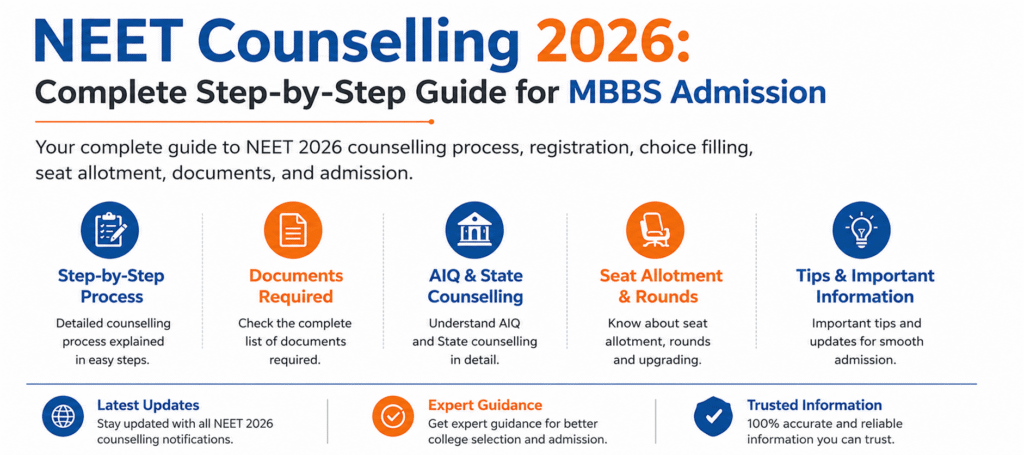
NEET Counseling Process Step-by-Step
Understanding the complete process can prevent mistakes and improve admission chances.
Step 1: Registration
Candidates must register on the official counseling portal.
Information required includes:
- NEET roll number
- Application number
- Personal details
- Contact information
After registration, students create login credentials.
Step 2: Payment of Counseling Fee
Candidates must pay the required counseling fee online.
Payment options usually include:
- Debit card
- Credit card
- Net banking
- UPI
Fee structures vary depending on the counseling authority and category.
Step 3: Choice Filling
Choice filling is one of the most critical stages of NEET Counseling.
Students can select:
- Medical colleges
- Dental colleges
- AYUSH institutions
- Preferred courses
Tips for Choice Filling
- Prioritize dream colleges first
- Research previous-year cutoffs
- Include safe options
- Fill maximum available choices
- Review selections carefully
Step 4: Choice Locking
After filling preferences, candidates must lock their choices before the deadline.
Failure to lock choices may result in automatic submission or cancellation depending on counseling rules.
Step 5: Seat Allotment
The counseling authority allocates seats based on:
- NEET rank
- Category
- Reservation
- Seat availability
- Candidate preferences
Results are published online.
Step 6: Reporting to Allotted College
Candidates receiving a seat must report to the assigned institution within the specified timeframe.
They must:
- Verify documents
- Pay admission fees
- Complete formalities
Failure to report may lead to cancellation of the allotted seat.
NEET Counseling Rounds
NEET Counseling generally consists of multiple rounds.
Round 1
This is the initial seat allotment round.
Features include:
- Fresh registration
- Choice filling
- Seat allocation
Students can accept or upgrade seats.
Round 2
Vacant seats from Round 1 are filled during Round 2.
Students may:
- Participate again
- Upgrade colleges
- Obtain new allotments
Competition may increase for preferred institutions.
Mop-Up Round
The Mop-Up Round fills remaining vacant seats.
It is especially useful for students who:
- Did not get a seat earlier
- Want better options
- Missed previous allotments
Stray Vacancy Round
This is the final stage of admission.
Colleges fill any leftover seats according to established guidelines.
Documents Required for NEET Counseling
Document verification is a mandatory step.
Students should keep multiple copies ready.
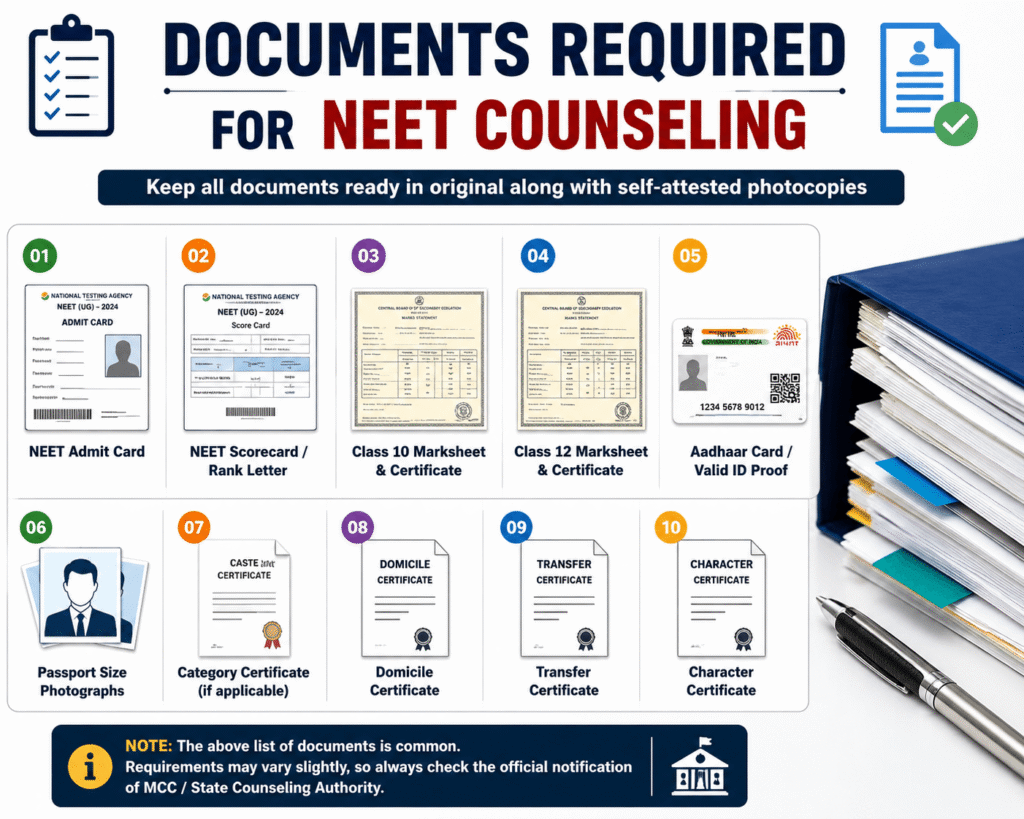
Essential Documents
Academic Documents
- Class 10 mark sheet
- Class 12 mark sheet
- Class 12 passing certificate
NEET Documents
- NEET scorecard
- NEET admit card
- Rank letter
Identity Documents
- Aadhaar Card
- Passport
- Voter ID
- PAN Card
Additional Documents
- Passport-size photographs
- Category certificate (if applicable)
- PwD certificate (if applicable)
- Domicile certificate
- Transfer certificate
- Character certificate
Always verify the latest document requirements before counseling.
Reservation Policies in NEET Counseling
Reservation plays a crucial role in seat allocation.
Common reservation categories include:
- SC
- ST
- OBC
- EWS
- PwD
Different states may have additional reservation policies.
Students should ensure their certificates are valid and up-to-date.
How Seat Allotment Works
Many candidates wonder how the system decides college allocation.
The seat allotment algorithm considers:
- Candidate rank
- Category
- Reservation status
- Choice preference order
- Seat availability
Therefore, strategic choice filling significantly affects final outcomes.
Common Mistakes During NEET Counseling
Avoiding these errors can improve admission chances.
Not Researching Colleges
Many students select colleges without understanding:
- Infrastructure
- Faculty
- Internship opportunities
- Hospital exposure
Research thoroughly before filling choices.
Filling Too Few Choices
Limiting options can reduce admission chances.
Always include:
- Dream colleges
- Moderate options
- Safe colleges
Missing Deadlines
Counseling schedules are strict.
Missing deadlines can result in:
- Seat loss
- Registration cancellation
- Missed opportunities
Maintain a counseling calendar.
Ignoring State Counseling
Many students participate only in AIQ counseling.
State counseling often provides additional opportunities and should not be ignored.
Tips to Succeed in NEET Counseling
Strategic planning can make a significant difference.
Analyze Previous Year Cutoffs
Study trends for:
- Government colleges
- Private colleges
- State quota seats
- AIQ seats
This helps create realistic expectations.
Keep Multiple Options Ready
Do not rely on a single institution.
Prepare a comprehensive list of:
- Government colleges
- Semi-government colleges
- Private colleges
Stay Updated
Official notifications may change timelines.
Regularly monitor:
- Counseling portals
- Official announcements
- Seat matrix updates
Seek Expert Guidance
Professional counseling guidance can help students:
- Understand cutoffs
- Make informed choices
- Avoid costly mistakes
Government vs Private Medical Colleges
During NEET Counseling, students often compare government and private institutions.
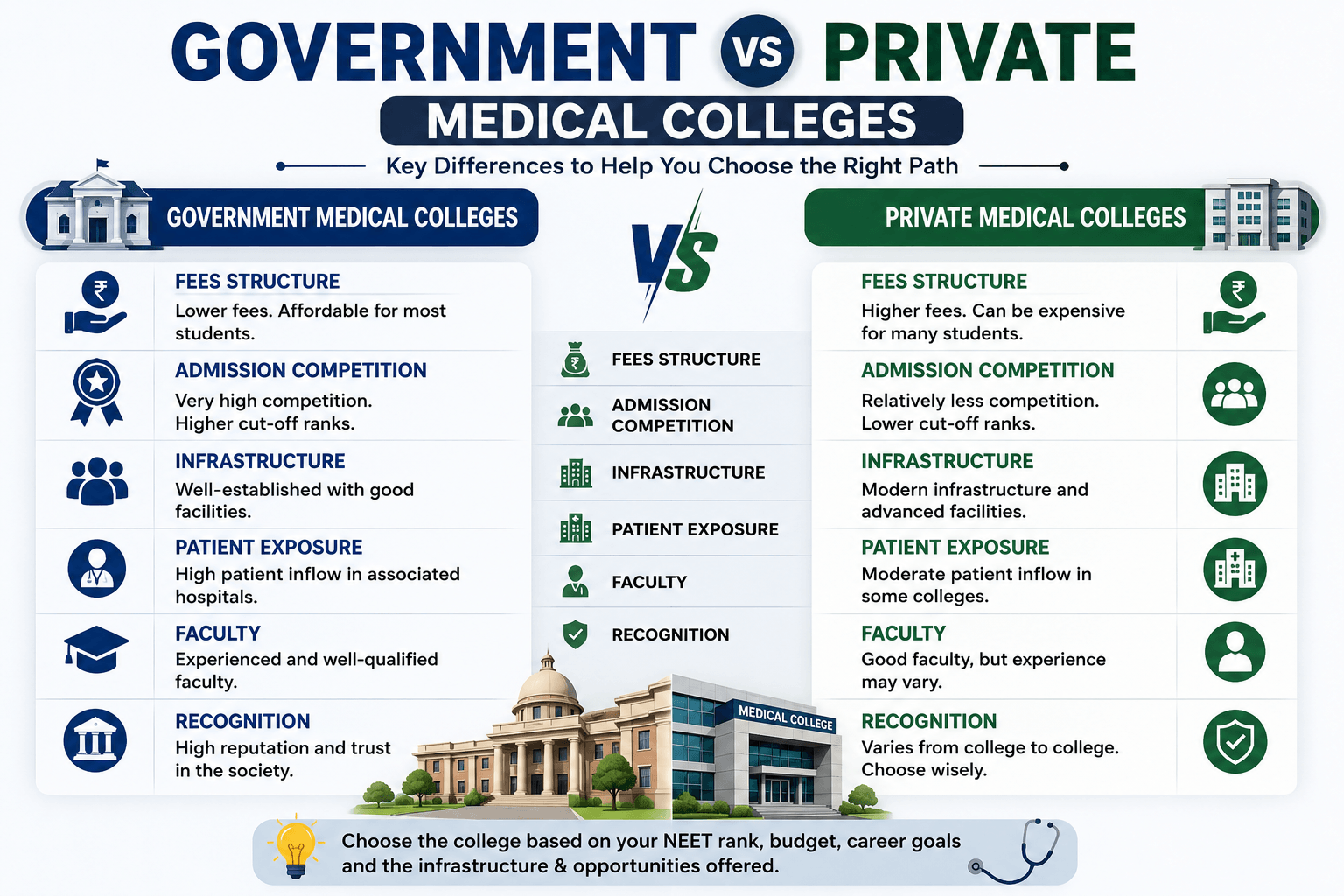
Government Medical Colleges
Advantages:
- Lower fees
- High patient exposure
- Strong academic reputation
Challenges:
- Higher competition
- Limited seats
Private Medical Colleges
Advantages:
- More seat availability
- Modern infrastructure
- Additional admission opportunities
Challenges:
- Higher tuition fees
- Variable fee structures
Students should consider both options based on rank and budget.
NEET Counseling for MBBS, BDS, and AYUSH Courses
NEET scores are accepted for various healthcare programs.
MBBS
The most preferred course among NEET aspirants.
BDS
Ideal for students interested in dentistry and oral healthcare.
AYUSH Courses
Includes:
- BAMS
- BHMS
- BUMS
- BSMS
These programs provide alternative healthcare career opportunities.
Future Opportunities After Medical Admission
Once admission is secured through NEET Counseling, students can pursue careers in:
- General Medicine
- Surgery
- Pediatrics
- Dermatology
- Radiology
- Orthopedics
- Cardiology
- Public Health
Medical education opens pathways to both national and international opportunities.
Conclusion
NEET Counseling is the bridge between qualifying NEET and securing admission to a medical college. While achieving a good score is important, understanding the counseling process is equally essential. From registration and choice filling to seat allotment and document verification, every step requires careful planning and attention.
Students who stay informed, analyze cutoffs, fill choices wisely, and meet all deadlines significantly improve their chances of getting into their preferred medical college.
If you are preparing for medical admissions, start researching colleges early, keep all documents ready, and follow official counseling updates regularly. A well-planned NEET Counseling strategy can turn your dream of becoming a doctor into reality.