
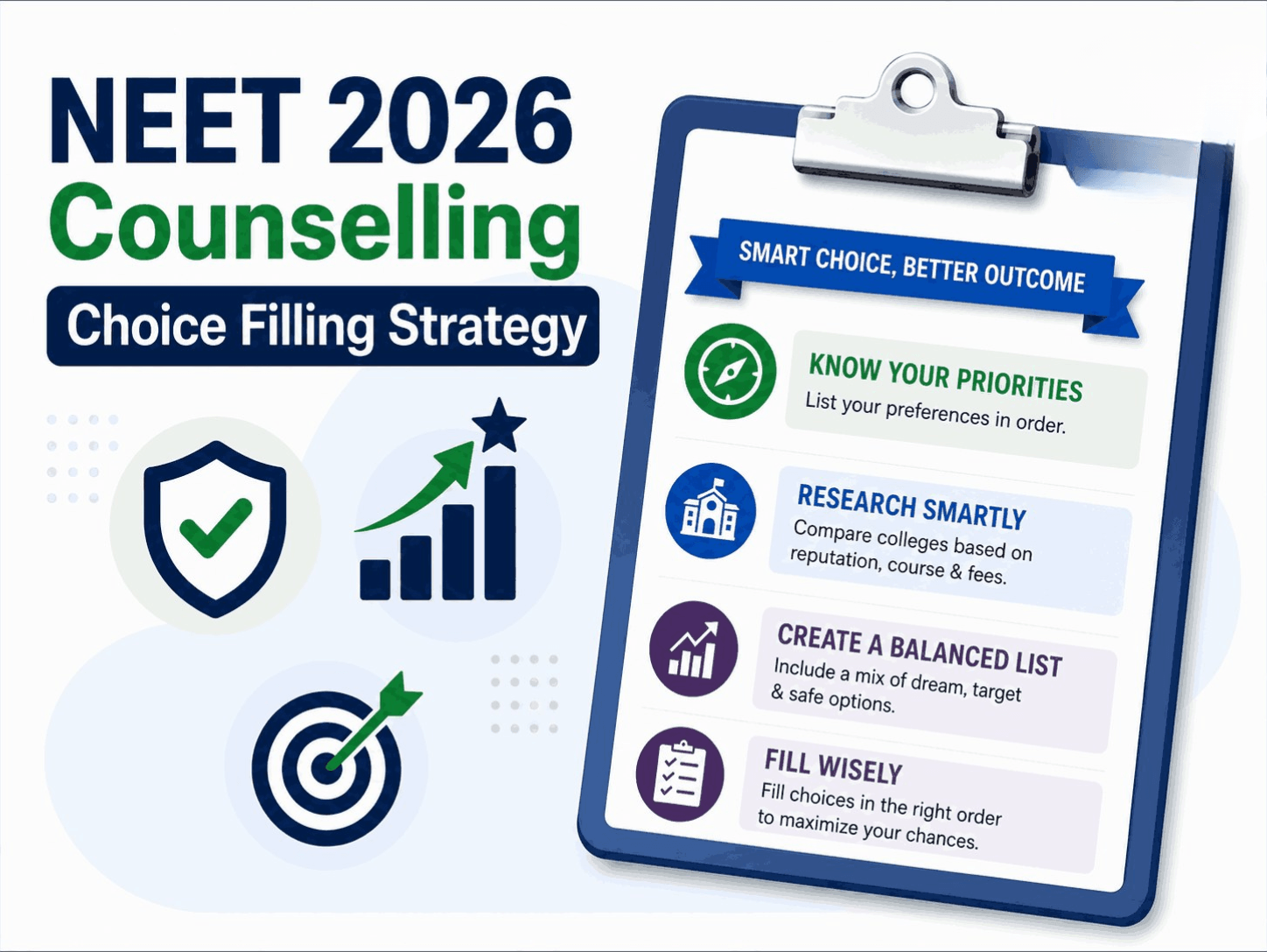
The NEET counselling process for 2026 is a pivotal stage in the journey of aspiring medical students, facilitating their entry into medical colleges across the country. The counselling process consists of several key stages that require careful attention to detail and timely actions. Understanding these stages is essential for candidates aiming to secure a seat in their desired institution.
The first stage is the registration, where candidates need to provide essential details and create a login account on the official NEET counselling portal. This registration process is crucial, as it allows the candidates to access all subsequent stages of the counselling process. It is advisable for candidates to ensure that their data is accurate to avoid issues during the later stages of counselling.
Following registration, candidates will proceed to the choice filling phase. This step is significant as it involves selecting the preferred colleges and courses. Candidates must carefully evaluate their options, taking into consideration factors such as college reputation, course availability, and personal preferences. This stage often requires research and guidance, as the choices made here will directly influence their future in the medical field.
The next critical phase is seat allocation, where the selections made during the choice filling process are evaluated against available seats. This process uses a merit-based system, and candidates are allocated seats based on their NEET scores and overall preferences. Understanding this allocation process can provide insights into how well they performed compared to their peers and the competitiveness of their chosen colleges.
After seat allocation, candidates must report to the allotted college for document verification and admission formalities. This step is essential as it formally secures their place in the college and course they have been allocated. Missing this step can result in losing the seat, making it vital for candidates to adhere to the stipulated timeframes.
Key Dates for NEET Counselling 2026
The NEET Counselling 2026 process is a critical phase for students aspiring to secure admission in various medical and dental colleges across India. Understanding the key dates associated with this process is essential for timely registration and informed choice filling. The important timeline for Round 1 of counselling will begin with the registration process.
Registration for NEET Counselling 2026 is expected to commence in the second week of June. Students must ensure that they are prepared to submit their applications as soon as the registration opens. Following the registration period, candidates will have a stipulated time frame of about a week to complete their choice filling. This choice filling window is crucial, as it allows students to select their preferred colleges and courses based on their NEET scores.
Once the choice filling has concluded, the authorities will take a few days to process the options selected by candidates. The announcement of the results for Round 1 is projected to occur by the end of June. This phase of the counselling process is particularly significant, as it will determine the allocation of seats to candidates based on merit and choice preferences.
It is imperative for students to remain aware of the nuances surrounding late registration. Missing the deadline for initial registration may not only affect their chances for Round 1 but also for subsequent rounds of counselling. In addition, late registrants may face challenges such as limited choices and potential delays in receiving their results.
In conclusion, staying informed about the key dates for NEET Counselling 2026 is essential for every student aiming for admission. Proper adherence to the timeline ensures that candidates maximize their opportunities during the choice filling process and position themselves effectively for successful outcomes in the counselling rounds.
Step-by-Step Guide to Register for Round 1 Choice Filling
Registration for the Round 1 choice filling window in NEET counselling 2026 is a vital step for all candidates aiming for admission into medical colleges. This process involves several key steps that must be followed meticulously to ensure a smooth registration experience.
Firstly, candidates need to gather essential documents required for registration. Typically, this includes a valid identity proof, NEET scorecard, and any educational certificates. Ensuring that all documents are ready will facilitate a faster registration process. Once the documents are in order, candidates should visit the official NEET counselling website.
Upon arriving at the website, the first task is to create an account. This requires the candidate to provide a valid email address and mobile number, which will be used for communication throughout the counselling process. After registering, candidates will receive a confirmation link via email to verify their account.
After successfully verifying the account, candidates can log in to the system. Here, they will need to fill in their personal details, including name, date of birth, and category. Accuracy is crucial at this stage, as any misinformation can lead to complications later in the registration process.
Once the personal details are correctly filled, candidates will move on to selecting their preferences for colleges and courses. It’s advisable to thoroughly research the available options before making selections, as this will impact future admission outcomes. Candidates should take their time to prioritize their preferences according to their aspirations and merit.
As candidates navigate through the online interface, they may encounter common issues, such as slow loading times or difficulties in selecting preferences. If issues arise, it is recommended to refresh the page or try using a different browser. In case of persistent problems, reaching out to the technical support team can provide assistance.
In conclusion, the registration process for the Round 1 choice filling window is systematic and requires careful attention to detail. By following this step-by-step guide and ensuring all prerequisites are met, candidates can complete their registration efficiently, setting a solid foundation for their further steps in NEET counselling.
Tips for Effective Choice Filling
When navigating NEET counselling, filling in your choices effectively is crucial for securing a seat in a suitable medical college. Start by thoroughly understanding the college rankings and the courses they offer. Rankings can give you insights into the reputation and quality of education provided, which can significantly influence your future career in medicine.
Next, consider the various medical branches available and assess your interest. It’s essential to have a clear understanding of each branch and its career prospects. For instance, while some may gravitate towards popular fields like surgery or pediatrics, others might find their passion in less conventional areas such as radiology or pathology. Researching these different branches will aid in making an informed choice, aligning your selection with both your interests and aspirations.
It is also advisable to incorporate backup choices in your list. In any competitive arena such as NEET, there is an inherent unpredictability in securing a preferred seat. By selecting backup options—colleges or branches that you find acceptable—you increase your chances of being allocated a seat. This approach ensures that you do not end up with no choice at all if your top preferences are unattainable.
Prioritizing your selections is another key strategy. Rank your choices based on your personal preferences, considering factors such as college reputation, location, faculty, and your career goals. It helps to make a list of what is non-negotiable for you in a medical institution and weigh these against each option available. Additionally, discussing your choices with peers or mentors can provide valuable insights that you might not have considered.
In conclusion, effective choice filling during NEET counselling requires careful analysis and strategic planning. By understanding the rankings, considering various medical branches, ensuring backup options, and prioritizing based on personal preferences, candidates can improve their likelihood of a successful outcome in the counselling process.