
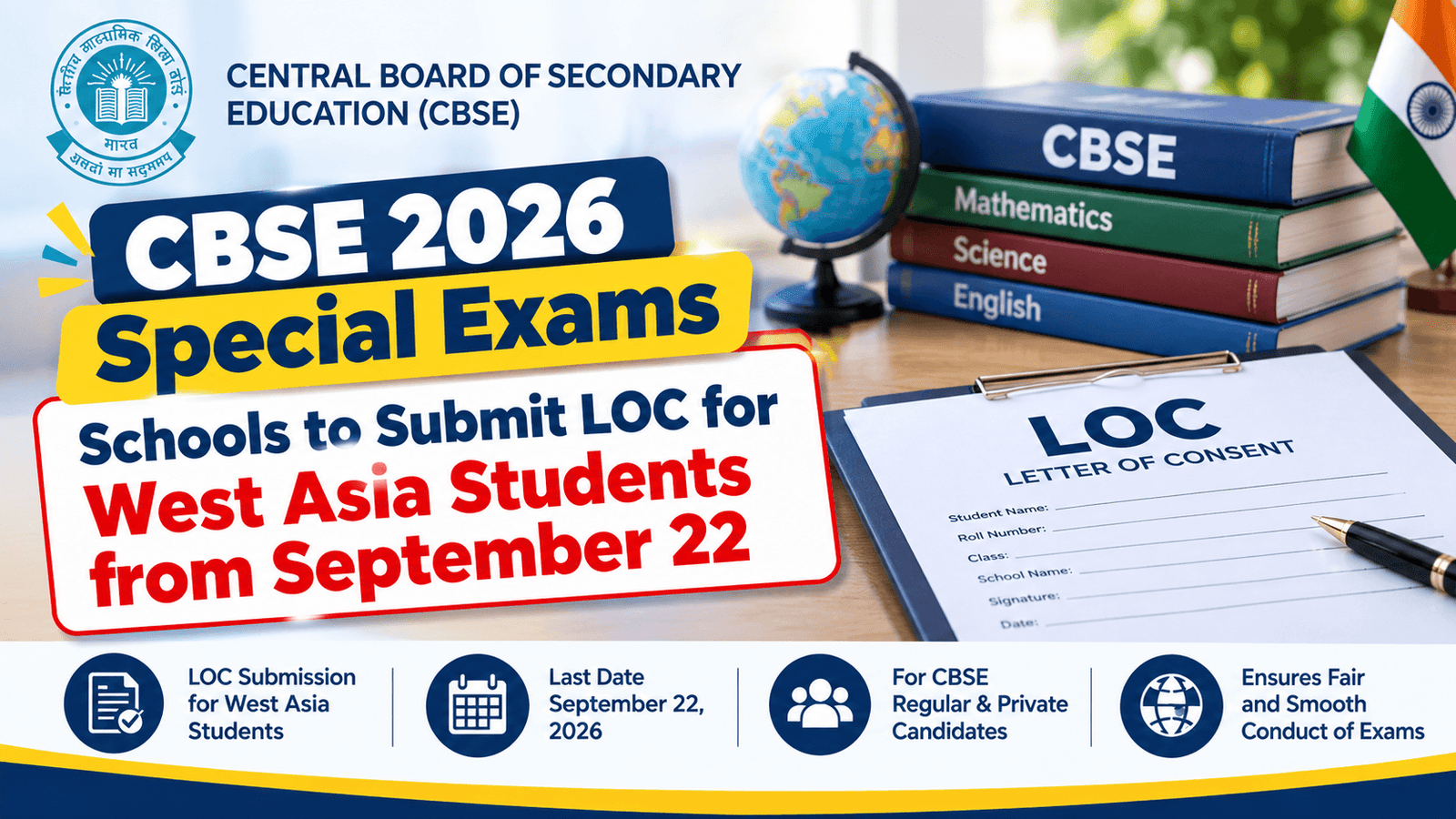
This initiative aims to address the challenges faced by these students by providing a flexible assessment format that accommodates different time zones and educational backgrounds. The Special Exams include a revised exam structure, subject options aligned with practical skills, and specific instructions to support candidates. Designed to enhance educational accessibility, these exams ensure that all students, regardless of their geographical location, have equitable opportunities to demonstrate their capabilities. This blog post delves into the key features, eligibility criteria, and preparation resources related to the CBSE Class 12 Special Exams, helping students navigate this unique educational initiative.The Central Board of Secondary Education (CBSE) has announced the introduction of Special Exams for Class 12 in 2026, which is a significant development, particularly for students residing in West Asian countries. This initiative is aimed at addressing the unique challenges faced by expatriate students, ensuring that they have access to the same educational opportunities as their peers in India. The Special Exams are structured to accommodate varying time zones and diverse educational backgrounds, providing a more flexible assessment approach.
One of the primary reasons for this initiative is the recent increase in the number of Indian students living abroad, particularly in West Asian nations, where educational resources and support may be limited. The CBSE recognizes that traditional exam formats may not adequately reflect the capabilities of these students, who often juggle multiple responsibilities in their host countries. By introducing Special Exams, the CBSE aims to level the playing field, allowing these students to demonstrate their knowledge and skills effectively.
The target population for these Special Exams encompasses Indian expatriates and other students in West Asia who intend to pursue higher education either in India or internationally. By focusing on this demographic, the CBSE hopes to foster a sense of inclusivity and ensure that educational standards are upheld, irrespective of geographical barriers. The introduction of the Special Exams is expected to provide a more approachable avenue for students who may have encountered obstacles in their academic journey due to their expatriate status.
This initiative not only highlights the CBSE’s commitment to providing equitable education opportunities but also reinforces its recognition of the diverse contexts that students are part of. The Special Exams will serve as a crucial tool for improving educational accessibility for West Asian students, ultimately contributing to a more holistic understanding of academic performance on a global scale.
Key Features of the Special Exams
The CBSE Class 12 Special Exams 2026 have been introduced to provide additional opportunities for students, particularly those from West Asia. These exams are tailored to address the unique needs of these students by adjusting the standard examination format. The structure of the Special Exams allows for greater flexibility in both the subjects offered and the timing of the examinations, thus accommodating various educational backgrounds and circumstances.
One of the notable features of these exams is the revised exam format, which may include both subjective and objective types of questions. This change aims to ensure that students can showcase their knowledge effectively, catering to different learning styles. In contrast to the conventional board exams, which typically adhere to a rigid structure, the Special Exams are designed to be more inclusive and supportive.
The subjects offered in the Special Exams align closely with those in the standard curriculum but may allow for additional options based on student needs. This could potentially include vocational subjects that are more aligned with practical skills and job readiness. The board has emphasized the importance of providing these varied options to reflect the diverse interests and aspirations of students.
Special instructions have been established to guide students through the examination process, ensuring clarity and reducing anxiety. These include provisions for extra time for students with specific needs and a clear outline of the evaluation criteria. Importantly, any changes in the assessment methodology are aimed at fairness and relevance, further distinguishing these examinations from regular board assessments.
In summary, the CBSE Class 12 Special Exams 2026 are characterized by a more adaptable format, a broader range of subjects, and specific instructions designed to support students. These features represent not only a shift in examination strategy but also an enhancement of opportunities for students, particularly for those in unique educational contexts such as West Asia.
Eligibility Criteria and Registration Process
The Central Board of Secondary Education (CBSE) has set forth specific eligibility criteria for students who wish to register for the Class 12 Special Exams in 2026. These examinations are particularly aimed at providing opportunities for students, including those residing in West Asian countries. To be eligible, candidates must have completed Class 11 from a recognized institution following the CBSE guidelines.
Furthermore, students must be enrolled in a CBSE-affiliated school to sit for the Special Exams. This requirement ensures that the educational standards maintained by the board are met. It is also important to note that students who have previously appeared for their Class 12 board exams and wish to improve their scores are also eligible for these Special Exams.
The registration process for the CBSE Class 12 Special Exams is structured to facilitate students, particularly those who might face challenges in their locality. Students can begin their registration online through the official CBSE website. Important dates for registration typically begin in early January and conclude by the end of February, allowing ample time for students to prepare their documents and complete the application forms.
Required documentation includes the candidate’s previous examination scores, a passport-sized photograph, and other relevant educational certificates. Specifically for students from West Asian countries, additional documentation may be required to attest their residential status and eligibility. It is advisable for these students to consult their respective educational institutions for guidance on any unique requirements that may apply.
Moreover, students should remain informed about the specific guidelines provided by CBSE, ensuring adherence to the instructions for filling out forms and submitting required declarations. Awareness of these regulations is crucial for a smooth registration process and successful participation in the examinations.
Support and Resources for Students
Preparing for the CBSE Class 12 Special Exams requires a multifaceted approach, leveraging various support and resources available to students in West Asia. Educational institutions and the Central Board of Secondary Education (CBSE) have taken significant steps to assist students in their preparation efforts.
One of the primary resources available is the network of coaching centers specifically aimed at providing guidance for CBSE Class 12 examinations. These centers not only offer tailored lessons but also conduct mock tests that simulate the actual exam conditions. This helps students identify their strengths and weaknesses, allowing for focused study based on individual needs.
In addition to coaching centers, a wealth of online resources has emerged to support students. Numerous educational websites offer free materials, including sample papers, video lectures, and comprehensive study guides. These platforms allow students to learn at their own pace, making it easier to grasp difficult concepts. Webinars and online workshops conducted by experienced educators also provide students with valuable insights into effective study techniques and examination strategies.
Moreover, institutions are encouraged to foster an environment of open communication where students can seek help and advice from teachers. Regular interactions with faculty allow students to clarify doubts, understand the syllabus better, and gain motivation from educators who are invested in their success.
Ultimately, the collaborative efforts of various educational stakeholders, including schools, coaching centers, and online platforms, create a robust support system for students preparing for the CBSE Class 12 Special Exams. As students take advantage of these resources, they are empowered not just to succeed academically but also to build confidence in their abilities, paving the way for future opportunities.