





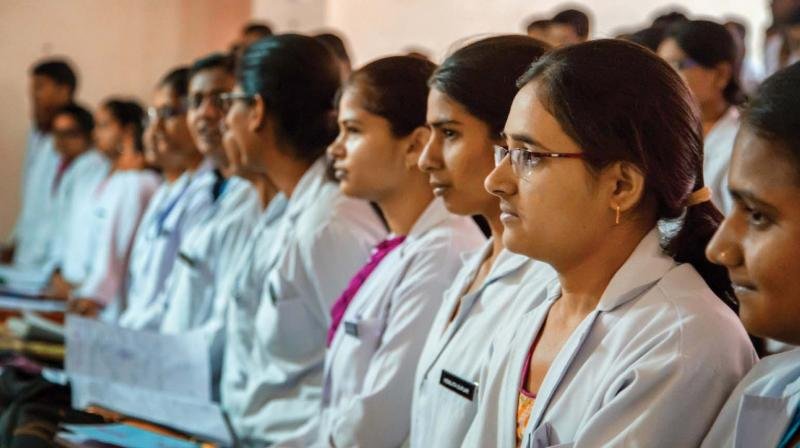
3,200 New MBBS Seats : In recent times, the landscape of medical education in India has seen considerable changes, primarily driven by a pressing demand for more healthcare professionals. One of the most significant recent developments is the approval of 3,200 new MBBS seats. This increase is a response to the ever-growing need for qualified doctors across the country, which has been highlighted by the challenges faced during the COVID-19 pandemic. With a vast population and a healthcare system in need of expansion, this move aims to bolster the number of medical graduates available to serve in public and private healthcare sectors.
The current state of medical education in India is defined by its rigorous and competitive nature. Prospective medical students undergo extensive preparation to secure a place in one of the country’s medical colleges. Despite this, the ratio of available seats to aspiring candidates has historically been skewed, leaving many qualified students without the opportunity to pursue a medical career. Government initiatives, therefore, have focused on expanding this educational infrastructure to accommodate a growing number of students, bridging the gap between demand and availability.
Central to these developments is the role of the National Medical Commission (NMC), the regulatory body responsible for governing medical education and practice in India. The NMC’s mandate includes accrediting medical schools, setting curriculum standards, and ensuring the quality of medical education and training. The approval of additional MBBS seats is a significant decision, as it reflects the commission’s commitment to addressing the shortages in the healthcare workforce.
The approval of these new seats is seen as a crucial step towards achieving a more robust healthcare system. It is expected to enhance the capacity of medical institutions to produce more physicians, which is essential for improving healthcare delivery and access, particularly in underserved regions. However, this development also brings to the forefront several challenges, including the need for adequate faculty, infrastructure, and resources to maintain educational standards.
NMC’s Reversal on Hiring New Faculty: Implications and Criticisms
The National Medical Commission (NMC) recently approved an additional 3,200 New MBBS Seats, an announcement that initially brought optimism to India’s medical education sector. However, this enthusiasm was short-lived as the NMC simultaneously decided not to hire new faculty to match the increased student intake. This decision has sparked significant debate and criticism from a variety of stakeholders, including medical institutions, students, and healthcare experts.
One of the primary reasons behind the NMC’s reversal on hiring new faculty appears to be logistical and financial constraints. Expanding faculty numbers would require a considerable investment in recruitment, salaries, and infrastructure. The NMC might also face strategic constraints, such as the lack of adequate candidates meeting the required qualifications and experience, which poses a challenge to recruiting effective educators.
Criticism from medical institutions revolves around the potential decline in educational quality due to the faculty shortfall. Faculty already burdened with an existing student load may find it increasingly difficult to provide personalized and effective instruction. Overworked faculty members could inadvertently compromise the rigor and thoroughness of education, potentially impacting the competence of future medical graduates. Students, on their part, have expressed concerns about receiving a diminished learning experience, which might not prepare them adequately for their professional careers.
Comparative examples shed light on the broader implications of this decision. For instance, countries like the United States and the United Kingdom have stringent faculty-to-student ratios to ensure high-quality medical education. These nations emphasize the importance of matching faculty numbers with student intake to maintain educational standards. India’s deviation from this approach may place its medical education system at a disadvantage when compared to global standards.
In light of these criticisms, the reversal on hiring new faculty, despite the addition of MBBS seats, poses significant questions about the future of medical education in India. Addressing these concerns is crucial for maintaining the quality and effectiveness of medical training, crucial for producing competent and skilled healthcare professionals.
Challenges and Opportunities: Balancing Quantity and Quality in Medical Education
The National Medical Commission’s (NMC) decision to increase the number of MBBS seats by 3,200 presents both significant challenges and opportunities for medical education in India. While this move aims to address the growing demand for healthcare professionals, it simultaneously raises concerns about the ability to maintain high educational standards. Striking a balance between the quantity of medical graduates and the quality of their education is crucial to the future of India’s healthcare system.
Read More : 3,200 New MBBS Seats
One primary challenge is ensuring that the influx of new students does not compromise the rigor and comprehensiveness of medical training. Larger class sizes can dilute the quality of education if not matched with adequate resources and faculty. This heightens the risk of producing underqualified professionals, which could have long-term consequences for patient care and the overall healthcare system. To mitigate these risks, investing in faculty development programs is imperative. Such programs can enhance the skills and competencies of existing faculty, preparing them to handle increased student populations effectively.
Exploring alternative models of medical education also presents promising opportunities. Hybrid learning approaches that combine traditional classroom instruction with online education can optimize resource utilization and expand access to quality education. Technological advancements such as telemedicine can also play a pivotal role. Through telemedicine, students gain practical experience in patient care even in remote or underserved regions, bridging gaps in traditional clinical training environments.
The potential solutions are multifaceted. Investing in state-of-the-art educational technology can provide interactive and engaging learning experiences, while partnerships with international medical institutions can introduce innovative teaching methodologies. Moreover, the government’s backing for continuous professional development and research initiatives can create a robust framework for ongoing improvement in medical education quality.
Balancing the quantitative expansion of medical seats with the qualitative aspect of education is a complex but achievable goal. By adopting a strategic, multi-pronged approach, India can not only meet the growing demand for healthcare professionals but also ensure that these professionals are well-equipped to deliver high standards of medical care. As the country navigates this path, the emphasis on both quality and quantity remains paramount for sustainable improvements in medical education.
Conclusion: The Way Forward for Indian Medical Education
The approval of 3,200 new MBBS seats signifies a pivotal moment in Indian medical education. However, the withdrawal of plans for new faculty by the National Medical Commission (NMC) complicates this expansion. This dual development presents both opportunities and challenges that necessitate concerted efforts to ensure the benefits of increased seats do not come at the expense of educational quality.
First and foremost, policy reforms are essential to create a balanced approach. The government and regulatory bodies like the NMC must prioritize stringent standards for faculty recruitment even as the number of MBBS seats increases. Comprehensive guidelines and transparent processes can enhance the quality of teaching staff, ensure consistent mentorship for students, and maintain high academic standards.
Increased funding is another critical area that requires immediate attention. Investments should not only focus on infrastructural development but also on qualitative aspects such as faculty training programs and research opportunities. Financial incentives could attract highly qualified professionals into the teaching domain, mitigating the current faculty shortage and refining the educational fabric.
Additionally, a continuous evaluation mechanism is crucial for sustaining educational standards. Introducing periodic assessments can help identify gaps in the current system and enable timely interventions. Feedback loops involving students, faculty, and administrative bodies can foster a culture of continuous improvement, aligning the medical education system with global best practices.
Innovative approaches like public-private partnerships can also play a significant role. Collaboration with private entities can bring in additional resources, and technological support can significantly enhance the learning experience. Digital platforms, simulation labs, and other advanced teaching aids can supplement traditional methods, making medical education more robust and dynamic.
In summary, while the increase in MBBS seats presents an excellent opportunity to address the country’s healthcare needs, it must be complemented by strategic measures to preserve and enhance the quality of medical education. By focusing on policy reforms, increased funding, robust faculty recruitment, continuous evaluation, and innovative approaches, India can make significant strides in creating a world-class medical education system that benefits both students and the broader healthcare sector.