






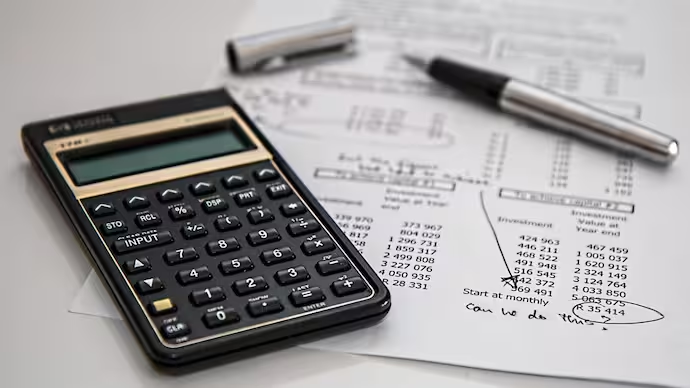
Calculators The Delhi High Court has sought responses from the Central Board of Secondary Education (CBSE) and the National Council of Educational Research and Training (NCERT) in connection with a public interest litigation (PIL) concerning calculator use in Class XII board examinations. The petition asks the court to consider allowing students to use calculators during these examinations. The matter therefore places before the court a question about examination rules and the tools students may use when demonstrating their understanding. At this stage, the reported development is that the two education bodies have been asked to respond to the plea; it does not establish that any change to existing examination arrangements has been made.
A request for replies is a procedural step in the handling of a case. It gives the institutions named in the proceedings an opportunity to provide their positions or relevant information for the court’s consideration. It is not, by itself, a decision on whether the requested permission is justified. Nor does it mean that students may use calculators in an upcoming examination. Until an applicable policy or court direction says otherwise, candidates should rely on the examination instructions issued by the relevant authorities rather than assume that the notice changes the rules.
Broadly, the PIL seeks consideration of calculator access for Class XII students sitting board examinations, and the High Court’s notice brings CBSE and NCERT into the proceedings as respondents asked to address that request. The public development should be described within those limits: a petition has raised the issue, and the court has sought replies from the education bodies. The notice alone does not reveal the court’s view of the merits, settle the question of permitted equipment, or confirm what the institutions will say. Any account of the petition’s detailed grounds, the court’s reasoning, or later procedural developments would require confirmation from reliable reporting or court records.
Requests to permit calculators in Class XII board examinations may arise from a broader question about what an examination is intended to measure. In advanced mathematics and science, students can encounter multi-step problems involving decimals, large values, fractions, or repeated numerical operations. Completing these calculations by hand takes time and can introduce arithmetic errors even when a student understands the underlying principle. This context can help explain why some students or stakeholders might favour calculator access, but it does not establish what the petitioners in this case specifically argued.
As a general educational rationale, a permitted calculator could allow an assessment to place relatively greater emphasis on interpreting a problem, choosing an appropriate method, applying a formula, and explaining or checking a result. Those skills are distinct from speed or accuracy in routine arithmetic. Calculator access would not, by itself, demonstrate conceptual understanding: examination questions and marking criteria would still need to test reasoning and method. Nor does the presence of lengthy calculations mean that every paper or every question is unsuitable for manual working.
There are also considerations on the other side. If calculators are allowed, examiners may need to decide whether their use changes the level or comparability of assessment, and how to preserve the ability to test relevant calculation skills. Differences in students’ access to devices or familiarity with them could affect fairness unless access and preparation are addressed consistently. Clear rules would also be necessary, including which models are permitted, whether memory or communication functions must be disabled, and how devices are checked in examination halls. These are general policy questions, not claims that should be attributed to the petitioners without verification. The grounds set out in the public-interest litigation must be distinguished from wider discussion about the educational merits and practical consequences of calculator use.
The Delhi High Court has sought responses from both the Central Board of Secondary Education (CBSE) and the National Council of Educational Research and Training (NCERT) because a proposal to allow calculators in Class XII board examinations touches on different parts of the education system. The notice gives each organisation an opportunity to explain its position and the policies or considerations relevant to its role. Seeking a response is a procedural step; it should not be read as evidence that either body has already supported or opposed the proposal.
CBSE administers board examinations for its students and sets or implements the rules that govern those exams. Its response may clarify whether calculators are currently permitted in the relevant subjects, and whether any existing instructions specify approved devices or conditions of use. The Board may also address practical questions about conducting examinations, including how to maintain consistent rules across centres, prevent unauthorised assistance, and protect the integrity of assessment. These matters relate to exam administration and would need to be considered alongside the concerns raised in the case.
NCERT has a different function: it develops educational curricula, textbooks and related academic guidance. Its response may explain how the curriculum expects students to use mathematical methods and tools, and whether current curriculum or assessment guidance supports a change in calculator access. That perspective can help distinguish what students are taught from the rules applied during a particular board examination. The court’s questions may therefore bring together the Board’s operational responsibilities and NCERT’s academic role. Until the two bodies file their responses and the matter is considered further, their respective views on calculator use remain to be established. Any eventual policy decision would need to account for both fair assessment and the educational aims of the relevant subjects.
The next stage may depend on the responses and submissions made by the institutions named in the proceedings. The court can consider their explanations, the applicable examination framework and the material placed before it before deciding whether any further directions are appropriate. The notice itself is a procedural step; it should not be treated as a finding on the merits or as a change to the rules governing the examination. The eventual course will depend on the record and the court’s consideration.
Possible outcomes can therefore range from the matter proceeding after the institutions have responded to the court issuing additional directions, if it considers them necessary. Any judicial order would need to be read in its full context, including its scope, timing and the parties or examinations to which it applies. Until such an order or an official policy update is issued, reports about possible outcomes should not be taken as confirmation that students may use calculators in a board examination.
Calculators For students and families, the practical approach is to continue following the current instructions issued by the Central Board of Secondary Education. Do not bring or use a calculator on the assumption that permission may be granted, unless an official rule expressly allows it. Examination instructions can specify permitted materials and conditions, and students should check the latest notices and guidance from the Board and their schools rather than relying on informal messages, commentary or interpretations of court proceedings.
The key developments to watch are the positions formally filed by the institutions, any subsequent orders or directions from the court, and any formal announcement about examination policy.(Calculators) These sources will clarify whether the matter has prompted further procedural steps and whether students need to act differently. If rules change, the relevant authority should communicate the change through official channels. Until then, existing directions remain the soundest basis for preparation, exam-day planning and decisions about permitted equipment.