




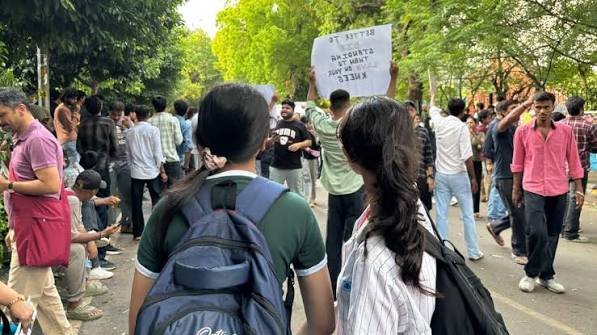
CBSE Jantar Mantar, a historical site in Delhi, has transformed into a dynamic hub where students converge to engage in discussions about their educational experiences and aspirations. This location is not merely a tourist attraction; it has become a beacon for young minds grappling with various academic challenges, notably those posed by the Central Board of Secondary Education (CBSE) and the Common University Entrance Test (CUET). The reasons for choosing Jantar Mantar as a meeting point are diverse, ranging from its accessible location to its historical significance, which often inspires students to reflect on their educational journeys.
This gathering of students is characterized by a rich demographic mix. Participants range from high school students preparing for their board examinations to college applicants eager to jumpstart their academic ventures through competitive examinations such as the CUET. This melting pot of individuals fosters an atmosphere of collaboration and shared learning, where diverse perspectives on education are exchanged, leading to enhanced understanding of the complexities involved in pursuing higher studies in India. Here, students often share resources, strategies, and personal experiences, which contribute to a collective sense of support and encouragement.
The air at Jantar Mantar is charged with an undeniable sense of activism and inquiry. Students engage in lively debates, discuss societal issues intertwined with education, and express their frustrations about systemic challenges. This vibrant environment not only empowers students to voice their concerns but also serves as a proactive platform through which they seek constructive dialogue and solutions. Such interactions play a crucial role in cultivating a sense of agency among youth, propelling them to advocate for their educational rights and confront the education divide that persists in society.
Understanding CBSE: The Core Curriculum for Indian Students
CBSE The Central Board of Secondary Education (CBSE) plays a pivotal role in the Indian education landscape, serving as a fundamental governing body for schools affiliated across the nation. Established in 1962, CBSE has aimed to provide a high standard of education while aligning with the national interest and ensuring a consistency across the curriculum. The board governs various educational institutions, including Kendriya Vidyalayas and private schools, which collectively affect millions of students’ academic pathways.
The CBSE curriculum is structured into two main levels: the Secondary level (Classes 10) and the Senior Secondary level (Classes 11 and 12). At the Secondary level, students engage in a range of subjects that cover core areas such as Mathematics, Science, Social Science, and Languages, alongside elective subjects. This breadth ensures students gain a holistic foundation, preparing them for more specialized academic pursuits in higher classes. The Senior Secondary level introduces greater specialization, offering streams such as Science, Commerce, and Humanities, enabling students to align their education with their future career aspirations.
CBSE examinations are regarded as critical milestones in students’ educational journeys. These assessments not only evaluate learning outcomes but significantly influence students’ admission prospects to higher educational institutions. The competitive nature of these examinations, notably the Class 10 and Class 12 board exams, adds considerable pressure on students. Many face challenges ranging from syllabus breadth, which requires extensive preparation, to coping with various external expectations.
From the students’ perspectives, preparing for CBSE examinations involves rigorous study routines and access to quality resources, which can vary significantly depending on their socio-economic backgrounds. These challenges highlight the education divide, necessitating a focus on equal access to educational resources and support structures to truly empower all students within the CBSE framework.
CUET: Navigating the New Entrance Examination Landscape
CBSE The Common University Entrance Test (CUET) represents a pivotal shift in the landscape of higher education admissions within India. Introduced in 2022, CUET aims to standardize the admission process for various undergraduate programs across participating universities, thereby creating a more equitable platform for aspiring students. This examination is a significant component of the National Education Policy’s objective to enhance the quality and accessibility of higher education.
CUET is designed as a comprehensive examination covering diverse subjects reflecting the curriculum taught at the pre-university level. The test format consists of multiple-choice questions, which assess a student’s knowledge and comprehension across disciplines. Students are encouraged to familiarize themselves with the exam structure, which includes sections on language, domain-specific subjects, and general interest, enabling a broad evaluation of their aptitude. The total duration of the test is approximately three hours, with multiple shifts conducted across various exam centers.
In terms of preparation strategies, students are advised to gather resources from a variety of channels, including online coaching platforms, study groups, and reference materials specific to CUET. Many tutors emphasize the importance of time management and regular practice through mock tests, which not only bolster confidence but also help in identifying areas requiring further focus. This holistic preparation approach is crucial for success in CUET, as it allows students to gauge their readiness ahead of the actual examination date.
Reactions to CUET have been mixed among students. While some view it as a welcome change that provides a fair opportunity to showcase their academic capabilities, others express concerns regarding the increased pressure associated with a standardized test. The transition to this new examination system continues to evoke discussions around accessibility, stress, and its long-term effects on student aspirations in pursuing higher education.
Bridging the Gap: Addressing the Public-Private Education Divide
CBSE The education landscape in India has been marked by a persistent divide between public and private institutions. This divide not only influences the quality of education accessible to students but also exacerbates their concerns regarding future opportunities. Public schools, often under-resourced and facing significant infrastructural challenges, contribute to a perception of educational inferiority when compared to privately funded institutions. Students from public schools frequently voice concerns about the lack of quality teaching, outdated materials, and inadequate facilities, which hinder their educational experience and aspirations.
On the other hand, students attending private institutions generally benefit from better resources, modern teaching methodologies, and smaller class sizes, resulting in a more supportive learning environment. However, this advantage is not universally shared, as private education remains out of reach for many families due to high tuition fees, thus reinforcing inequities in educational access. The implications of this divide are significant; research indicates that students from well-funded schools are more likely to succeed in competitive examinations, ultimately shaping their career pathways and socioeconomic status.
To address this educational disparity, stakeholders must re-evaluate resource allocation and policy implementation. Insights gathered from students reveal a strong desire for a more equitable education system, where access to quality education is not dictated by socioeconomic status. Many students aspire to a system that offers equal opportunities, regardless of their backgrounds. Collaborative efforts between the government and private sector could focus on increasing funding for public schools, enhancing teacher training programs, and promoting community involvement in educational governance. By fostering an environment that minimizes the public-private education divide, India can ensure that every student, irrespective of their background, has the potential to achieve their academic and professional goals.