



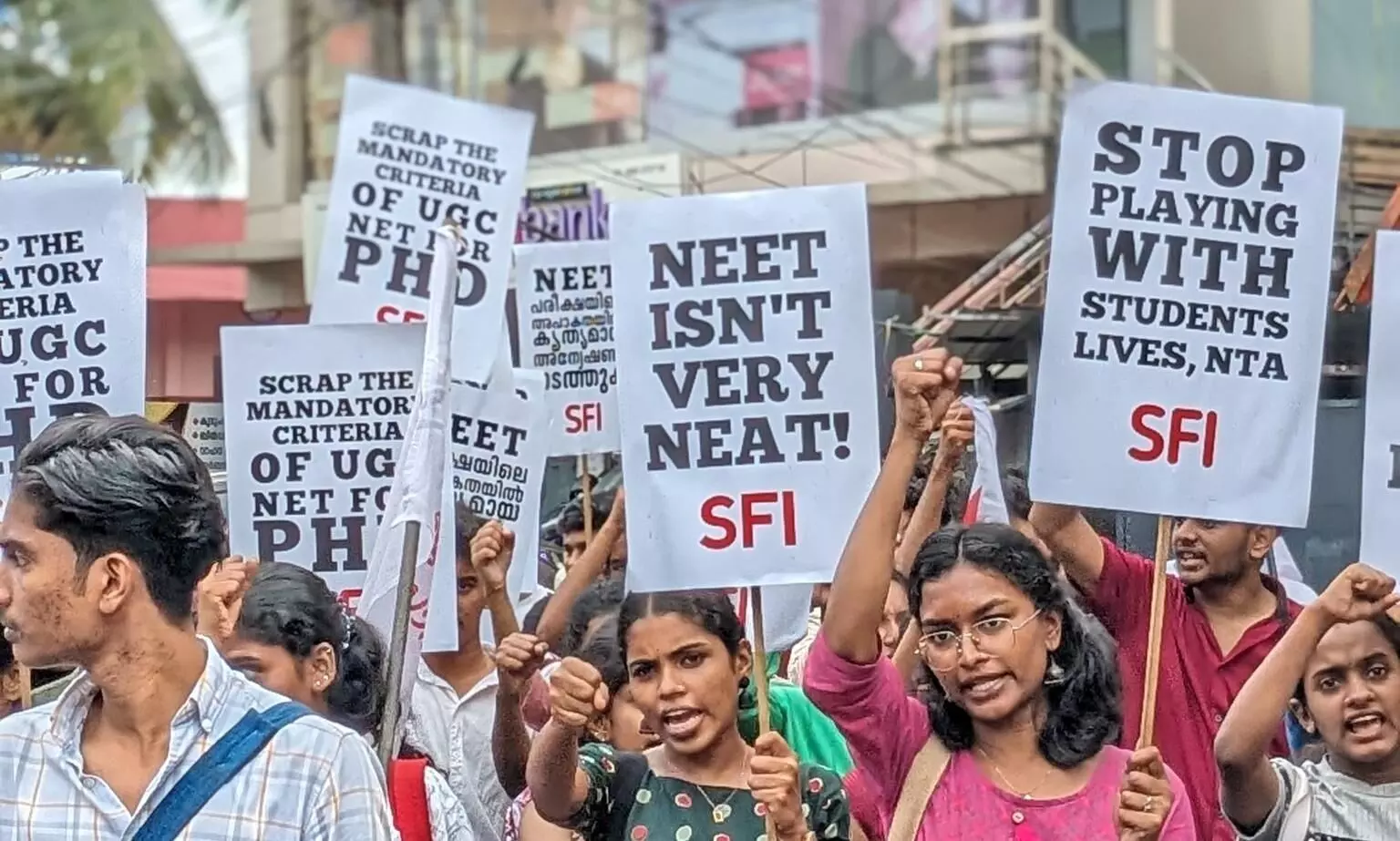
NEET-UG The reported decision to extend the tenure of the exam reform panel chaired by Nandan Nilekani until January 2027 gives the group additional time to examine how national entrance examinations are designed and administered. The panel’s work has drawn attention amid heightened scrutiny of NEET-UG, the medical admissions test, after allegations of a question-paper leak and reports of other irregularities. These concerns have prompted questions about safeguards, transparency and the reliability of processes that affect millions of candidates.
An extension can allow the panel to assess the examination system in greater depth, consider evidence and input from relevant stakeholders, and develop recommendations on possible improvements. Areas for examination may include the handling of question papers, examination-day procedures, security arrangements, evaluation and the communication of results. However, the additional time should be understood as an opportunity for further review, not as confirmation that any particular reform has been approved, adopted or put into effect. Recommendations may require separate consideration and decisions by the responsible authorities.
The distinction matters because an extended mandate does not, by itself, resolve the allegations or establish what changes will follow. The panel’s role is to study the broader system and offer proposals; decisions on policy and implementation rest with the appropriate government bodies and examination authorities. The reported extension also does not necessarily signal a conclusion about the facts of any specific incident. Readers seeking the precise terms, scope and formal date of the extension should consult official government communications or announcements from the relevant examination authority. Those sources can clarify the panel’s updated mandate, its reporting timeline and any subsequent steps. Until such details are formally confirmed, descriptions of the extension and the panel’s future recommendations should be treated as reported developments rather than completed reforms. This careful distinction helps separate ongoing review from measures that have actually been announced and implemented.
High-stakes entrance examinations depend on a chain of safeguards, not a single security measure. Question papers must be prepared, printed, stored and transported under controlled conditions, with access limited to authorized personnel and recorded at each stage. Secure printing arrangements, tamper-evident packaging, clear custody logs and contingency plans can reduce opportunities for unauthorized access. Digital systems also require protection: exam platforms, candidate databases and communication channels need access controls, monitoring and procedures for responding to cyber incidents. Weakness at any handoff can undermine protections elsewhere.
Security at test centres is equally important. Staff need consistent identity-verification procedures, supervision and incident-reporting rules to deter impersonation, prohibited devices and collusion. Centre allocation, entry checks, seating arrangements and handling of answer materials should be documented and auditable. Because responsibility may be distributed among examination authorities, vendors, printing facilities, transport providers, local officials and centre staff, agencies need clear roles and channels for sharing credible warnings quickly. Coordination should be established before an examination, rather than improvised after concerns arise.
A suspected leak can damage public confidence before investigators establish what happened, when information may have circulated or how many candidates could have been affected. Public statements should therefore distinguish allegations, preliminary indications and verified findings, and explain what remains under investigation. Timely, credible inquiries can preserve evidence and clarify the scope of any breach, while transparent updates help limit speculation. Decisions about withholding results, cancelling a paper, holding a retest or taking other corrective action should follow published, consistent criteria. Candidates should receive equal treatment, clear explanations and accessible avenues to raise concerns. Any remedy must weigh the seriousness and reach of the proven breach against disruption to candidates who followed the rules. Reforms are strongest when they produce reliable records, independent review and a process that can be tested before the next examination, not merely assurances after a failure. These principles matter as an examination-reform panel considers how to address vulnerabilities and restore confidence in NEET-UG and other high-stakes tests.
The panel’s extended timeline creates an opportunity to examine the full chain through which an examination paper is prepared, stored, transported, accessed and opened. This is a possible area of review, not a confirmed recommendation. A detailed assessment could map who handles each stage, where information might be exposed, and how access is recorded. Options such as encrypted files or just-in-time digital delivery may merit comparison with existing arrangements, while accounting for backup procedures if technology fails. Any approach would need to protect the paper without creating new vulnerabilities or making the process dependent on a single system or supplier.
Operational safeguards may also warrant scrutiny. These could include documented audit trails, risk-based inspection of examination centres, clearer staff vetting and role-specific training, and a consistent process for reporting suspected breaches. Contingency planning is equally important: officials may need predefined steps for investigating an incident, communicating verified information, and deciding whether a centre or examination session can proceed. Independent oversight could help test whether controls work in practice, rather than merely exist on paper. These are examples of matters a review might consider; they should not be presented as decisions already taken by the panel unless an official report confirms them.
Stronger security must be weighed against the practical demands of a national examination involving many centres and candidates. New systems can bring substantial costs, require reliable connectivity and specialist support, and risk disrupting delivery if introduced too quickly. Procedures must also remain accessible to candidates with disabilities and avoid collecting or retaining unnecessary personal information. A credible reform plan would identify accountable bodies and individual responsibilities, set measurable safeguards and standards for reporting, and specify how compliance will be checked. Before nationwide adoption, proposed changes could be piloted across varied locations, independently tested, and audited for security, accessibility, cost and reliability. Publishing results and addressing identified weaknesses would help build confidence while allowing adjustments before reforms are scaled up.
NEET-UG The panel’s extended timeline may give its members more opportunity to consult students, educators, testing specialists, state authorities and other stakeholders before recommending changes. It may also allow closer examination of examination security, question-paper handling, monitoring systems and the procedures used to respond to suspected breaches. Detailed consultation and implementation planning can help ensure that proposed reforms are practical, rather than simply announced quickly in response to public concern.
However, an extension of the panel’s deadline does not, by itself, alter the next NEET-UG examination schedule or change its syllabus, eligibility criteria or scoring system. Such changes would require formal decisions and communication by the competent authorities. Until an official notification says otherwise, candidates should avoid treating media reports, social-media posts or informal predictions as confirmed policy. For dependable updates, they should regularly check notices issued by the National Testing Agency, the relevant ministry and other official authorities responsible for the examination.
NEET-UG As the review proceeds, students can watch for publication of the panel’s findings and for formal government decisions explaining which recommendations will be accepted. If reforms require substantial technical or administrative changes, authorities may choose a phased rollout, with clear dates and guidance for candidates. Any announced measures should also identify who is responsible for carrying them out and how failures in examination security will be investigated and addressed.
Clear communication matters alongside stronger safeguards. Candidates need enough notice to understand any new procedures and prepare under stable, consistent rules. The goal of reform should be to protect the integrity of NEET-UG while giving students predictable requirements and timely, trustworthy information. Until the authorities provide confirmed details, candidates can focus on the published rules currently in force and use official channels to verify any reported change.