



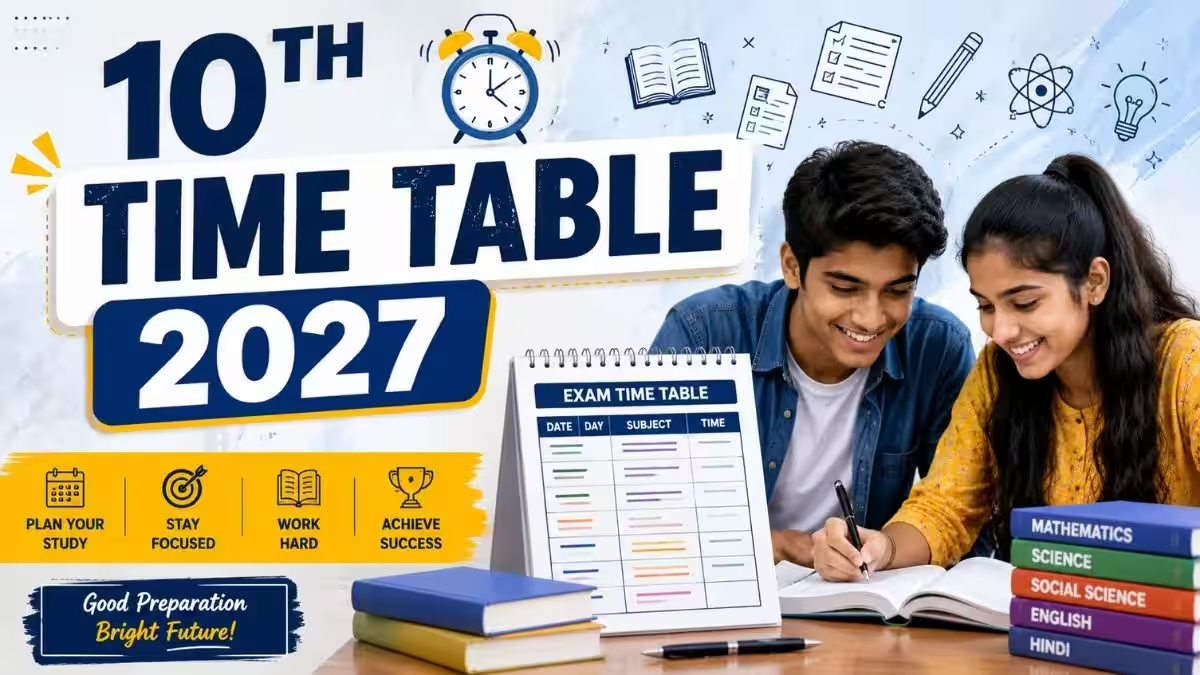
The CBSE Class 10 date sheet for the 2027 board examinations is the timetable that students use to understand when each subject’s examination is scheduled. Once officially issued, it is expected to list exam dates, subjects, examination durations and key timing information, such as when students should arrive and when question papers are distributed. These details help students, families and schools coordinate revision plans and practical arrangements. Until the Central Board of Secondary Education publishes its notice, however, any circulating timetable should be treated as unconfirmed rather than as the final schedule.
Students should distinguish an official date sheet from predictions, drafts and screenshots shared online. A post may look convincing or reproduce the board’s branding, but that alone does not establish that it is genuine. Unofficial PDFs can contain incorrect dates, omitted subjects or outdated information, potentially leading students to plan around a schedule that later changes. Do not rely on a claimed release date or subject-wise exam date unless CBSE has confirmed it through an official communication. If a timetable is revised, the board’s latest notice should take precedence over earlier copies.
For reliable updates, students and families should check the CBSE website at cbse.gov.in and look for notices issued by the board. They can also ask their school to clarify official announcements and explain how the timetable applies to their subjects. After the date sheet is published, review every subject entry carefully, including the date, start time, duration and any instructions stated in the notice. Save or print the official version for reference, but revisit the website in case CBSE publishes an update. Until then, continue preparing across subjects rather than postponing revision based on rumours. Treating the timetable as confirmed only after an official announcement helps students make informed plans and avoid unnecessary confusion.
To find the official CBSE Class 10 timetable, begin at the Central Board of Secondary Education website, cbse.gov.in. Use the main navigation or homepage links to locate the announcements, latest updates, or examination section. The labels and page layout may change over time, so check the current official site rather than relying on an old bookmark or a search result that may point to an earlier year.
Look for a notice that specifically refers to the 2027 board examinations for Class 10. Read the notice heading and any accompanying details before opening the timetable. CBSE may publish several documents around the same period, including schedules for different classes, practical examinations, or other examination-related updates. Make sure the link you select is for the Class 10 main examination and not a different exam or academic year.
Open the linked PDF and review its first page and document details. Confirm that the title identifies the 2027 examination, that the class is Class 10, and that the publication date is clear. Check the listed subjects, examination dates, timings, and any instructions printed in the document. If the notice page includes a PDF link, download the file directly from that official page, rather than using an unofficial copy shared through social media or messaging platforms.
Before making plans, return to the CBSE notice page and look for later updates or revision notices. A corrected timetable may replace or amend an earlier version, so compare publication dates and read any notice that refers to changes. Save the PDF on a device and, if useful, keep a backup copy or printout. It is also sensible to revisit the official website periodically as the examinations approach, even after downloading the schedule. This helps ensure that students and families are working from the latest CBSE-issued timetable and can respond promptly if dates or instructions are updated.
When CBSE publishes the official Class 10 date sheet PDF, review the complete document before making a study schedule. Check every examination date and the subject name listed for each paper, then compare the subject codes with the details on your registration records or admit card when available. Similar subject titles can be easy to confuse, so confirm that the entry matches the subject you are actually appearing for. If any detail seems inconsistent, contact your school promptly rather than relying on an unofficial timetable or an assumption.
Note the paper’s start time and any stated reporting time or entry instructions. The date sheet may specify the examination duration, reading time, or other timing information; record these details accurately and avoid planning around a guessed finish time. Check whether the PDF refers to practical examinations, internal assessment, or related arrangements, and identify which dates or instructions apply to your class and subjects. These components may be organised separately from written papers, so follow the relevant school communication as well as the CBSE notice.
Once you have verified the entries, transfer every examination to a personal calendar, including the subject name, code, date, start time, and any reporting reminder. Mark the gaps between consecutive papers: they can help you allocate revision time realistically, arrange rest, and prioritise topics without overlooking a short interval. Recheck the calendar against the official PDF before finalising travel or study plans, particularly if CBSE issues a revised schedule. The date sheet is the authoritative source for examination scheduling, but it does not replace instructions from your school. Continue to follow school notices and the official examination guidelines for permitted materials, conduct, attendance, and day-of-exam procedures. Keep a saved copy of the PDF and use the latest version, so planning is based on confirmed information rather than circulated messages or outdated images.
Once CBSE publishes the confirmed date sheet, use it as the foundation for a practical revision plan rather than trying to predict exam dates in advance. List each subject in exam order and note the time available between papers. Give earlier attention to subjects that need more preparation, feel less secure, or have only a short gap before the exam. This helps you allocate effort according to both your readiness and the actual timetable.
Divide revision into three recurring stages: syllabus review, question practice, and error correction. First, revisit key concepts, definitions, formulas, and prescribed chapters. Next, solve practice questions and attempt sample papers or previous question papers under timed conditions. Finally, check your answers carefully, identify recurring mistakes, and set aside time to review those topics. A simple weekly plan can assign specific subjects and tasks to each study session while leaving room to shift work when needed.
Use timed practice to become familiar with the pace and structure of an examination, but treat results as feedback rather than a measure of your worth. If a topic remains difficult, ask a teacher to clarify it early instead of repeatedly studying the same material without progress. Include short breaks, adequate sleep, meals, and some lighter revision in your schedule; a plan that allows recovery is more realistic than one built around continuous study. Reserve a few flexible sessions for unfinished work or unexpected changes.
As exams approach, prepare essential items such as permitted stationery and your admit card, and check official instructions for each paper. Keep these materials together so last-minute searching does not add stress. If CBSE issues a revised date sheet, verify the update through official channels, then adjust your subject order, practice sessions, and rest periods accordingly. A flexible timetable, reviewed regularly, can help you make steady use of the time available without relying on unconfirmed dates.