
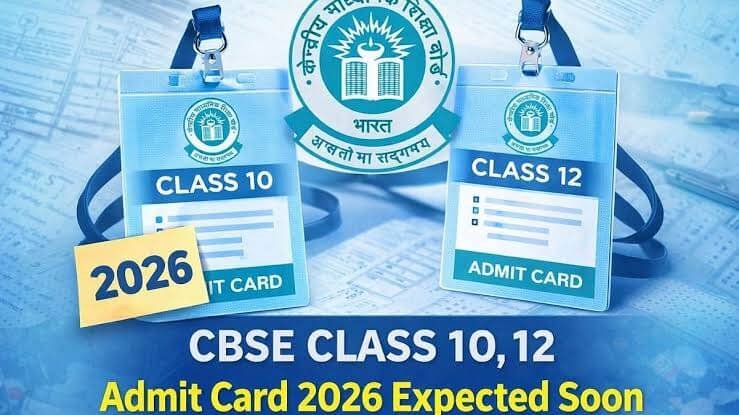
The CBSE special examinations 2026 are intended for eligible students who require an additional opportunity to appear in selected subjects or complete specific academic requirements. Unlike the main board examinations, these papers are arranged through a separate schedule because the candidates, eligibility conditions, and administrative arrangements may differ. The examinations may cover students affected by exceptional circumstances, those seeking improvement in performance, candidates covered by compartment-related provisions, and other categories identified in the official Central Board of Secondary Education notice.
The separate date sheet enables the Board to coordinate examinations for a defined group of students while allowing schools to verify records and provide the required support. Eligibility is not determined solely by general announcements or informal interpretations. Students should therefore check the applicable CBSE notification, confirm their category with their school, and ensure that their examination application, subject selection, and supporting documents meet the stated requirements.
Once the timetable is released, candidates should review every detail rather than relying only on the examination date. The date sheet should be checked for subject-wise paper dates, reporting time, scheduled start time, examination duration, and any instructions concerning permitted materials or identification documents. Students should also look for practical examination, project, or internal-assessment directions where applicable. A subject may have a different arrangement from other papers, so the complete PDF deserves careful reading.
Particular attention is necessary if a revised timetable or subject-specific change is issued after the initial announcement. News reports, school messages, coaching materials, and social-media posts can provide useful alerts, but they may omit eligibility conditions or reproduce outdated information. The official CBSE circular and date-sheet PDF should remain the final authority for the CBSE special examinations 2026. Candidates should download the latest document from the Board’s official website, compare it with school guidance, and retain a copy for reference until all examination and related assessment requirements are completed.
The CBSE special-examination timetable should be read as an official subject-wise schedule rather than as a general list of examination days. Before making travel, study, or application plans, obtain the latest timetable from the CBSE website or another authorised school communication channel. Avoid relying on screenshots, social-media posts, or older circulars, since special examinations may be revised through subsequent notices. The schedule generally presents the class, subject or paper code, full subject name, examination date, and the reporting or paper timing. These details should be checked together, not separately.
Students must match the exact subject code and the complete title printed on their registration or examination documents. Similar subjects can have different codes, paper formats, dates, or timings, particularly where elective, language, applied, and vocational options are offered. The timetable should also be read alongside any separate instructions covering regional subjects, practical examinations, project assessments, internal components, or other school-managed requirements. A written-theory schedule may not include every activity connected with a subject, so candidates should ask their school whether practical or project-related information is issued independently.
It is equally important to confirm which candidate category the timetable covers. Check whether the notice applies to Class 10 or Class 12, regular or private candidates, and the relevant special-examination category. If the wording is unclear, consult the school or the official CBSE help channel before assuming that a paper applies to you. After verification, record each personal paper in a calendar, including the subject code, full title, date, timing, reporting requirement, and examination centre details when available. Mark the gaps between papers to organise revision and identify periods requiring focused preparation. Continue monitoring official CBSE updates for altered dates, postponements, correction notices, or clarifications, and replace earlier calendar entries whenever an amended timetable is released.
The admit card is an essential document for appearing in a CBSE special examination. It serves as official proof that a candidate is registered for the examination and provides the instructions required for entry to the assigned centre. Students should note that the publication of the special-examination timetable does not mean that hall tickets have been released. The timetable announces the subjects, dates, and paper schedule, whereas the admit card is issued separately through a notice or download facility provided by the Central Board of Secondary Education.
Regular students will generally receive their examination documents through the school where they are enrolled. Schools may download the cards in bulk, verify candidate information, and distribute them after obtaining the required signatures or acknowledgements. Private candidates and individually registered students may instead be required to download their hall tickets from the official CBSE examination portal. The exact process can vary, so candidates should follow the board’s latest instructions and avoid relying on unofficial websites, social-media messages, or unverified claims about the release date.
After receiving the document, students should carefully inspect the candidate name, photograph, roll number, examination centre address, category, registered subjects, examination dates, and paper timings. They should also read every instruction printed on the card, including reporting time, permitted stationery, identification requirements, restrictions on electronic devices, and any special directions for the examination centre. Comparing these details with the school record and the published timetable can help identify discrepancies early.
If any information is incorrect, the student or parent should immediately contact the school authorities or the designated CBSE regional office, as applicable. Waiting until the examination day may create avoidable difficulties and could prevent timely correction. Candidates should retain a clean printed copy and, where permitted, a digital copy for reference. On each examination day, they should carry the valid admit card, approved identification, and required stationery. The confirmed hall-ticket release date should be taken only from an official CBSE announcement.
Use the confirmed timetable to build a realistic revision plan rather than treating every subject equally. Begin with the earliest paper and assign clear daily targets for syllabus review, key definitions, formulas, diagrams, and frequently tested concepts. After each examination, use the available gap to prepare for the next subject instead of postponing all revision until the final days. Sample papers, previous question formats, and timed practice can help students become familiar with the expected structure, improve answer presentation, and identify topics that require further attention. Reserve time for reviewing mistakes and maintaining adequate sleep before each paper.
On examination day, arrive at the centre well before the reporting time so that security checks and unexpected travel delays do not create stress. Carry the valid admit card and any stationery or permitted materials specified by CBSE. Follow the instructions given by invigilators and centre staff, and do not bring prohibited electronic devices, written material, smartwatches, or other restricted items. Students appearing under a special-examination category should check whether an additional identity document, school certification, medical record, or other supporting document is required.
If a paper date, centre detail, reporting instruction, or other examination requirement changes, verify the information through the official CBSE website, examination portal, school notices, and authenticated circulars. Students should ask their school promptly when an update is unclear. Unofficial screenshots, social-media posts, and forwarded messages should not be treated as reliable confirmation.
Before leaving for the examination, complete this checklist: verify the latest timetable; collect and inspect the admit card; confirm the centre address and route; match every subject with its correct subject code; plan transport and allow extra travel time; pack permitted materials; and save emergency contact details for a parent, guardian, school representative, and transport provider. Recheck official notices close to each paper, while keeping the revision schedule flexible enough to accommodate verified changes.