
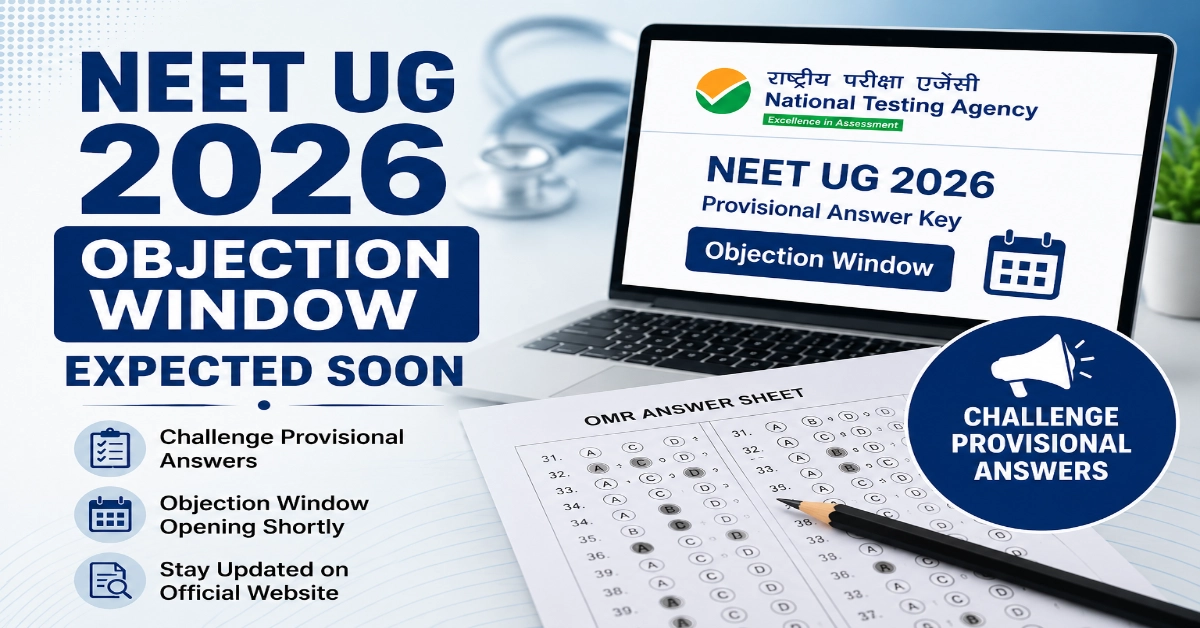
NEET The National Eligibility cum Entrance Test (NEET) serves as a crucial gateway for students aspiring to pursue undergraduate programs in the medical field across India. Conducted by the National Testing Agency (NTA), this examination assesses the eligibility of candidates for admissions into various medical undergraduate courses, including MBBS, BDS, and other allied health sciences programs. The NEET examination is designed to evaluate a student’s knowledge in subjects such as Physics, Chemistry, and Biology, ensuring that only those with the requisite academic proficiency gain admission into medical colleges.
The importance of the NEET examination cannot be understated, as it plays a vital role in the medical admission process and influences the future careers of aspiring healthcare professionals. In 2026, the re-examination of NEET, referred to as Re-NEET UG 2026, has been introduced to address certain discrepancies from previous test cycles. This re-examination aims to uphold the integrity and fairness of the admission process, particularly for those candidates who may have faced challenges during the initial examination.
The Re-NEET UG 2026 initiative underscores the commitment of NTA to maintain transparency and provide equal opportunities for all candidates. The decision to conduct a re-examination enables students who might not have performed to the best of their abilities during the first attempt to showcase their knowledge and aptitude in a renewed setting. The newly introduced assessment not only aims to rectify previous inadequacies but also fortifies the overall admission framework for medical colleges. Consequently, Re-NEET UG 2026 is anticipated to significantly impact the educational landscape for medical aspirants, ensuring that deserving candidates are provided with fair and equitable chances for admission into reputable institutions.
Overview of NTA’s Update on OMR Sheets
The National Testing Agency (NTA) has recently issued crucial updates regarding the OMR sheets utilized in the NEET UG 2026 examination. This update comes at a pivotal time as the agency opens the window for objections related to the provisional answer key. The methodology behind the evaluation of these OMR sheets is of paramount importance, especially for candidates aiming for clarity and fairness in the assessment process.
One significant aspect of the NTA’s announcement is the transparent evaluation method employed for OMR sheets. It has been emphasized that the process will adhere to stringent quality checks, ensuring that each sheet is scanned and evaluated with precision. Unlike previous years, where discrepancies were noted, this year the NTA has implemented advanced scanning technology that enhances accuracy and minimizes human intervention, which can often lead to errors.
Additionally, the NTA has outlined changes in how objections to the provisional answer key will be processed. For NEET UG 2026, candidates will be provided with a clearer framework on how to raise objections, alongside detailed instructions on timelines and acceptable grounds for challenges. This proactive approach is designed to empower candidates, ensuring that their concerns regarding the evaluation process are addressed promptly and effectively.
Moreover, these updates underscore the NTA’s commitment to maintaining integrity and transparency in the examination process. Candidates will benefit from improved clarity in the evaluation criteria, allowing them to be more informed regarding their performance. Overall, these steps taken by the NTA reflect an ongoing effort to enhance the NEET UG examination experience, placing a significant emphasis on fairness and accessibility.
Understanding the Answer Key Objection Process
The answer key objection process is a crucial element of the evaluation mechanism employed by the National Testing Agency (NTA) during the Re-NEET UG examination. This process allows candidates to review the provisional answer key published by the NTA and raise objections if they believe certain answers are incorrect. The objection process is designed to ensure fairness and accuracy in the assessment of candidates’ responses.
To initiate an objection, candidates must access the official NTA website where the answer key is displayed. They will find an option to submit their grievances against specific questions. Typically, the timeline for submitting these objections is outlined along with the release of the provisional answer key. It is essential for candidates to act promptly, as this window is often limited and adherence to deadlines is critical.
In order to submit an objection, candidates are generally required to provide adequate documentation that supports their claims. This can include references to authentic sources, relevant textbooks, or any other material that can substantiate their disagreement with the answer provided in the key. Furthermore, candidates may also be required to pay a nominal fee for each objection raised. This fee is typically refundable if the objection is upheld by the NTA.
Once the objection window closes, the NTA will review the submissions. Their team of subject matter experts will evaluate the objections raised and determine if any corrections to the answer key are warranted. Should changes be made, a final answer key will be published, and the results of the examination will be updated accordingly. This thorough process exemplifies the NTA’s commitment to maintaining transparency and accuracy in the examination process.
Next Steps for NEET UG Aspirants
Following the recent updates on the OMR sheets and the opening of the objection window, NEET UG aspirants must adopt a strategic approach to prepare for the upcoming examination. Proper preparation is critical in maximizing candidates’ chances of success and ensuring they are ready to perform at their best when the exam day arrives.
First, it is essential to thoroughly review the official answer key released by the National Testing Agency (NTA). Aspirants should carefully compare their marked responses on the OMR sheets with the answer key to identify any discrepancies. If any discrepancies are found, candidates should follow the prescribed process to file objections. This may not only affect their final score but can also play a significant role in understanding the exam’s marking scheme.
In addition to addressing immediate concerns regarding the answer key, candidates should reinvigorate their study efforts. Creating a defined schedule that includes time for review, practice tests, and rest is advisable. Various resources such as NEET UG preparatory books, online lectures, and practice question sets are available to enhance study productivity. Institutions and tutoring services often provide structured coaching plans, which can be beneficial for a focused and systematic approach.
Moreover, it is vital for aspirants to familiarize themselves with the examination hall environment and procedures. This includes understanding what materials are permitted into the exam room, the significance of arriving on time, and the general conduct during the examination. Candidates should remain calm and adapt to the exam conditions effectively.
Lastly, sustaining a balanced routine with regular intervals for rest and leisure can help alleviate exam stress and improve concentration. With proper preparation and the right strategies, aspiring candidates will be well-equipped to face the NEET UG examination confidently.