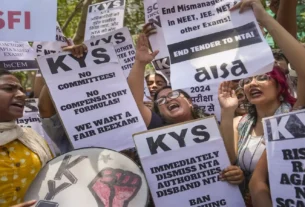
NEET-UG The National Eligibility cum Entrance Test (NEET) is an essential examination in India, serving as a gateway for students aspiring to pursue undergraduate medical courses. Conducted by the National Testing Agency (NTA), NEET-UG plays a crucial role in providing admissions to various medical and dental colleges across the country. Its significance extends beyond academics, as it impacts the future careers of thousands of students every year, making the integrity of this examination paramount.
Recently, however, the NEET-UG exam has been shrouded in controversy due to allegations of a paper leak. Reports emerged indicating that certain individuals had unauthorized access to the exam papers before the scheduled date, raising grave concerns about examination security and transparency. These allegations have sent shockwaves through the academic community, prompting an urgent need for a thorough investigation to ascertain the truth behind the claims.
In response to these troubling revelations, the Central Bureau of Investigation (CBI) initiated raids in Nagpur and Chandrapur, where they seized crucial documentation linked to the alleged paper leak. This decisive action underscores the seriousness of the situation and highlights the government’s commitment to maintaining the sanctity of the NEET-UG examination process. The involvement of the CBI not only signifies the gravity of the allegations but also reinforces the expectations that the authorities will uphold the principles of fairness and meritocracy in academic assessments. Educational institutions and prospective medical students anxiously await the outcomes of this investigation, as the implications of a compromised examination could reverberate throughout the system, affecting future admissions and the credibility of the entire educational framework in India.
Details of the CBI Raids in Nagpur and Chandrapur
NEET-UG In a decisive move against alleged malpractice concerning the NEET-UG examination, the Central Bureau of Investigation (CBI) executed coordinated raids in the cities of Nagpur and Chandrapur. These operations, carried out on a specified date, were part of an extensive inquiry into a paper leak that has sparked widespread concern among stakeholders in the education sector.
Officers initiated their actions early in the day, targeting multiple locations suspected of harboring evidence linked to the examination irregularities. The CBI focused on private coaching centers, residences of individuals potentially involved in the leak, and various educational establishments believed to have played a role in the dissemination of the compromised examination materials. Such raids underline the urgency and seriousness with which the agency is treating the situation.
During these operations, the CBI was able to seize a range of significant documents and electronic evidence. The materials collected include answers sheets, question papers, and communication records that may shed light on the individuals and networks involved in the illicit activities related to the NEET-UG exam. The relevance of these documents is immense; they could potentially identify culprits and map out the intricate web of collusion that facilitated the breach of examination integrity.
Furthermore, the findings from these raids may play a decisive role in guiding the investigation forward, possibly leading to further inquiries and legal actions against those implicated. As the CBI continues its efforts to untangle this complex issue, the ramifications of the leaked examination questions could extend beyond immediate accountability, impacting public trust in the examination system itself. The operations in Nagpur and Chandrapur thus mark a critical chapter in efforts to uphold the sanctity of the NEET-UG examination process.
Legal and Educational Implications of the Leak
The recent NEET-UG paper leak incident has raised significant concerns regarding the integrity of the examination system in India. This leak not only undermines the credibility of the National Eligibility cum Entrance Test (NEET) but also has broader ramifications for the educational landscape. The legal repercussions for individuals involved in facilitating or orchestrating this breach could be severe. The Central Bureau of Investigation (CBI) is expected to pursue charges that may include fraud, conspiracy, and other violations pertaining to the examination integrity laws. Such legal actions would likely serve as a deterrent against future attempts to compromise examinations.
On a more profound level, the trust of students in the examination process is at stake. The NEET serves as a pivotal gateway for aspiring medical students in India. Incidents of leaks can lead to anxiety and uncertainty, prompting doubts about the fairness of assessments. Students may feel disillusioned, which could impact their performance not just for NEET but also for future academic endeavors. This erosion of trust may lead to a decreased motivation among students, potentially affecting their overall academic performance across various disciplines.
Furthermore, the implications of this leak may prompt educational authorities to reassess and reinforce examination protocols. The incident might lead to the implementation of stricter security measures and advanced technological solutions in examination halls. Regulatory bodies may also consider revisiting policies concerning examinations and their administration to prevent such breaches in the future. This not only encompasses the NEET but could extend to other competitive examinations within the Indian education system, emphasizing the importance of safeguarding academic integrity.
Public and Institutional Reactions
The recent allegations surrounding the NEET-UG paper leak have ignited significant public outrage and scrutiny from various stakeholders. Students, who have invested considerable time and resources into their exam preparation, expressed feelings of betrayal and anger. Many took to social media platforms to voice their concerns, calling for transparency and accountability in the examination process. The uncertainty surrounding the integrity of the NEET-UG has led to anxiety among thousands of aspiring medical students, casting a shadow over their future educational and career prospects.
Educational institutions have also been vocal regarding the situation. Several colleges and coaching centers issued official statements condemning the alleged malpractices while advocating for stricter regulations in the conduct of examinations. Some institutions emphasized the need for reform in the current testing process to safeguard it against such breaches in integrity. Notably, the National Testing Agency (NTA), the organization responsible for overseeing NEET-UG, released a statement assuring the public that they are cooperating fully with the CBI’s investigation and reiterated their commitment to maintaining a fair assessment environment.
Government bodies have taken a proactive stance as well, with calls for a thorough investigation to reveal the depth of the issue and potential lapses in the system. Politicians across the spectrum have weighed in, demanding accountability from both the NTA and the officials involved. The Central Bureau of Investigation (CBI), tasked with investigating the case, has promised to bring those responsible to justice, a pledge that has brought some reassurance to concerned stakeholders. Amidst all reactions, there is a shared sentiment: a need to restore confidence in the examination system and ensure that such incidents do not reoccur in the future.