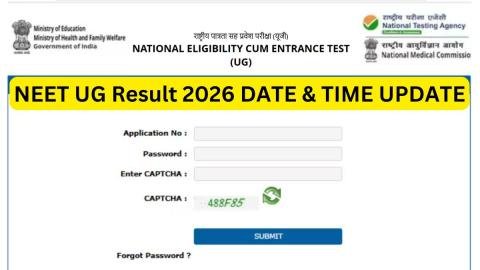







NEET 2026 The National Eligibility cum Entrance Test (NEET) serves as a crucial benchmark for aspiring medical students in India. It assesses candidates’ proficiency in subjects fundamental to medical studies: Physics, Chemistry, and Biology (Botany and Zoology). The thorough understanding of the NEET exam structure is essential for aspirants aiming to secure top-tier scores.
The NEET exam comprises a total of 180 multiple-choice questions, divided equally among the three subjects. Each subject contains 45 questions, allowing students to showcase their competencies across a balanced curriculum. It is imperative for candidates to grasp the significance of each subject; a firm foundation in Physics and Chemistry, alongside Biology, will facilitate a comprehensive understanding of medical concepts required for future studies.
The marking scheme for NEET further underscores its competitive nature. Each question carries a weight of four marks, contributing to a total of 720 possible points. However, incorrect answers attract a penalty of one mark, necessitating careful consideration before selecting answers. This aspect of the NEET structure encourages students to hone not only their knowledge but also their critical thinking and decision-making skills.
The time allocation for the exam is another critical factor, with candidates having a total of 180 minutes to complete the questions. Proper time management is essential; students must practice effectively to ensure they can navigate the questions within the allotted time. It is advisable for candidates to develop strategies for pacing themselves, ensuring they have sufficient time to double-check their answers.
In conclusion, understanding the NEET exam structure—a careful blend of subjects, marking schemes, and time management—is vital for aspirants aiming for excellence in this competitive field. By strategically preparing for each component of the exam, candidates can significantly enhance their chances of achieving a high score and gaining admission to prestigious medical colleges.
Essential Preparation Tips Leading Up to Exam Day
NEET 2026 The journey towards scoring 600 marks in the NEET 2026 exam necessitates a well-structured and strategic approach. This includes effective study schedules combined with thorough resource selection and practical test management. Crafting a realistic study timetable is paramount. It should allocate ample time to each subject, with special emphasis on key topics that frequently appear in the examination. Employing techniques such as the Pomodoro Technique can enhance focus during study sessions. This method involves studying in short bursts, typically 25 minutes, followed by a five-minute break, which can improve retention and decrease burnout.
Resource selection plays a crucial role in preparation. It is advisable to use a combination of standard textbooks, previous years’ question papers, and online resources like video lectures and practice quizzes. Books such as “NCERT” for biology and “Concepts of Physics” by H.C. Verma for physics are highly recommended. Online platforms like Coursera and Khan Academy offer supplementary materials that can deepen understanding and provide alternative explanations. In addition, it is beneficial to join study groups or forums, where students can discuss challenging topics and share insights.
Mock tests are an indispensable part of preparation. Regular practice not only helps in familiarizing oneself with the exam format but also aids in time management, which is crucial on exam day. It is advisable to simulate real exam conditions while taking these tests, including adhering strictly to time limits and minimizing distractions. Post-test analysis is equally important, as it helps identify weak areas and adjust study plans accordingly. Ensure that each mock test is followed by a review session to reinforce learning and improve problem-solving skills.
Mastering Time Management on Exam Day
NEET 2026 Effective time management is crucial for aspirants sitting for the NEET 2026. Given the exam’s extensive syllabus and various sections, adopting a structured approach can significantly influence performance. Candidates should familiarize themselves with the exam structure ahead of time. Know the total time allotted, the number of questions, and weightage for each section—Physics, Chemistry, and Biology. This understanding lays the foundation for a timed strategy.
One effective technique is to create a time allocation plan. For instance, if the exam lasts for 180 minutes and consists of 180 questions, candidates can aim to spend roughly one minute per question. However, some might require more time for complex physics problems than straightforward biology queries. To accommodate this variability, establishing a prioritized list of questions based on confidence can balance time effectively.
Another important strategy involves pacing oneself. Regularly glance at the clock without becoming overly fixated; this helps maintain a steady rhythm. Identifying where one stands periodically—whether ahead or behind schedule—enables quick adjustments. When facing particularly challenging questions, it is advisable to skip and return later if time permits. Remaining calm under pressure is essential; stress can lead to uncharacteristic mistakes. Deep breathing exercises before the exam and during breaks can help in managing anxiety.
A solid answering strategy also plays a significant role in effective time management. Consider adopting the elimination technique, which involves ruling out clearly incorrect answers to increase the probability of selecting the correct one. Additionally, be wary of overthinking; instead, trust your first instinct after thorough consideration. This approach not only boosts confidence but ensures that the candidate maximizes their chances of achieving a desirable score on the exam day.
Post-Exam: Analyzing Performance and Future Steps
Once the NEET exam is completed, it is essential for candidates to engage in a thorough analysis of their performance. This process not only aids in understanding how well one performed but also helps in strategizing for future academic endeavors. The first step is to review the official answer key once it is released. Comparing your responses to the answer key allows you to identify correct answers and will enable you to calculate a tentative score. This reflective exercise can provide insight into areas where your preparation was strong and areas that may require further work.
It is also beneficial to analyze specific sections of the exam to determine strengths and weaknesses. For instance, if a student consistently performs well on biology questions but struggles with physics, it may indicate the need to focus more resources on enhancing understanding in that subject area. This targeted approach is crucial for future exams or retakes, should that be necessary.
Following the analysis, candidates should not underestimate the importance of motivation during this period. Taking time to celebrate successes and acknowledging hard work can foster a positive mindset. It may also be advantageous to engage with peers or mentors for advice and tips for improvement. This social support can help keep spirits high as you prepare for the subsequent admission processes.
Ultimately, it is vital to have a plan based on your anticipated scores. Understanding which medical colleges align with your expected outcomes is an essential next step. Setting realistic goals and timelines for applications can alleviate stress and ensure that you remain organized and ready for the challenges ahead.