
CBSE The Central Board of Secondary Education (CBSE) plays a pivotal role in overseeing the Class 12 board examination process for students, including those studying abroad. The board’s regulations are specifically designed to provide a fair and equitable examination system. However, recent developments have posed significant challenges, particularly for overseas students whose examination venues fall within regions affected by the COVID-19 pandemic.
In light of the pandemic, many Gulf nations cancelled their scheduled board examinations, leaving numerous students, particularly those who were expecting to take their Class 12 improvement exams in these regions, in a state of uncertainty. The cancellation impacted not only the students’ immediate academic plans but also their ability to fulfill prerequisite requirements for further education opportunities, both domestically and internationally.
CBSE’s policies on improvement examinations aim to support students seeking to enhance their performance; however, these policies leave little flexibility in situations such as this. The refusal to issue results for improvement examinations poses a significant barrier to the academic progression of many students living abroad. The unique circumstance of being an overseas student also adds layers to the complications faced. For instance, logistical challenges and differing educational timelines make it difficult for these students to adapt to sudden changes or decisions made by the CBSE.
The legal action taken by the affected overseas student reflects a growing concern over these discrepancies in policy enforcement and the rights of students participating in improvement examinations. As students navigate these complex situations, the potential long-term effects on their academic careers require serious consideration from the board, highlighting the pressing need for more adaptable assessment policies that accommodate the unique challenges faced by overseas candidates.
Details of the Legal Action
The student, identifying as an overseas candidate, has taken significant legal action against the Central Board of Secondary Education (CBSE) following the withholding of their Class 12 improvement result due to the cancellation of examinations in the Gulf region. This legal step is grounded in multiple grievances linked to CBSE’s policy and operational decisions that have direct implications on students’ academic progress and future opportunities.
The core of the legal complaint rests on the argument that CBSE’s decision to restrict results based on the cancellation of exams is both unreasonable and discriminatory. The student contends that the board failed to establish a fair and just alternative assessment policy for those unable to take their exams due to factors beyond their control, specifically in the Gulf region. Furthermore, the complainant asserts this decision violates the principles of natural justice and the right to education as enshrined in various educational regulations in India.
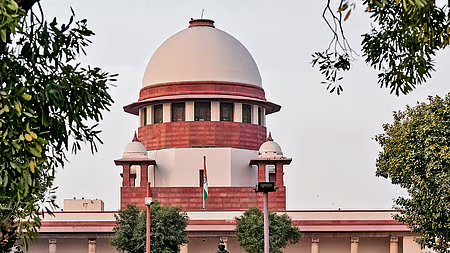
The provisions invoked in the complaint may include the right to a fair trial and procedural fairness under existing educational law frameworks, which necessitate that all students have equal access to assessment opportunities. The legal action has formally requested the Supreme Court to direct CBSE to release the withheld results and provide a clear explanation regarding their assessment criteria in cases of exam cancellations.
Additional demands from the Supreme Court include seeking a comprehensive review of CBSE’s policies to ensure that such situations do not recur in the future. The student also seeks a directive for the board to adopt measures that promote fairness in evaluating students’ performance, particularly those in international contexts. The outcomes desired from this judicial engagement underscore a quest for accountability and transparency in the examination and assessment processes governed by CBSE.
Implications of the Case for Overseas Students
The case of the overseas student challenging the Central Board of Secondary Education (CBSE) over the withholding of their Class 12 Improvement Result raises significant implications for students studying abroad. Primarily, it highlights concerns regarding examination fairness and the treatment of international students by educational boards. As these students often face unique challenges, the case draws attention to the systemic issues affecting their academic journey.
Students enrolled under CBSE from overseas locations may find themselves caught in the complexities of result processing. This case exemplifies the necessity for transparent mechanisms that cater to the exigencies of students who have limited access to resources, especially during extraordinary circumstances such as the cancellation of exams abroad. The decision by the Supreme Court to hear this case could prompt a reevaluation of how the CBSE manages results for its international candidates, potentially leading to reforms that recognize their distinctive status.
Moreover, this case can set a precedent regarding the rights of students to appeal decisions made by educational boards. In instances where results are withheld, clarity about the appeals process is critical. An unfavorable ruling for the board could empower students, encouraging them to challenge decisions that they believe are unjust. This could lead to a more accountable education system that actively considers the challenges faced by overseas students.
As the case unfolds, it is anticipated that the CBSE will be compelled to engage more constructively with its international clientele, thereby improving communication and procedural fairness. Furthermore, the possible outcomes could influence how similar disputes are handled in the future, not only within the CBSE framework but also across other educational boards dealing with overseas students. Addressing these concerns may ultimately lead to a more equitable academic environment in alignment with global educational standards.
Conclusion and Future Prospects
The recent legal action taken by an overseas student against the Central Board of Secondary Education (CBSE) regarding withheld Class 12 improvement results raises critical issues concerning educational equity and the treatment of expatriate students. This case, stemming from the cancellation of exams in the Gulf region, highlights the pressing need for transparency in educational assessment processes, especially for students studying abroad.
As the student pursues a legal remedy, their chances of success will significantly depend on established legal precedents and the specific context surrounding this case. The Supreme Court’s ruling could set a vital precedent for future disputes between educational authorities and students regarding assessment fairness. If successful, it may compel CBSE and similar organizations to reevaluate their policies concerning expatriate students, ensuring that their assessment results are handled with the same diligence and care as those of domestic students.
Moreover, the implications of this case extend beyond just the individual student. A favorable outcome could encourage a broader dialogue about the need for reforms within CBSE, pushing for policies that are equitable and transparent. Such changes would not only benefit current students but also enhance the integrity of the educational system for future generations.
The necessity for fair treatment in educational assessments cannot be overstated. Ensuring that all students, regardless of their geographic location, receive equal consideration is paramount in fostering an inclusive educational environment. Therefore, this case also highlights the importance of advocacy for change, emphasizing that the voices of expatriate students must be heard in discussions about educational policies.