



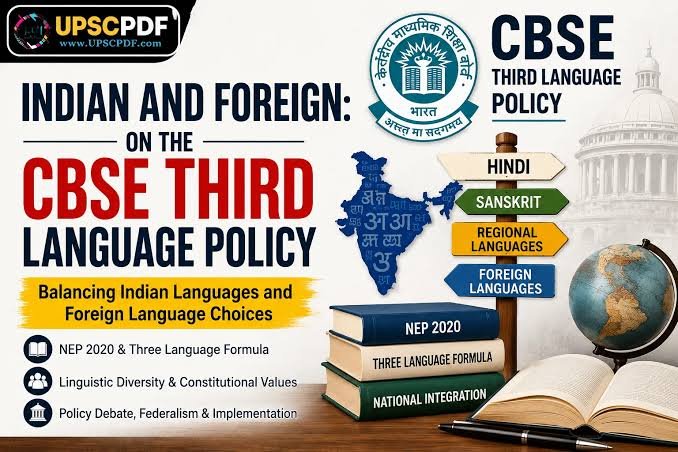
CBSE Three-Language Policy The Central Board of Secondary Education (CBSE) Three-Language Policy was introduced as a means to promote multilingualism within the diverse linguistic landscape of India. The origins of this policy can be traced back to the National Policy on Education, which aimed to ensure that students not only learn the languages of their state but also understand and appreciate the national language and a foreign language. This initiative underscores the importance of cultural heritage and aims to foster a greater understanding among various communities within the nation.
The key objective of the CBSE Three-Language Policy is to mandate the learning of three languages: typically, a mother tongue, a regional language, and a foreign language. This structure not only aids in the cognitive development of students but also fosters an environment where linguistic diversity is embraced. By integrating these languages into the school curriculum, students are encouraged to connect with their roots while being equipped with the necessary language skills required in an increasingly globalized world.
The implementation of this policy is integral to the educational framework of CBSE-affiliated institutions. Schools are encouraged to design their language programs based on this directive, thereby allowing students to experience a balanced exposure to different languages. Moreover, the three-language approach works to minimize the dominance of English and other foreign languages, thereby preserving regional languages and dialects that are paramount to India’s rich cultural integrity. The curriculum thus ensures that students appreciate their linguistic heritage while gaining proficiency in multiple languages, leading to not just a better educational experience, but also enhanced personal growth.
Impact on Multilingualism in Education
The implementation of the CBSE Three-Language Policy represents a significant advancement in promoting multilingualism within the educational framework of India. This policy encourages students to learn three languages, often including English, Hindi, and a regional language, thus enriching their linguistic capabilities. The emphasis on multilingual education not only facilitates communication but also enhances cognitive development among learners. Studies have shown that children who are exposed to multiple languages tend to develop better problem-solving skills and improved cognitive flexibility.
Moreover, the policy supports cultural exchange and understanding, fostering a sense of unity among students from diverse backgrounds. By learning different languages, students gain insights into various cultures and perspectives, promoting inclusivity and reducing social barriers. Language diversity in education cultivates an environment where the richness of India’s linguistic heritage is preserved and appreciated. This appreciation contributes to more harmonious interactions in multi-ethnic classrooms, encouraging respect and empathy toward differing cultural identities.
Educational experts highlight that multilingualism plays a critical role in academic achievement. Research indicates that students who learn multiple languages exhibit greater academic performance across subjects, as they develop enhanced verbal communication skills and a broader knowledge base. Furthermore, the cognitive advantages derived from learning multiple languages extend to improved literacy skills in both the first and additional languages. Consequently, the Three-Language Policy can be seen as a strategic initiative aimed at not only preserving linguistic diversity but also equipping students with essential skills for their future endeavors in an increasingly globalized world.
Challenges Faced by Foreign Language Education
The CBSE Three-Language Policy, while aiming to promote multilingualism, has inadvertently contributed to a decline in the prominence of foreign language education within the Indian educational framework. One of the most pressing challenges is the noticeable drop in enrolment in foreign language courses. As students are encouraged to prioritize local and regional languages, opportunities to study global languages such as French, German, or Spanish are increasingly overlooked. This shift not only limits students’ linguistic exposure but may also diminish their ability to engage in the global economic landscape.
Another significant hurdle facing foreign language education relates to the shortage of qualified teachers. The demand for educators capable of teaching foreign languages has not kept pace with the evolving educational paradigm established by the Three-Language Policy. Schools often struggle to find adept foreign language instructors, resulting in compromised teaching quality and a lack of resources for effective language acquisition. Consequently, this deficit can lead to diminished student interest and lower proficiency levels, adversely affecting learners’ confidence in using a foreign language.
Moreover, the emphasis on regional languages over global languages raises important considerations regarding students’ readiness for a globalized world. As industries increasingly operate on an international scale, the ability to communicate in multiple languages is an essential skill for career advancement. When local languages are prioritized, the necessary exposure to foreign languages diminishes, potentially limiting students’ global competence and future job prospects. Educational institutions must critically assess the impact of policy directives on foreign language education and strive to restore balance, ensuring that students are well-equipped to navigate an interconnected world.
Future Directions: Balancing Multilingualism and Global Competence
As the CBSE Three-Language Policy takes root in India’s educational landscape, it becomes crucial to explore avenues for promoting multilingualism while ensuring that learners acquire essential foreign language skills. The rapid globalization that characterizes today’s interconnected world necessitates a strategic approach in which both local and global language competencies are nurtured. Integrating foreign languages into the curriculum alongside regional languages is not merely beneficial but essential for equipping students with the linguistic tools necessary for success in a globalized job market.
One approach to achieving this balance is through curriculum reform that emphasizes the importance of foreign languages in enhancing cultural exchange and global understanding. Schools can introduce language modules that blend local languages with global languages, allowing students to appreciate the value of both. For instance, providing immersion programs or blended learning environments where students can learn a foreign language while simultaneously developing their proficiency in Hindi and English could yield positive outcomes. This systematic integration can foster an environment where multilingualism thrives without sidelining foreign language education.
Moreover, teacher training plays a pivotal role in this transformation. Educators must receive continuous professional development on effective methods for teaching foreign languages, alongside strategies that respect and incorporate local dialects. Allocating resources for teacher training, including workshops and online courses, can substantially bridge the gap between multilingual education and global language requirements. Schools will thus be better equipped to cultivate educators who can ignite students’ passion for embracing foreign languages as a tool for communication and cultural understanding.
Ultimately, policy reforms are essential to creating frameworks that facilitate this integration. Governments should engage in dialogues with educational stakeholders to ensure that multilingualism is maintained while prioritizing foreign language skills. In doing so, the future of education can promote not only linguistic diversity but also the global competence that is so vital in contemporary society.