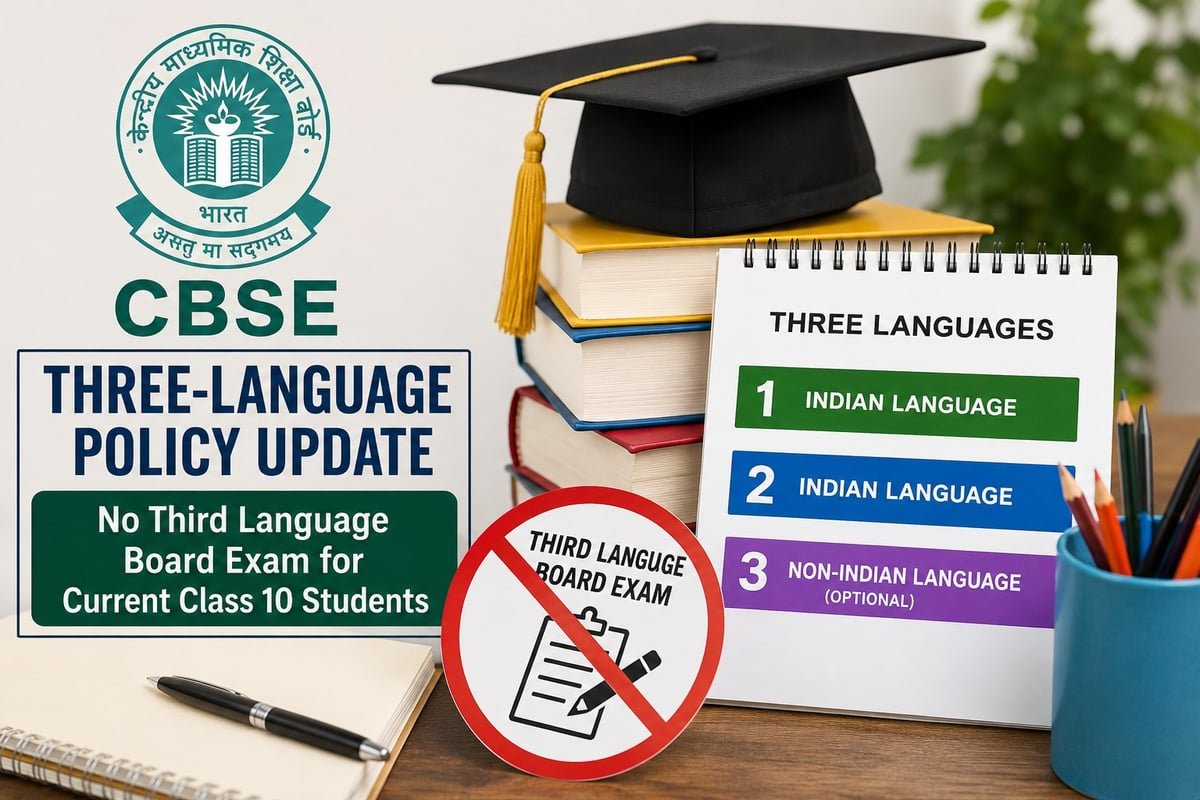
CBSE The Central Board of Secondary Education (CBSE) has recently introduced the R3 assessment rules aimed at redefining the examination framework for students in India. This new model emphasizes a comprehensive understanding of subjects rather than rote memorization, enabling a more holistic approach to education. The R3 assessment, which stands for Reassessment, Remediation, and Reiteration, seeks to address the varying learning curves of students by offering multiple opportunities for assessment.
One significant change under the R3 rules is the removal of the traditional Class 10 board examination for third language subjects. This decision reflects a strategic move to alleviate the pressure on students during critical examination phases and encourages them to focus on their core subjects without the additional burden of third language assessments. The motivation behind these policy revisions is to cultivate a more conducive learning environment that prioritizes student engagement and understanding over examination results.
The R3 assessment framework includes several key features designed to enhance the educational experience for students. It promotes continuous evaluation through formative assessments, allowing educators to monitor students’ progress more effectively. This approach not only empowers teachers to provide timely feedback but also enables students to identify their strengths and weaknesses in various subject areas. Furthermore, the integration of remedial measures ensures that students who may struggle with particular concepts receive the necessary support, fostering improved academic performance.
In summary, the CBSE’s R3 assessment rules represent a significant shift in the educational landscape, aimed at nurturing a generation of learners who are not only academically proficient but also equipped with critical thinking and problem-solving skills. By focusing on holistic development, the R3 model sets the stage for a more robust and adaptable educational framework in India.
Implications of the No Board Exam for Third Language
The Central Board of Secondary Education (CBSE) has recently announced that there will be no board examination conducted for the third language in Class 10. This decision carries significant implications for students, educational institutions, and the broader framework of language education in India. One of the most immediate consequences is that students may experience a shift in their academic trajectories. Without the pressure of a board exam, students may feel more liberated to explore diverse language options, whether it be choosing a new language to learn or opting to drop a less favored language entirely.
Furthermore, the absence of a formal assessment could lead to a re-evaluation of how languages are taught within schools. Teachers may have the flexibility to adopt innovative pedagogical approaches, emphasizing communication skills rather than rote learning, as the stakes associated with traditional examinations are lowered. This could lead to enhanced language proficiency among students, as instructors focus on practical usage rather than theoretical knowledge.
However, there are potential drawbacks to this approach. The lack of a standardized board examination might diminish the perceived importance of third languages in CBSE’s curriculum, possibly resulting in reduced motivation among students to engage with these languages. Moreover, students preparing for higher education or careers requiring multilingual capabilities may find themselves at a disadvantage without formal recognition of their language skills. Additionally, the absence of a uniform examination could lead to disparities in language proficiency, as students from different schools may receive varying levels of instruction. As the educational landscape adapts to this policy change, the repercussions of foregoing a board exam for the third language will continue to unfold, shaping the future of language learning within the academic context.
Stakeholder Reactions and Perspectives
The recent announcement by the Central Board of Secondary Education (CBSE) to abolish the Class 10 board examination for the third language has elicited varied reactions from different stakeholders. Educators, students, parents, and educational experts have expressed their opinions regarding the implications of this significant shift in assessment policy.
From the educators’ standpoint, the decision has sparked a debate over the evaluation process as a whole. Many teachers argue that removing the board exam could lead to a lack of rigor in language learning, possibly diminishing students’ proficiency in the third language. They express concern that this may adversely affect students’ future opportunities, particularly in fields where language skills are paramount. However, some educators support the change, believing that it allows students to focus more on their primary subjects and reduces unnecessary pressure.
Students, a critical voice in this discussion, have exhibited a mixed response. While many students celebrate the elimination of the exam as a welcome relief from the burdens of board assessments, others feel that such a move may devalue their learning experience. For those who are passionate about languages, the change might seem counterproductive, fearing that a lack of formal assessment could result in disinterest in the subject.
Parents also have mixed opinions. Some support the initiative, recognizing the stress and anxiety that board examinations can induce in their children. They appreciate the CBSE’s effort to create a more nurturing educational environment. Conversely, certain parents worry that less formal assessment may lead to complacency in their children’s studies.
Educational experts emphasize the need for a balanced approach. They advocate for continuous assessment methods that can ensure students maintain a high standard of learning while also accommodating varied educational needs. The discourse surrounding the new assessment rules reflects a broad spectrum of reactions, underlining the necessity for a collaborative dialogue among all stakeholders involved in shaping the future of education.
Future of Assessment in CBSE Schools
The Central Board of Secondary Education (CBSE) has embarked on a transformative journey with its R3 assessment rules, particularly concerning the exclusion of board exams for third language subjects. This change marks a pivotal moment for educational policy within India. By removing the pressure of a formal examination for third languages, the CBSE aims to encourage a more flexible, student-centric approach to learning and assessment, allowing schools to adapt practices that suit varied learner needs.
As we look to the future, it is evident that ongoing assessment practices will become increasingly integral to educational success. Continuous and comprehensive evaluation methods, such as formative assessments, project-based learning, and peer evaluations, are likely to gain prominence. These methodologies not only reduce stress commonly associated with examinations but also foster skills such as critical thinking, collaboration, and creativity among students.
Moreover, curriculum design may necessitate a re-examination in light of these policy changes. Educational stakeholders could place a stronger emphasis on multisensory learning experiences, thereby enhancing student engagement. The revaluation of how third language subjects are taught could lead to innovative pedagogical frameworks that inspire rich cultural appreciation and language diversity.
In summary, the implications of the R3 rules are significant, suggesting a future where assessments are more reflective of a holistic understanding rather than rote learning. The educational landscape in India is poised for a dynamic shift, promoting not only academic excellence but also the overall development of students as more well-rounded individuals. This evolution reflects a commitment to adapt and respond to the needs of society in a manner that supports both teachers and learners in achieving their full potential.