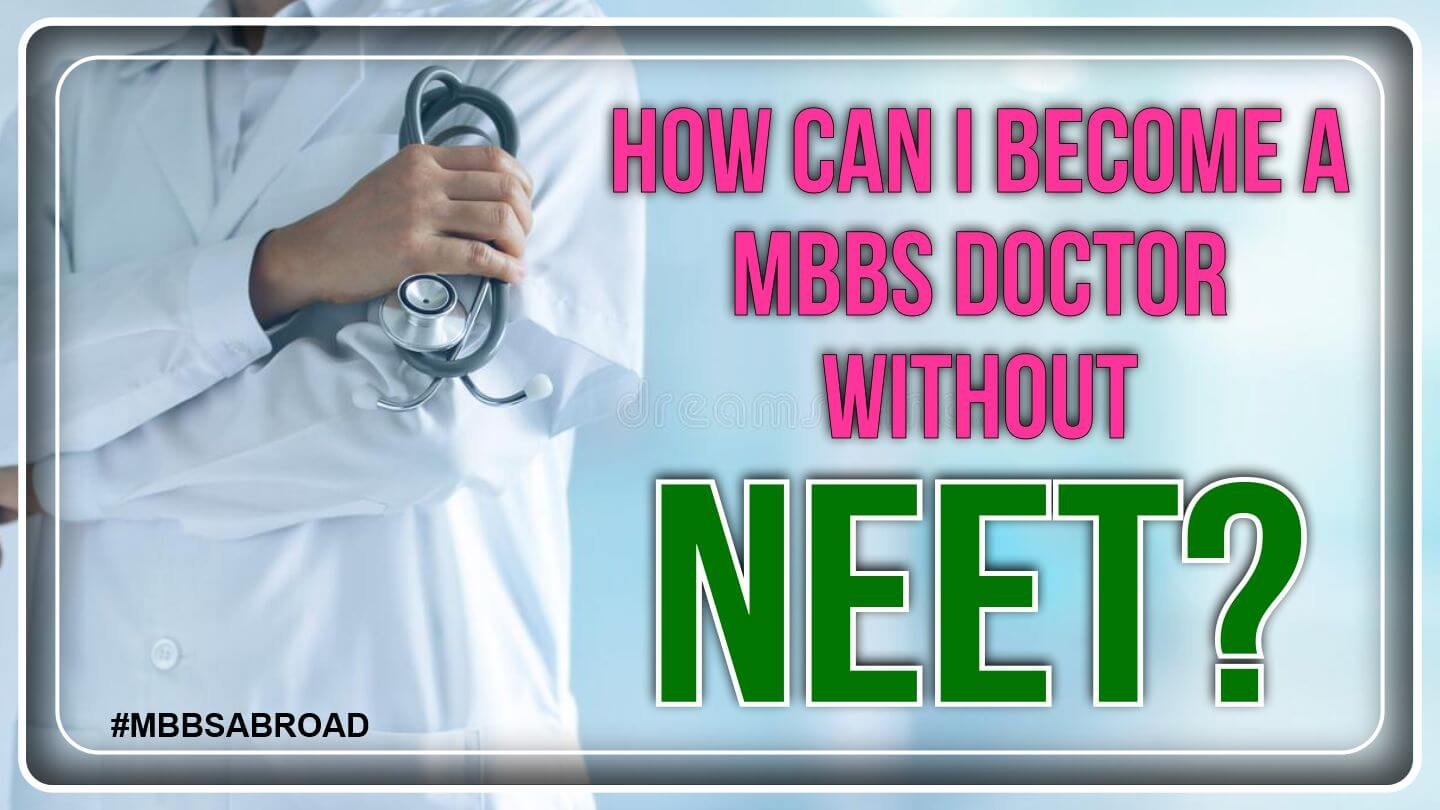
MBBS Without NEET : The Bachelor of Medicine and Bachelor of Surgery (MBBS) is a prestigious degree that is essential for anyone aspiring to pursue a career in medicine. This programme equips students with both theoretical knowledge and clinical skills necessary for diagnosing and treating illnesses. In India, the gateway to obtaining an MBBS degree is the National Eligibility cum Entrance Test (NEET), which serves as a single entrance examination for medical aspirants across the country. The NEET exam is highly competitive, drawing in large numbers of candidates each year, and is a determining factor for eligibility into various medical colleges.
The implications of NEET for students in India are significant; it establishes a rigorous selection process that aims to identify top-tier candidates for medical education. To apply for NEET, students must meet specific eligibility criteria, which include educational qualifications, age limits, and residency status. The results of this exhaustive examination play a crucial role in the admission processes of medical schools, often dictating students’ choices regarding their future education and training in the medical field.
As NEET has become an integral part of medical admissions in India, many students find themselves under immense pressure to perform well on this test. The demand for medical education continues to rise, making the competition fiercer each year. However, for those seeking alternatives, pursuing an MBBS degree abroad offers a viable option. Several countries have medical schools that allow students to enroll without requiring NEET results, thereby broadening opportunities for aspiring physicians. This opens up diverse pathways to obtain medical qualifications, offering students additional options beyond the constraints posed by NEET in India.
MBBS Without NEET : Requirements for Studying MBBS Abroad
For Indian students aspiring to pursue MBBS abroad without the necessity of clearing the NEET exam, several essential requirements must be considered. The primary qualification is the successful completion of high school education, specifically with a focus on subjects such as Biology, Chemistry, and Physics. This foundational knowledge is critical, as it prepares students for the medical curriculum they will encounter in foreign institutions.
In addition to academic qualifications, proficiency in the English language is typically required. Many universities mandate standardized tests such as the IELTS (International English Language Testing System) or TOEFL (Test of English as a Foreign Language) to ascertain a student’s ability to comprehend and communicate effectively in English. Achieving the minimum score in these exams is crucial, as it ensures that the student can navigate their studies successfully in an English-speaking environment.
Furthermore, financial preparedness is a significant aspect of studying abroad. Prospective students must be able to demonstrate their capability to meet tuition fees and living expenses for the duration of their medical program. This may involve providing bank statements, income proof, or sponsorship letters, which assure the educational institution of the student’s financial stability.
Equally important is the selection of an accredited medical college overseas. Students must conduct thorough research to ensure that the institutions they consider are recognized by the Medical Council of India (MCI). This recognition is vital for Indian students who envision returning to India to practice medicine after completing their studies. By meeting these requirements, Indian students can embark on a successful journey to pursue MBBS abroad without the constraints of NEET, while ensuring they are well-prepared for their future careers in medicine.
Top 5 Countries to Pursue MBBS Without NEET
For aspiring medical students from India, pursuing an MBBS degree without sitting for the National Eligibility cum Entrance Test (NEET) can be a crucial factor in their academic plans. Several countries offer opportunities for students to enroll in medical programs without this requirement. Here is a comprehensive overview of five countries that are popular destinations for Indian students seeking to pursue an MBBS degree without NEET.
1. Russia: Renowned for its high medical education standards, Russia houses numerous medical universities recognized by the World Health Organization (WHO). Institutions like Kazan Federal University and Moscow State University offer programs in English at reasonable tuition fees. The education system emphasizes practical training, and students benefit from ample internship opportunities in hospitals worldwide.
2. Ukraine: Ukraine boasts a rich tradition in medical education, with several universities such as Bogomolets National Medical University providing excellent training tailored for international students. The cost of living is affordable, making it an attractive option. Furthermore, the medium of instruction is predominantly English, easing the language barrier for Indian students.
3. Belarus: With its progressive education system, Belarus welcomes Indian students eager to pursue medicine. The Belarusian State Medical University offers a six-year MBBS program in English, complete with modern facilities. Tuition fees are competitive, and students are offered opportunities for internship placements across Europe post-graduation.
4. The Philippines: The Philippines has gained popularity among Indian students due to its American-style education system. Universities like the University of Santo Tomas provide affordable tuition and clear pathways towards practicing medicine globally. The English-speaking environment aids students in acclimatizing easily, enhancing their learning experience.
5. Kazakhstan: This country continues to emerge as a favorable destination for medical aspirants. Kazakh National Medical University offers contemporary medical programs taught in English, ensuring quality education. The lower cost of education and living compared to Western countries makes Kazakhstan appealing. Moreover, the government actively supports international students, increasing their chances of a successful medical career.
These countries not only provide the chance to study medicine without NEET but also deliver quality education with promising career prospects, making them ideal choices for students globally.
Challenges and Considerations for Studying Abroad
When contemplating the pursuit of an MBBS degree abroad, particularly without the NEET examination, students must face several challenges and considerations that can impact their educational journey. One prominent challenge is the significant cultural difference experienced in a foreign country. Adapting to a new cultural environment can be both exciting and daunting. Students may find themselves navigating different social norms, languages, and customs, which can initially lead to feelings of homesickness and isolation. Embracing these differences, however, can enhance personal growth and facilitate broader worldviews.
Another critical consideration is adjusting to an unfamiliar education system. Curriculum styles and teaching methodologies can vary greatly from what students are accustomed to in India. For instance, practical exposure and interactive learning may be emphasized more in certain countries, requiring students to actively engage with the material. Therefore, it is essential for prospective students to research the educational philosophy of their chosen institution to ensure it aligns with their learning preferences.
Visa requirements also pose a potential hurdle for those aiming to study medicine abroad. Each country has specific visa regulations that can evolve, influenced by various geopolitical factors. Students must stay informed about changes in visa policies and ensure that they meet all requirements before enrolling in their chosen institution.
Lastly, there is the matter of recognition of foreign qualifications in India after graduation. While many countries offer reputable medical programs, degrees obtained internationally may not have uniform recognition by Indian authorities. It is crucial for students to verify the international recognition of their program before application. To enhance their experience, students should actively seek support networks, such as student organizations, and familiarize themselves with local resources to ease their transition. By comprehensively addressing these challenges, students can better prepare themselves for a successful and enriching international education experience.