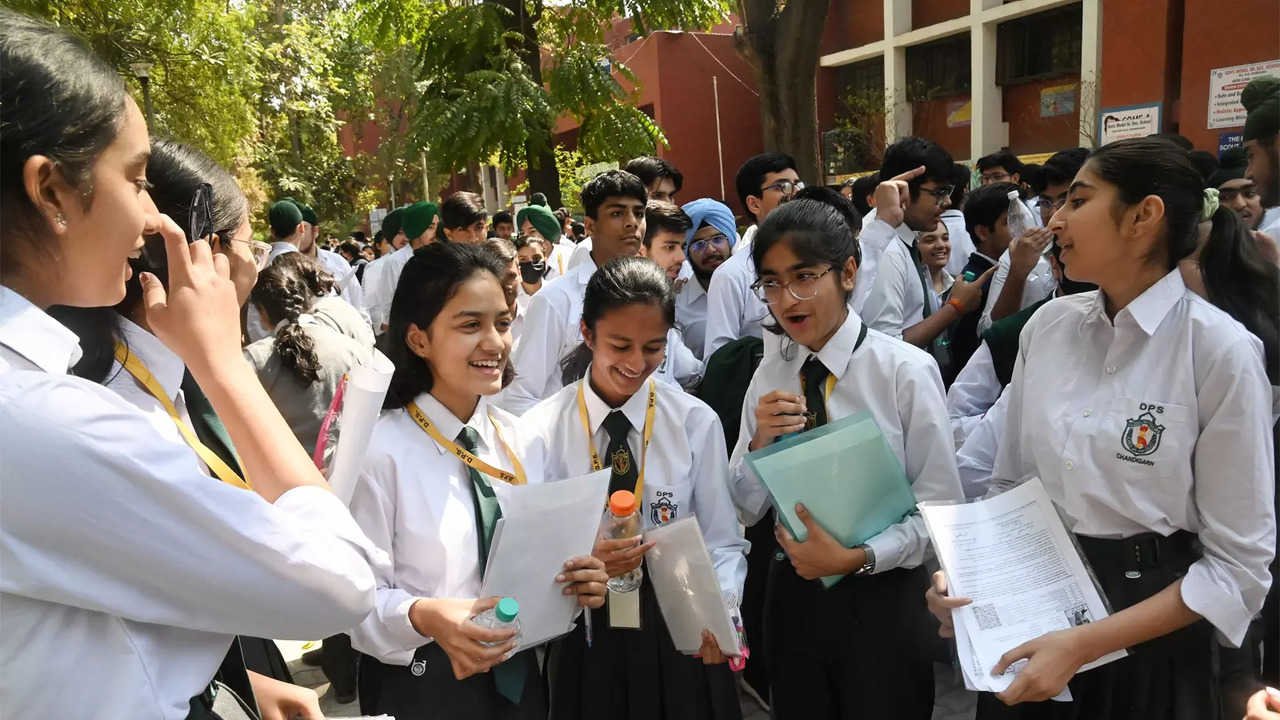
JEE Mains 2026 April session marks a significant milestone in the engineering admission process for aspiring candidates across India. Scheduled to take place in April, this examination serves as a crucial gateway for students seeking admission to prestigious engineering institutions, including the Indian Institutes of Technology (IITs) and National Institutes of Technology (NITs). The examination is designed to evaluate a candidate’s grasp of subjects such as Physics, Chemistry, and Mathematics, which are fundamental to engineering disciplines.
For the April 2026 session, the examination comprises two shifts: Shift 1 and Shift 2, each targeting different groups of students. The number of candidates appearing for this session is expected to be substantial, reflecting the growing interest in engineering education in India. The JEE Mains is crucial, not only for the direct admission into engineering courses but also as a significant criterion for many institutions that prefer JEE scores during their admission processes.
This examination is distinct in its structure, facilitating a multiple-choice format that challenges candidates to apply their theoretical knowledge practically. The results of the JEE Mains influence the ranks and subsequent admission processes, and hence, performance in this examination is of utmost importance for aspirants. Over the years, JEE Mains has evolved, integrating various technological enhancements to improve the examination experience. Furthermore, the session’s performance analysis provides insights into the subjects that posed challenges for candidates, ultimately aiding students in their preparations.
Shift 1 and Shift 2 Exam Analysis
JEE Mains 2026 April session for the year 2026 witnessed a comprehensive examination across two distinct shifts. Analyzing both Shift 1 and Shift 2 reveals important insights into the structure, subject difficulty, and collective performance of candidates. The exam pattern maintained consistency with previous iterations while introducing a few nuanced variations aimed at evaluating the depth of understanding among the students.
Overall, the difficulty level of both shifts exhibited a moderate to high range. Shift 1 was perceived to be slightly more challenging, particularly in the Physics section, where questions were framed to test conceptual clarity and application. Significant focus was placed on topics such as Mechanics and Thermodynamics, as echoed by student feedback. In contrast, Shift 2 allowed for a more balanced approach with some easier questions in Mathematics, especially focusing on Algebra and Coordinate Geometry, which seemed to provide a relief to candidates. However, the Chemistry segment in this shift included intricate problems that prompted students to rely on exceptional preparation.
During these shifts, educators observed a distinct trend regarding the adaptability of students to various question formats. Many candidates reported feeling adequately prepared, thanks to extensive practice with mock tests covering a diverse range of important topics. Notably, the level of competition and the pressure of exam conditions played a significant role in shaping student performance across both shifts.
Insights from students revealed a need for strategic preparation, particularly in mastering core concepts that frequently recur in JEE papers. As the exam continues to evolve, the importance of understanding the marking pattern and question types cannot be overstated. This comprehensive analysis reflects a growing body of experiences from students and highlights the dynamic nature of the JEE Mains assessment in the 2026 April session.
Subject-wise Difficulty Levels
JEE Mains 2026 The Joint Entrance Examination (JEE) Mains 2026 April session revealed varying difficulty levels across different subjects, namely Physics, Chemistry, and Mathematics. Performance data from candidates and feedback collected post-examination provide a valuable insight into which subjects presented the most challenges.
In the realm of Physics, students reported a balanced level of difficulty. The questions ranged from straightforward physics concepts to more complex problems involving multiple layers of understanding. Approximately 30% of the candidates found Physics to be moderately difficult, with consensus around the topics of Mechanics and Thermodynamics showcasing greater complexity compared to others. The integration of practical application in theoretical concepts seemed to test the students’ comprehension thoroughly.
On the other hand, Chemistry was deemed the least daunting subject among the three. The questions predominantly focused on conceptual clarity rather than intricate calculations. Organic Chemistry garnered favorable responses, while Inorganic Chemistry maintained a consistent questioning pattern that students were well-prepared for. Notably, the data indicates that about 25% of test-takers found Chemistry to be relatively easy, showcasing the effectiveness of their preparatory strategies.
Mathematics emerged as the most challenging subject on Day 1 of the JEE Mains 2026 April session. The level of difficulty was marked by intricate problems requiring higher-order thinking. A striking 45% of the students reported that Mathematics posed the greatest difficulty. Topics such as Calculus and Algebra contained questions that not only demanded conceptual understanding but also the application of various problem-solving techniques. The challenges in Mathematics could be attributed to the nature of the questions which often involved multiple steps, requiring both time and analytical skills.
The interplay of various factors including topic familiarity and exam strategies influenced the overall performance across subjects. Understanding these difficulty trends can help aspiring candidates prepare more effectively for future sessions of the JEE Mains.
Most Difficult Subject Analysis and Student Feedback
JEE Mains 2026 In the April session of JEE Mains 2026, Day 1 showcased a significant challenge for students, with many expressing concerns regarding the relative difficulty of specific subjects. From the feedback collected, it became evident that Mathematics emerged as the most difficult subject, overshadowing both Physics and Chemistry in terms of student anxiety and perceived difficulty level.
Students reported that the Mathematics section included several complex problems that required not only a strong conceptual understanding but also advanced problem-solving skills. A notable pattern observed in the questions was the application of higher-order thinking concepts, which comprised intricate scenarios rather than straightforward computational problems. This led to a substantial number of students struggling with time management as they navigated through the complex questions.
Expert analysis of the question patterns corroborated these findings, revealing that approximately 40% of the Mathematics questions fell under the category of difficult or very difficult, as per standard difficulty metrics. An exceptional number of questions related to calculus and coordinate geometry were highlighted for their complexity, compelling students to apply multiple concepts to arrive at solutions. This aligns with the feedback from educators, who noted the necessity for students to engage in rigorous practice to prepare adequately for such challenging content.
The statistical performance indicators indicated a noticeable drop in the average score for the Mathematics section compared to previous years, further reinforcing the notion that this particular subject was the toughest on Day 1. Students suggested that increased focus on these challenging areas during their preparation could benefit future candidates. Overall, the combination of student experiences and expert evaluations encapsulates a clear understanding of the challenges faced in the subject, paving the way for improvements in preparation strategies for aspirants of JEE Mains.