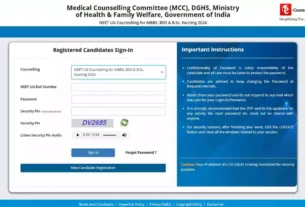
NEET-UG 2025 : The National Eligibility cum Entrance Test for Undergraduate (NEET-UG) is an essential examination for aspiring medical and dental students in India. Conducted by the National Testing Agency (NTA), this exam is pivotal for admission into various undergraduate programs in medical and dental colleges across the nation. NEET serves as the only standardized assessment for millions of candidates seeking admission to government and private medical institutions, marking a significant crossroads in their educational journey.
The structure of the NEET-UG examination typically consists of multiple-choice questions encompassing subjects such as Physics, Chemistry, and Biology. Aspiring candidates are evaluated on their understanding of these crucial scientific disciplines, which form the backbone of medical education. The examination is usually conducted once a year, attracting a substantial number of participants; in 2025, it is expected that over 18 lakh candidates will register to take the test, reflecting the increasing demand and competition within the field of healthcare.
The timeline for NEET-UG 2025 is imperative for both candidates and educational institutions. Registration for the examination generally begins several months prior to the test date, followed by a detailed schedule outlining the examination phases, including the release of admit cards and the final announcement of results. However, as the examination date approaches, challenges often arise, leading to complications and legal disputes. Recently, developments related to exam centers have prompted petitions for re-tests and demands for bonus marks. The Rajasthan High Court’s involvement in resolving these disputes highlights the ongoing complexities surrounding this critical examination. The legal adjudication reflects broader concerns about examination fairness and integrity, crucial for maintaining public trust in the educational process.
The Rajasthan High Court’s Ruling Explained : NEET-UG 2025
In a recent ruling, the Rajasthan High Court addressed a significant plea regarding the National Eligibility cum Entrance Test for Undergraduates (NEET-UG) 2025. This legal action arose from concerns surrounding the examination centers, where candidates faced various challenges, including power outages that allegedly hindered their performance. The petitioners sought both a re-test and the awarding of bonus marks to account for these disruptions. However, the court ultimately rejected these requests, explaining its rationale in a detailed judgment.
The court considered several legal arguments presented by the candidates affected by the exam-related issues. The primary contention was that the failures at the examination centers constituted a violation of the students’ rights to a fair assessment. Advocates for the petitioners highlighted specific incidents where power failures led to significant disruptions during the test, suggesting that these could have impacted the outcomes for many candidates. They argued that compensatory measures, such as a re-test or bonus marks, were necessary to uphold the integrity of the examination.
Despite the compelling arguments, the court ruled against the plea, asserting that various safeguards and protocols were in place to mitigate such operational failures. Furthermore, the court emphasized that unforeseen circumstances, while unfortunate, do not necessarily warrant a blanket re-evaluation of the entire examination. This decision underscores a critical stance on maintaining the examination’s integrity and ensuring that all candidates are subjected to the same standards, regardless of isolated incidents at specific centers.
The implications of this ruling extend beyond the immediate cases at hand. It raises questions about the perception of fairness in the NEET examination process, particularly regarding how institutions respond to logistical failures. By clarifying the limits of students’ expectations in these situations, the court’s decision may set a precedent that shapes future examinations and student recourse in similar circumstances.
Allegations Against Exam Centers: What Went Wrong?
The NEET-UG 2025 examination faced a myriad of allegations from candidates concerning the conditions and management of exam centers across Rajasthan. Many candidates reported severe disruptions during the examination due to unexpected power outages. Such outages not only affected the lighting in examination halls but also caused delays in the exam schedule, leaving students anxious and stressed. In an examination setting, electricity is crucial for ensuring a smooth progression of activities, from administrative checks to the actual testing process.
In addition to power issues, candidates described inadequate facilities that severely compromised their ability to perform. Complaints were raised about overcrowded exam rooms, insufficient seating, and inadequate sanitation facilities. Many students detailed how these conditions created a distracting environment that hindered their focus. These reports were further substantiated by testimonies that highlighted a lack of basic amenities such as drinking water and functional restrooms, which are essential for any formal examination.
Furthermore, there were accounts of mismanagement on the day of the exam, where candidates reported disorganization at check-in points and a lack of clear communication from the invigilators. This led to confusion as candidates struggled with conflicting information regarding their assigned rooms, creating a chaotic atmosphere. Some students recounted being directed to incorrect locations or receiving contradictory instructions about the exam procedures. These incidents ultimately raised concerns about the responsibility of the examination authorities, challenging their commitment to providing a conducive environment for students.
The cumulative nature of these allegations paints a troubling picture of the examination infrastructure in place for NEET-UG 2025. The grievances expressed by candidates underscore the urgent need for thorough reviews and reforms concerning examination procedures and facilities to ensure fairness and reliability in the assessment process.
Implications for Future NEET Examinations
The recent ruling by the Rajasthan High Court concerning the NEET-UG 2025 exam has significant implications for prospective medical students and the overall integrity of the examination process. This verdict, which rejected the plea for a re-test and additional marks due to issues at examination centers, sets a precedent for how student grievances are handled in the future. It underlines the importance of maintaining robust and reliable examination protocols while also reflecting the judicial system’s view on the accountability of educational authorities.
In the wake of this decision, it is likely that regulatory bodies overseeing NEET may reevaluate and enhance the infrastructure and procedures utilized at examination centers. This could involve the implementation of more stringent guidelines and standardized procedures to ensure that candidates face minimal disruption during the examination process. Such improvements would aim to address the widespread issues highlighted by students—such as inadequate facilities and logistical failures— which could affect performance and student morale.
Furthermore, the ruling raises concerns regarding student confidence in the fairness and reliability of the NEET examination process. If students perceive that their grievances are inadequately addressed, it may lead to diminished trust in the regulatory framework governing medical admissions. To counter this potential decline in confidence, it will be essential for the relevant authorities to be proactive in engaging with students and stakeholders, incorporating their feedback to enact necessary changes.
Ultimately, while the High Court’s decision reinforces the status quo for now, it may serve as a catalyst for future reforms in the NEET examination system. The need for ongoing dialogue among students, educational institutions, and regulatory bodies is crucial to ensure that the examination process continues to evolve and meets the expectations of all stakeholders involved in medical education.