

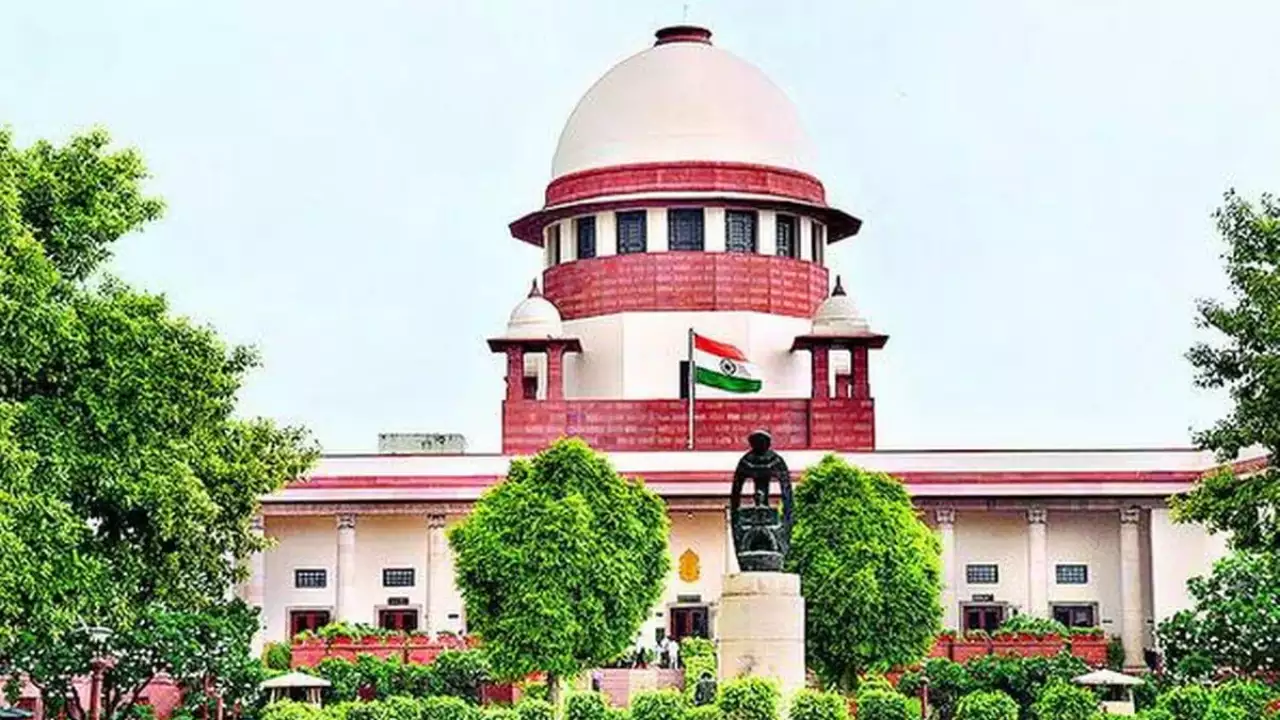
The Supreme Court of India has stepped into the escalating NEET-PG 2025–26 cut-off controversy, issuing notices on a public interest litigation (PIL) challenging the decision to drastically reduce the qualifying percentile for the National Eligibility-cum-Entrance Test Postgraduate (NEET-PG) exam. The matter is now scheduled for a hearing on Friday, February 6, 2026, before a Constitution Bench, signaling a significant judicial review of medical education policy in the country.
What Prompted the PIL?
The controversy stems from a January 13, 2026 notification by the National Board of Examinations in Medical Sciences (NBEMS) that revised the minimum qualifying cut-off percentiles for NEET-PG 2025–26. The revised standards reportedly lowered the eligibility threshold to abnormally low levels, including zero and even negative percentiles for certain categories — a move unprecedented in recent medical entrance policy history.
Under the revised scheme, sources indicate that the qualifying percentile for:
- General/EWS candidates was reduced from 50th to the 7th percentile (around 103 marks out of 800),
- General PwBD candidates to the 5th percentile (around 90 marks), and
- SC/ST/OBC (including PwBD) candidates to a zero percentile, reportedly equivalent to a minus-40 marks score out of 800.
This radical reduction came after two rounds of NEET-PG counselling had already been completed, stirring objections from students, doctors and education activists.
Supreme Court Issues Notice
On February 4, 2026, a bench comprising Justices P.S. Narasimha and Alok Aradhe considered the PIL and issued notices to key respondents — the Union of India, NBEMS, the National Medical Commission (NMC) and the Medical Counselling Committee (MCC) — seeking their responses before the next hearing. The court posted the matter for further proceedings on Friday, February 6.
The petitioners, led by social activist Harisharan Devgan and doctors Saurav Kumar, Lakshya Mittal and Akash Soni, have challenged the constitutionality of the cut-off revision, arguing that such a steep downward adjustment undermines merit, justice and the integrity of medical education. They contend that medical postgraduate training requires rigorous academic benchmarks to ensure competent future specialists.
Petitioners’ Arguments: Merit, Standards and Constitution
The PIL claims that the decision to drastically reduce qualifying thresholds is arbitrary and unconstitutional, violating Articles 14 and 21 of the Indian Constitution, which guarantee equality before the law and protection of life and personal liberty, respectively. The plea argues that medical education standards cannot be diluted post hoc — after exams, results and initial counselling — because aspirants make career decisions based on announced criteria.
According to the petition, allowing candidates who score near zero or even negative marks to participate in counselling:
- Dilutes merit-based selection, traditionally the hallmark of competitive medical admissions,
- Compromises minimum academic standards essential for postgraduate medical training, and
- Risks patient safety and public health by enabling candidates with minimal demonstrated competence to pursue specialized medical education.
The petitioners have urged the Supreme Court to quash the NBEMS notification, restore constitutionally permissible qualifying standards and issue appropriate directions to safeguard the quality and credibility of India’s medical education system.
Government’s Position and Broader Context
The NBEMS and government authorities appear to have taken the cut-off decision in response to the high number of vacant postgraduate medical seats across the country. Reports suggest that thousands of MD/MS/DNB seats remained unfilled after two counselling rounds, prompting calls from medical associations and health officials to widen eligibility so that available seats are not left unused.
Advocates of the lower cut-offs argue that such changes can improve healthcare workforce distribution by filling seats that would otherwise lapse unused. They also point out that eligibility for counselling does not guarantee admission — seats are eventually allotted strictly on merit during the actual counselling process.
However, concerns have grown within the medical community, with several stakeholders claiming that eligibility thresholds set so low could weaken long-term educational standards and diminish trust in the NEET-PG screening mechanism.
Judicial Review and Implications
The Supreme Court’s decision to entertain the PIL and issue notices reflects the gravity of the issues involved — weighing administrative flexibility against constitutional principles and the future of medical education. The arguments are set to unfold in the next hearing on Friday, February 6, 2026, when the Court will likely examine responses from the government, regulatory bodies and counsel representing the petitioners.
As India grapples with doctor shortages in certain regions and the implications of postgraduate training standards on public health, all eyes will be on the apex court’s deliberations. The outcome could have far-reaching consequences for medical aspirants, institutional policies and broader healthcare sector governance.