Overview of the NEET PG Examination
NEET PG examination is a pivotal examination for medical graduates in India seeking to pursue postgraduate courses in various medical disciplines. This examination serves as a gateway for candidates aiming to secure admission into MD (Doctor of Medicine), MS (Master of Surgery), and diploma courses across government and private medical colleges in India. Conducted annually, the NEET PG is recognized as an essential part of the Indian medical education system, significantly influencing the trajectory of aspiring medical professionals.
The eligibility criteria for candidates intending to sit for the NEET PG examination are clearly defined. Individuals must possess an MBBS degree or a provisional MBBS pass certificate granted by a recognized institution. Additionally, candidates must have completed a one-year internship by the specified date as indicated by the conducting authority. This ensures that all participants possess the requisite foundational knowledge and practical experience necessary for advanced medical education.
The examination is typically conducted in a Computer-Based Test (CBT) format, which allows for a more efficient assessment of candidates’ knowledge and skills. The NEET PG generally comprises a multiple-choice question (MCQ) format, with questions derived from various subjects studied during undergraduate medical education. Questions encompass topics such as anatomy, physiology, pharmacology, pathology, and more, requiring a comprehensive understanding of medical science principles.
Results from the NEET PG hold immense significance, as they play a crucial role in determining the future of medical graduates. Scoring well can unlock opportunities for coveted postgraduate positions, while lower scores may restrict options, thus emphasizing the high stakes involved in this examination. The importance of the NEET PG results extends beyond individual careers, impacting the overall landscape of medical education and healthcare provision in India.
The Controversy Surrounding the NEET PG Examination
The National Eligibility cum Entrance Test for Postgraduate (NEET PG) has been a subject of considerable scrutiny following allegations of discrepancies in its results. Candidates contend that there have been irregularities in scoring and evaluation processes, which have raised questions about the overall integrity of the examination. A group of affected candidates filed a petition pointing out these issues, arguing that the inconsistencies potentially compromised their chances of success and fair representation in the medical education landscape.
One of the central allegations revolves around the scoring system. Candidates have reported instances where marks appeared to be inaccurately reflected in their results. This has led to an outpouring of frustration and confusion among students, who depend on this examination as a stepping-stone to further their medical careers. Moreover, the concerns extend beyond mere scoring errors; candidates have expressed doubts regarding the evaluation method used to assess their performance, suggesting a lack of clarity and potential biases in the grading process.
The demand for transparency in the NEET PG results has been echoed by various experts within the medical education sector. Many argue that the availability of detailed score breakdowns and the evaluation rubric would serve to enhance trust in the system. This call for transparency is not only a reaction to the current scenario but also a proactive measure to ensure that future examinations uphold the principles of fairness and accountability.
The response from the examination authorities has thus far been measured, emphasizing the robustness of their evaluation methods and the rigorous processes in place to mitigate discrepancies. However, as the controversy unfolds, it remains essential for stakeholders in the medical field, including candidates, educators, and governing bodies, to engage in open dialogue to address these vital concerns effectively.
Supreme Court’s Ruling: Key Takeaways
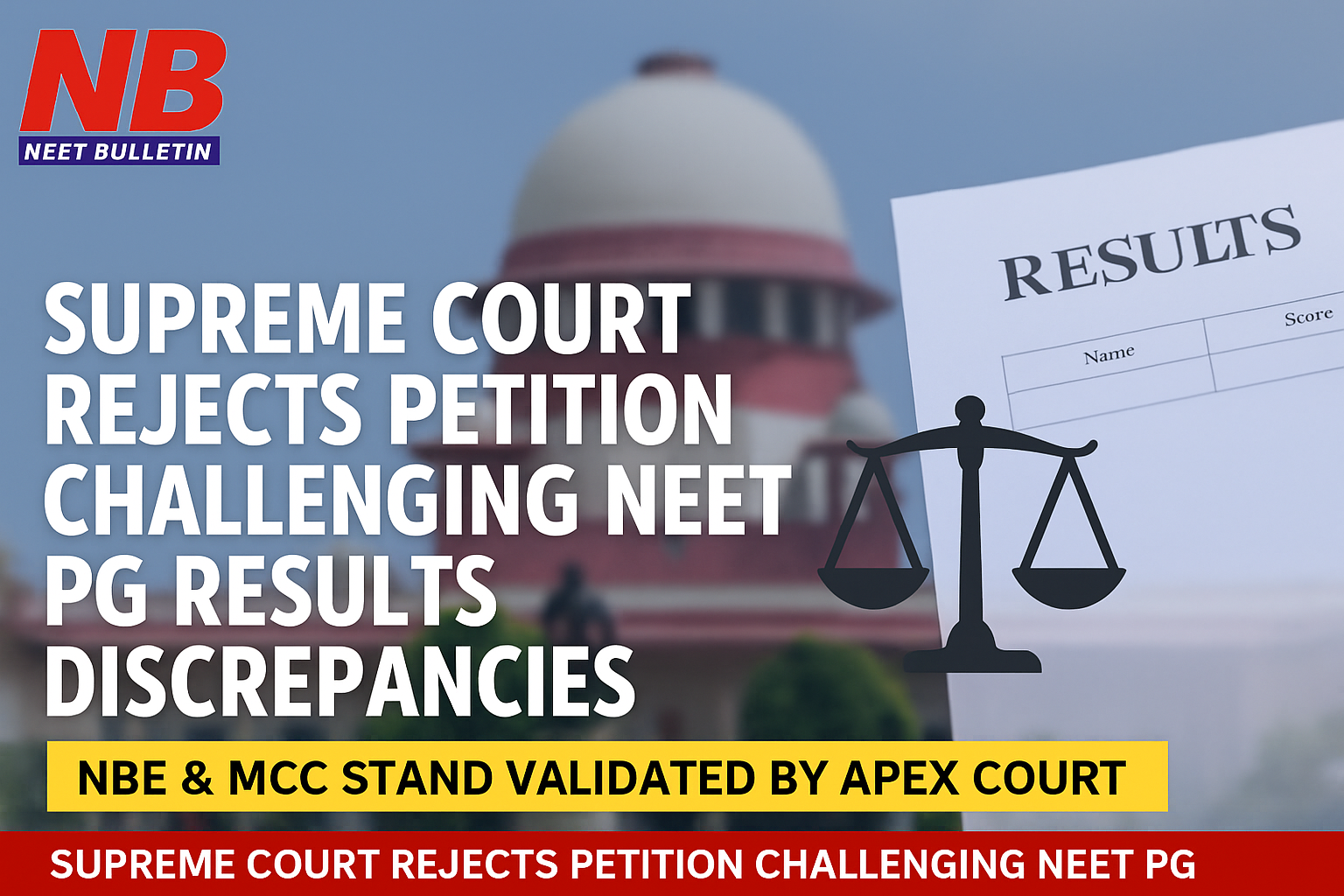
The Supreme Court’s recent decision to reject the petition challenging the results of the NEET PG examinations has significant implications for both the candidates involved and the integrity of future assessments. In this ruling, the court emphasized the importance of maintaining consistent standards and refusing to undermine the rigorous processes established for medical entrance examinations. The petition alleged discrepancies in how results were processed and claimed that certain candidates were unfairly disadvantaged. However, the court maintained that the procedures followed were transparent and complied with established norms.
One of the key reasons for the court’s ruling was its reliance on prior legal precedents that uphold the sanctity of examination results, particularly in competitive environments like medical admissions. The justices underscored that the National Eligibility cum Entrance Test for Postgraduate (NEET PG) is designed to assess competency fairly across diverse candidates. The rigorous validation of results and the process for resolving grievances demonstrate a commitment to impartiality, which the court believes is crucial for public trust in the education system.
Additionally, the ruling highlighted the responsibilities of examination boards in ensuring that all protocols are followed meticulously. The court’s decision reaffirms that candidates seeking redress must provide substantial evidence of their claims beyond mere allegations of irregularity. This stance may deter frivolous petitions in the future, helping to streamline the legal framework surrounding educational assessments. Overall, the Supreme Court’s rejection of the plea not only bolsters the validity of the NEET PG results but also sets a precedent emphasizing the importance of due process in educational challenges. The ramifications of this ruling will likely resonate in forthcoming medical examinations, influencing how grievances are addressed by both authorities and candidates alike.
Impact and Reactions to the Decision
The Supreme Court’s recent verdict rejecting the petition challenging the discrepancies in the NEET PG results has stirred a myriad of reactions from stakeholders throughout the medical education sector. This landmark decision not only affects current students but also has broader implications for the future of medical examinations in India. One of the most significant responses came from the National Board of Examinations (NBE), which emphasized its commitment to ensuring transparency and fairness in the evaluation process. The NBE has highlighted ongoing efforts to enhance the examination system, addressing the concerns raised by students regarding anomalies and inconsistencies.
Student organizations swiftly expressed their views, reflecting a mix of disappointment and determination. Many students view the ruling as a setback in their quest for justice concerning perceived unfair practices in the examination process. As a result, some student groups are mobilizing to advocate for reforms, urging policymakers to consider alternative measures to safeguard the integrity of future NEET examinations. By doing so, they seek to foster a system that assures fairness and equitable opportunities for all candidates preparing for these critical assessments.
From the perspective of medical educators, there is a growing concern regarding the implications of this decision on the overall landscape of medical training. Legal experts have weighed in, emphasizing that the upholding of the examination results could lead to further scrutiny of examination protocols and grading practices in the future. The ongoing discourse surrounding examination fairness remains crucial as stakeholders strive towards improving accountability and trust within the medical education framework. As students gear up for subsequent NEET examinations, the necessity of a fair and reliable assessment mechanism will be more pertinent than ever, shaping aspirations and careers in the medical field.